
Government Over-Reach
Suspicions, Accusations, Evidence, Testimonials, etc. etc. ...
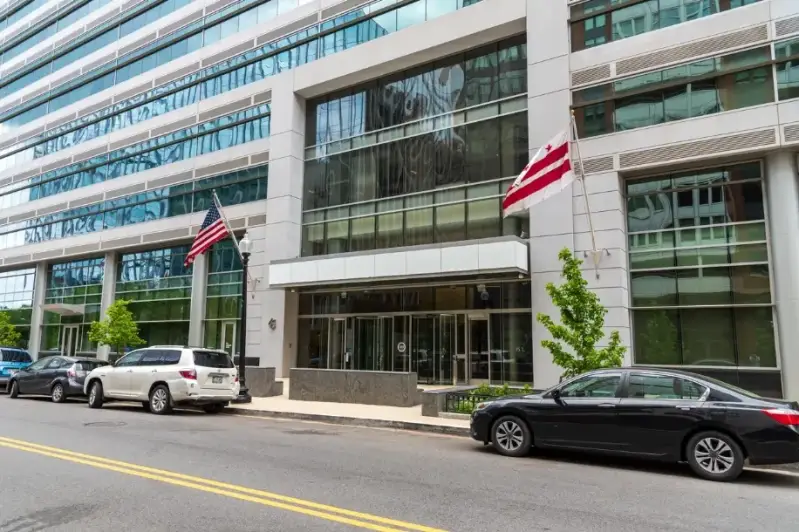

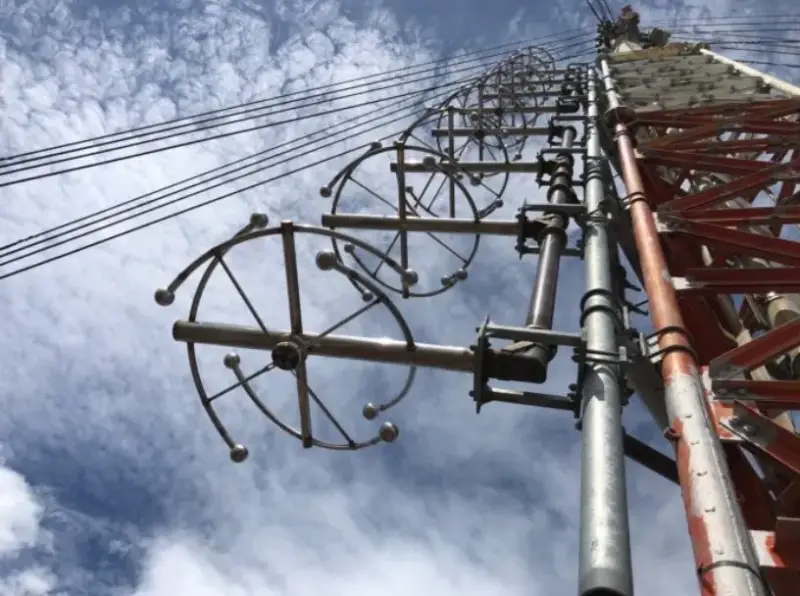
FCC license power now holds the off switch on critical networks
What control does the President have over the FCC
The FCC has long held licensing authority over the radio spectrum, broadcast stations, wireless services, and certain equipment authorizations.
That power lets it grant, condition, renew, or revoke licenses. In practice, this can force a station or service offline if the license is pulled or not renewed.
Recent actions have made the leverage more visible. In 2026 the FCC ordered early license-renewal reviews for multiple ABC-owned stations years ahead of schedule. Disney and ABC sued, arguing the move was retaliation for programming decisions and content the administration disliked. License revocation remains rare and legally difficult mid-term, but the threat of a formal hearing or denial of renewal is real pressure. Broadcast licenses are the clearest example of the “off switch” language people use.
Beyond broadcast, the same licensing and authorization tools apply more broadly:
Spectrum licenses for mobile and fixed wireless networks.
Equipment authorizations that can block or limit devices (the Covered List has been expanded to foreign-made power inverters, advanced robots, routers, and other gear the FCC says pose national-security risks to critical infrastructure).
Rules requiring licensees to maintain the ability to shut transmitters off and rules governing discontinuance of service.
None of this creates a brand-new literal kill switch for the entire internet or every critical network. Most core internet infrastructure runs on fiber and private networks that are not solely dependent on a single FCC broadcast-style license. Still, wireless carriers, broadcasters, and many connected devices do rely on FCC approvals. National-security findings, enforcement actions, or renewal denials can effectively take specific operators or equipment out of service.
The power has always existed; the current intensity of its use against specific media outlets and the expansion of the Covered List to more infrastructure-related hardware are what make the “off switch” description feel newly pointed.
Clarifying the distinction between broadcast and broadband licensing
Broadcast licenses and broadband-related authorizations are handled differently by the FCC, both in purpose and in how much control they give the agency.
Broadcast licenses
-
These cover traditional over-the-air radio and television stations. A station needs a specific FCC license to transmit on a particular frequency (or channel) in a defined geographic area at a set power level.
-
Licenses are issued for fixed terms (usually eight years) and must be renewed.
-
The FCC evaluates renewals under a “public interest” standard. This historically allowed more scrutiny of the licensee’s operations, including some content-related issues, though First Amendment limits still apply.
-
The FCC can order early reviews, designate a license for a hearing, or ultimately deny renewal or revoke it.
-
Losing the license takes the station off the air.
This is the clearest example of an “off switch” because the license is the legal right to use the public airwaves for that specific broadcast service.
Broadband licensing and authorizations
Broadband (internet access service) works differently and is less centralized around a single station-style license:
-
Wired broadband (cable, fiber, DSL): Providers generally do not need an FCC spectrum license to offer the service itself. Cable companies need local or state franchises. The service is currently treated as a Title I “information service,” which means lighter federal regulation focused mainly on transparency, not heavy common-carrier rules or content oversight.
-
Wireless broadband (mobile 4G/5G, fixed wireless): These do require spectrum licenses. The FCC auctions or assigns rights to use specific frequency bands in geographic areas. These licenses are commercial and more flexible than broadcast licenses—they authorize the use of spectrum for data transmission rather than one-to-many broadcasting. Rules focus on interference protection, build-out requirements, and technical operations, not content.
-
Unlicensed spectrum (used by Wi-Fi and many consumer devices): No individual license is needed. Devices just have to follow FCC technical rules (power limits, etc.).
Separately, almost all radio-frequency-emitting devices need equipment authorization from the FCC before they can be marketed or sold. This is how the Covered List works—it blocks new models of certain gear (including some that could affect critical infrastructure) from getting that approval.
Bottom line on the “off switch”
The strongest, most direct license-based control sits with broadcast stations. For broadband, the FCC’s leverage is more indirect: spectrum licenses for wireless providers, equipment authorizations that can keep risky devices out of the market, and rules governing service discontinuance. Wired broadband networks themselves are not as tightly gated by a single renewable “broadcast-style” license that the FCC can simply pull to shut everything down.
The President has substantial influence and, as of mid-2026, significantly expanded legal control—over the FCC.
What control does the President have over the FCC
Traditional structure
-
The FCC is a five-member independent regulatory commission created by Congress.
-
The President nominates the commissioners; the Senate confirms them.
-
Terms last five years and are staggered.
-
No more than three commissioners may belong to the same political party.
The President designates one commissioner as Chairman (the agency’s chief executive officer, who sets the agenda, manages staff, and represents the Commission).
Historically, commissioners could be removed only “for cause” (inefficiency, neglect of duty, or malfeasance), under the long-standing Humphrey’s Executor precedent. This limited the President’s ability to fire them at will for policy disagreements.
The President therefore shaped the FCC mainly through appointments and by choosing the Chair, but could not directly order specific decisions or freely dismiss commissioners.
Current reality (as of 2026)Presidential control is now much stronger:
In February 2025, an executive order required so-called independent agencies (including the FCC) to submit draft regulations for White House review, consult on priorities, and accept the President’s and Attorney General’s interpretation of the law.
In June 2026, the Supreme Court overturned Humphrey’s Executor in Trump v. Slaughter. The ruling held that the President may remove commissioners of independent agencies without cause because those agencies exercise executive power. This applies to the FCC.
FCC Chairman Brendan Carr has publicly stated the agency “is not an independent agency formally speaking,” and the word “independent” was removed from its official mission statement.
As a result, the President can now appoint (and remove) commissioners more freely, designate the Chair, set broad priorities through the White House, and exert real-time pressure on the agency’s direction. The Chairman and a party majority on the Commission give the sitting President strong practical control over agenda-setting, rulemaking, licensing actions, and enforcement.
Congress still retains oversight, appropriations power, and the ability to pass legislation that constrains the FCC, and individual commissioners can still dissent or write separate opinions.
Courts can review specific decisions.
But the combination of appointment power, Chair designation, at-will removal authority, and the 2025 executive order has shifted the FCC far closer to direct presidential supervision than its traditional independent design.
SOURCES:
Here are key related links on the FCC’s structure, presidential control, recent Supreme Court ruling, and related actions:
Supreme Court ruling on presidential removal power https://www.scotusblog.com/cases/trump-v-slaughter-2/
https://supreme.justia.com/cases/federal/us/609/25-332/
Trump executive order on independent agencies (February 2025) https://www.whitehouse.gov/fact-sheets/2025/02/fact-sheet-president-donald-j-trump-reins-in-independent-agencies-to-restore-a-government-that-answers-to-the-american-people/
https://www.whitehouse.gov/presidential-actions/2025/02/ensuring-accountability-for-all-agencies/
Disney/ABC lawsuit over FCC license reviews (August 2026) https://www.reuters.com/world/disney-abc-sue-us-regulator-over-threats-broadcast-licenses-2026-08-18/
Official FCC pages https://www.fcc.gov/about/leadership (current commissioners)
https://www.fcc.gov/about/overview
#thebrutaltruthnewspodcast #substack #FCCIndependence #PresidentialPower #BroadcastLicenses
FAIR USE COPYRIGHT NOTICE:
substack.com/@originalbrutaltruth AUG 2026 The Copyright Laws of the United States recognizes a “fair use” of copyrighted content. Thank you all for subscribing. If you enjoy and feel the information shared here is important, please share it!
The videos and YouTube channel in general may contain certain copyrighted works that were not specifically authorized to be used by the copyright holder(s), but which we believe in good faith are protected by federal law and the fair use doctrine for purposes such as criticism, comment, news reporting, teaching, parody, or research, is not an infringement of copyright. All video is for educational purposes only. We believe this constitutes a fair use of any such copyrighted material as provided for in section 107 of the US Copyright Law.