Man-Made Disasters

Anything Man Creates can be Destructive.


Chernobyl: Inside the World’s Most Haunted Nuclear Disaster Zone


How the Disaster Still Affects Europe Today

Disturbing Things Found Inside the Chernobyl Exclusion Zone

On April 26, 1986, Reactor No. 4 at the Chernobyl Nuclear Power Plant exploded during a late-night safety test.


The accident released massive amounts of radioactive material across Ukraine, Belarus, and parts of Europe. Soviet authorities evacuated the nearby city of Pripyat within 36 hours, but by then thousands had already been exposed. The area surrounding the plant became known as the Chernobyl Exclusion Zone, covering roughly 1,000 square miles. Nearly four decades later, it remains one of the most contaminated places on Earth.

Some of the most disturbing discoveries in the Exclusion Zone are not the famous outdoor landmarks, but “hotspot” interiors where radioactive dust and particles settled and stayed. Researchers who have studied radiation risk during visits note that certain basements are especially dangerous because contamination can concentrate there, including the basement of Pripyat’s Hospital No. 126 where contaminated firefighter clothing was stored after the first response to the reactor explosion. Those items can still register extremely high readings compared with normal background levels, and the bigger risk in these confined spaces is not just standing near a “hot object,” but breathing in or stirring up contaminated dust.

Another disturbing reality is what people have tried to take out of the zone. Multiple reports describe a long-running black market tied to illegal entry, scavenging, and scrap metal removal, with concerns that contaminated materials can be moved and resold outside controlled channels. Even when metal recycling is done legally, it is tightly managed because the goal is to prevent radioactive contamination from spreading into the normal economy. This is one reason safety experts warn against treating the zone like a theme park: the main danger is not “mystery monsters,” but contamination being disturbed, transported, or mishandled.

A third unsettling finding is how long radioactive contamination can remain in the food chain. Studies continue to measure cesium-137 in wild animals decades later, including wild boar, because the animals forage and dig in soils where contamination persists. Researchers have documented measurable levels in boar in the ex-evacuation area and have also shown that boar contamination has been a recurring issue in parts of Europe since Chernobyl, demonstrating that “time passing” does not automatically erase the problem everywhere.


The “Red Forest”

One of the most contaminated parts of the zone is known as the Red Forest. After the explosion, pine trees near the reactor absorbed intense radiation and turned reddish-brown before dying. The forest was bulldozed and buried, but radiation remains in the soil. Scientists continue to monitor plant and animal life in this area. While wildlife has returned in large numbers, studies show genetic mutations and elevated contamination in some species. The Red Forest remains off-limits to most visitors due to high radiation levels.

The Red Forest is a “hotspot” because it sat directly in the path of the heaviest fallout in 1986, and the contamination did not spread evenly. Radioactive particles settled into the soil and forest litter, and some of the most important isotopes last a long time, including cesium-137 and strontium-90 (about 30-year half-lives), along with longer-lived elements like plutonium and americium that can remain for decades to centuries. Long-term monitoring in the Exclusion Zone shows that these radionuclides can stay in place and move only slowly through soil and groundwater, which is why patches of the Red Forest can still measure much higher radiation than nearby areas even many years later.

A major modern danger in the Red Forest is fire. When contaminated forests burn, radioactive material can be lifted into the air as smoke and ash, then redeposited on the ground or carried downwind. Research on Chernobyl-area fires has examined how radionuclides like cesium-137 can be re-suspended during wildfires and what that means for exposure, especially for firefighters working close to the burn area. Studies of large fires in the zone (including 2016 and 2020 events) have used air sampling and monitoring data to estimate worker exposure and confirm that fires can temporarily increase airborne contamination where burning occurs.

Scientists also use the Red Forest to study how chronic radiation affects ecosystems over time, and the results are not simple. Some studies report clear links between higher radiation and reduced numbers of certain small organisms (like soil invertebrates), while other research finds many larger animals still present and reproducing, which suggests the impacts can vary by species, location, and exposure level. The key fact is that wildlife returning does not mean the area is “clean”; it means the zone is a complicated natural lab where radiation effects can be uneven and sometimes hard to measure without long-term data.


The New Safe Confinement Structure

The New Safe Confinement (NSC) is not just a giant “lid.” It is a working industrial enclosure built so crews can eventually take apart unstable, highly contaminated structures without releasing dust and particles into the outside environment. The arch was assembled away from the reactor to reduce worker exposure, then slid into place on rails using hydraulic systems. Inside, it includes major infrastructure such as ventilation and filtration, radiation monitoring, power and maintenance systems, and heavy-duty bridge cranes designed to move equipment and remove debris during long-term dismantling work. The European Bank for Reconstruction and Development (EBRD) managed the donor-funded program behind the project, and EBRD documents describe the NSC as the biggest part of the Shelter Implementation Plan, with costs around €1.5 billion and an intended service life of about 100 years.

The wildlife story is also more complicated than “nature healed itself.” Population counts and camera-trap studies have shown that many large animals can live and reproduce in the zone, likely helped by the absence of hunting, farming, roads, and day-to-day human pressure. At the same time, scientific reviews and field studies report measurable biological effects in some organisms in more contaminated areas, including signs of genetic damage or reduced health and reproduction in certain species. That is why researchers still debate the overall impact: the zone can function as a refuge from people for some animals while still acting as a chronic radiation-exposure environment that affects other species differently depending on where they live, what they eat, and how much contamination is in the soil and food chain.


Looting, Urban Exploration, and War

In recent years, the Exclusion Zone has drawn illegal explorers and social media influencers seeking dramatic footage. Authorities have arrested trespassers who risk radiation exposure. During Russia’s 2022 invasion of Ukraine, military forces briefly occupied the Chernobyl site, raising international concern about potential disturbance of radioactive soil. The International Atomic Energy Agency monitored the situation closely and later confirmed Ukrainian control had been restored.

Illegal “urban exploration” in the Chernobyl Exclusion Zone has become a real law-enforcement problem, not just a social media trend. Ukrainian border and security officials have repeatedly warned that the zone is a restricted area with both safety hazards and legal consequences, and they have reported catching groups of trespassers who try to sneak in for photos and video. The risk is not only “standing near radiation,” but also entering unstable buildings, getting injured far from help, and accidentally spreading contamination by carrying dusty clothing or gear back out.

During Russia’s full-scale invasion in 2022, Chernobyl became a war zone. The IAEA’s timeline notes Russian forces controlled the Chornobyl site from February 24 to March 31, 2022, and the occupation raised fears about safety systems and the handling of radioactive areas. Separate reporting described Russian vehicles and digging activity disturbing contaminated soil in the Red Forest, which can kick up radioactive dust and increase exposure for people on the ground.

Even after the occupation ended, the war has continued to create nuclear-safety concerns around Chernobyl because the site depends on stable power and secure operations. The IAEA has issued repeated updates during the conflict, including public reporting that the plant has lost off-site power during periods of military activity, forcing reliance on backups until electricity is restored. That pattern shows why international agencies keep monitoring the area closely: Chernobyl is decommissioned, but it still contains radioactive waste and spent fuel that require controlled conditions and functioning safety infrastructure.


Long-Term Health and Environmental Impact

The World Health Organization and United Nations agencies estimate that thousands of thyroid cancer cases were linked to radioactive iodine exposure, particularly among children at the time of the accident. Large areas remain contaminated with cesium-137 and other isotopes. Cleanup and containment efforts continue decades later. While radiation levels in many outer regions have decreased significantly, the reactor site itself will require monitoring for generations.

Even decades later, Chernobyl’s health impact is shaped by what people were exposed to, where they lived, and how quickly protective steps were taken. The clearest long-term medical signal is still thyroid cancer in those who were children or teenagers in 1986, because iodine-131 from fallout can concentrate in the thyroid, especially through contaminated milk and food. The United Nations scientific panel UNSCEAR reported that by 2005, more than 6,000 thyroid cancer cases had been diagnosed in people exposed as children and adolescents in the most affected areas, and it concluded that a large fraction of those cases is most likely linked to radioiodine intake from the accident.

Beyond cancer numbers, long-term harm also includes lasting exposure pathways and long-lasting social damage. Studies show that chronic internal exposure can persist mainly through local “forest foods” (like mushrooms and berries) that concentrate cesium-137, even when other foods have lower levels, which is why restrictions and monitoring have continued in some areas. And UN reporting on Chernobyl’s legacy has emphasized that mental health problems, stress, stigma, and the economic shock of displacement became major long-term burdens for many affected communities, sometimes outweighing radiation dose as a day-to-day driver of suffering.


The Brutal Truth

Chernobyl isn’t “spooky.” It’s a slow, ugly lesson in what happens when a reactor blows its guts out and a government lies long enough for the poison to settle in. Pripyat wasn’t evacuated fast because officials were kind, it was evacuated because reality finally overpowered propaganda. People were told they’d be back in a few days, so they left their lives behind like trash on the floor. Now the city sits there rotting, a museum of denial, while radiation hangs around like a debt that never stops collecting interest.

The truly disturbing part isn’t the famous ferris wheel photo ops. It’s the indoor hotspots... basements, sealed rooms, and places where radioactive dust didn’t “go away,” it just parked itself and waited. You can’t out-tough contamination. Breathe the wrong particles, track the wrong dust, and you carry the problem with you. And because humans can’t resist being stupid, there’s been looting, illegal exploration, and scrap scavenging, people literally trying to turn contaminated material into cash and drag it back into normal life like it’s just “metal.” Chernobyl isn’t haunted by ghosts. It’s haunted by greed.

Then there’s the Red Forest.. the zone’s radioactive bruise where fallout hit hardest and the ground still holds long-lived contaminants. Fire is the nightmare sequel: burn contaminated forests and you can kick radioactive material back into the air as smoke and ash. Add war to that, and the whole place becomes a high-risk mess. In 2022, soldiers rolled through, dug around, and stirred up soil that never should’ve been touched, while the world watched nuclear safety become a battlefield issue.

The New Safe Confinement arch is a massive engineering bandage meant to keep the wound from bleeding outward, but it doesn’t erase the core truth: this site will require control, monitoring, and humility for generations, because the fallout didn’t just injure people in 1986.

…it rewired land, food chains, and lives long after the cameras moved on.


Full Source Links

https://www.iaea.org/newscenter/focus/chernobyl 

https://www.britannica.com/event/Chernobyl-disaster 

https://whc.unesco.org/en/list/1596/ 

https://www.nationalgeographic.com/history/article/chernobyl-disaster 

https://www.sciencedirect.com/science/article/pii/S0265931X19301767 

https://www.ebrd.com/what-we-do/sectors/nuclear-safety/chernobyl.html 

https://www.world-nuclear.org/information-library/safety-and-security/safety-of-plants/chernobyl-accident.aspx 

https://www.nationalgeographic.com/animals/article/chernobyl-wildlife-thirty-years-later 

https://www.sciencedirect.com/science/article/pii/S004896971830043X 

https://www.reuters.com/world/europe/russian-forces-leave-chernobyl-plant-2022-03-31/ 

https://www.who.int/news-room/questions-and-answers/item/chernobyl-radiation-and-health-effects 

https://www.unscear.org/unscear/en/chernobyl.html 

Chernobyl: Inside the World’s Most Haunted Nuclear Disaster Zone


Please Like & Share 😉🪽

@1TheBrutalTruth1 FEB. 2026 Copyright Disclaimer under Section 107 of the Copyright Act of 1976: Allowance is made for “fair use” for purposes such as criticism, comment, news reporting, teaching, scholarship, education, and research.


Is Canada the Leading Country in Suicides?


Canada’s Suicide Rate and the Debate Over Medical Assistance in Dying

Recent online claims say Canada is now the leading country in the world for suicides. Current international data does not support that claim.


According to the World Health Organization and the OECD, countries such as Lithuania, South Korea, and Guyana have reported higher suicide rates per 100,000 people than Canada in recent years. Canada’s suicide rate remains a serious public health concern, but it is not ranked number one globally.

In Canada, Statistics Canada reports that suicide remains one of the leading causes of death among younger age groups, especially males aged 15–44. However, the overall national rate has fluctuated over time rather than dramatically surging above every other nation. Public health officials continue to focus on prevention, mental health access, and crisis intervention programs.


Understanding Canada’s Medical Assistance in Dying Program

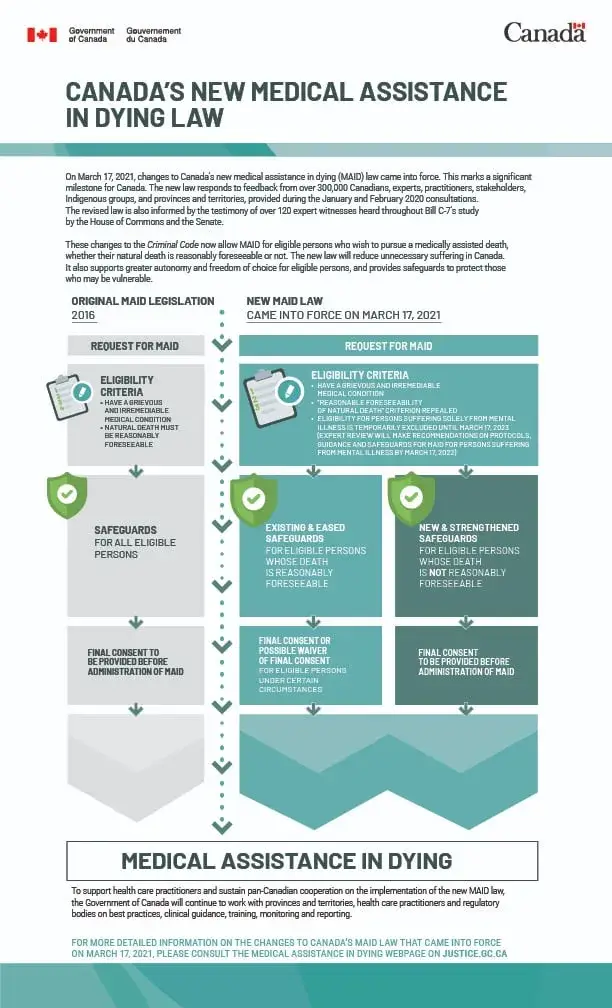
Canada legalized Medical Assistance in Dying (MAID) in 2016 under the federal government, which at the time was led by Justin Trudeau and administered through the Government of Canada. The original law allowed assisted dying for adults with a serious and incurable medical condition whose natural death was reasonably foreseeable.

In 2021, Parliament expanded eligibility to include individuals whose death was not reasonably foreseeable, provided they met strict medical criteria. The government also debated extending eligibility to people whose sole condition is mental illness. That expansion has been delayed multiple times and is currently paused until at least 2027. This delay reflects ongoing concerns among lawmakers and medical groups about safeguards and readiness.


The Controversy: Safeguards, Pressure, and Ethical Concerns

Critics, particularly from conservative and faith-based communities, argue that MAID has expanded too far beyond its original intent. They point to reports of individuals with disabilities or chronic illness who felt social or economic pressure and question whether safeguards are strong enough. Some disability advocates have raised concerns that inadequate support services could influence vulnerable people to consider assisted death instead of receiving better care.

Others argue that MAID remains tightly regulated, requiring assessments from multiple medical professionals and written consent. Supporters say the program respects individual autonomy and prevents prolonged suffering. Canadian courts, including rulings influenced by earlier Supreme Court decisions, have emphasized personal liberty in end-of-life choices while directing lawmakers to maintain protective measures.


Mental Health, Public Distrust, and Broader Social Debate

The emotional intensity around MAID reflects a deeper public struggle over mental health, healthcare access, and trust in institutions. Canada, like many Western nations, has faced strain in its healthcare system and rising mental health needs following the pandemic years. Some critics believe expanding assisted dying without fully fixing mental health care sends the wrong message.

At the same time, public policy experts caution against linking overall suicide statistics directly to MAID participation without clear data. While MAID cases are tracked separately and legally documented, traditional suicides and medically assisted deaths are classified differently in official records. Analysts stress that careful interpretation is required when comparing the two categories.


The Bigger Picture

Canada is not the global leader in suicide rates, but it remains engaged in one of the most intense ethical debates in the Western world over assisted dying. The MAID program has expanded beyond terminal illness, yet lawmakers have paused further changes involving mental illness alone due to safety and oversight concerns. The issue continues to divide political parties, faith communities, medical professionals, and disability advocates.

Future decisions will depend on parliamentary review, court rulings, and whether public safeguards are strengthened. As the debate continues, both sides agree on one central point: mental health support, economic stability, and healthcare access remain critical factors in preventing suffering and restoring public confidence.


THE BRUTAL TRUTH

Alright, look — Canada right now? It’s not having a calm policy discussion. It’s having a full-blown family Thanksgiving argument with no turkey and everybody’s yelling.

You’ve got mental health needs through the roof. Clinics packed. Therapy waitlists longer than winter. Emergency rooms looking like airport terminals during a snowstorm. And in 2023, 4,735 suicide deaths. That’s not a meme. That’s real.

At the same time? MAID cases are in the thousands too. And here’s where people start losing their minds — they see big numbers and go, “Add it together! It’s the apocalypse!” And experts are like, “Whoa, whoa, slow down, algebra class. Different systems. Different reporting. Different categories.” You can’t just mash those numbers together like you’re making a conspiracy smoothie. That’s not statistics — that’s vibes.

Now here comes the real drama: mental illness. Parliament keeps pushing the deadline back on letting MAID apply when mental illness is the only condition. Why? Because nobody can agree on how to decide when a mental illness is truly “irremediable.” You can scan a broken bone. You can’t MRI heartbreak. You can’t put sadness on a scale and go, “Yep, that’s terminal.” So they hit pause until March 17, 2027. Translation? “We are not ready for this smoke.”

And this is why folks are heated. They look around and see long waits for care, stressed hospitals, families begging for support… and then they see a federal assisted-dying program operating with official forms, eligibility tracks, and safeguards. Some people say, “That’s autonomy.” Other people say, “Fix the system first!”

And when trust in institutions is already shaky? Ohhh, baby — that’s when the volume goes up. Not because everybody agrees on the facts. But because everybody feels something about it.


Address Links

World Health Organization Suicide Data

https://www.who.int/data/gho/data/themes/mental-health/suicide-rates 

OECD Suicide Rates Data

https://data.oecd.org/healthstat/suicide-rates.htm 

Statistics Canada Suicide Data

https://www150.statcan.gc.ca/n1/daily-quotidien/231127/dq231127b-eng.htm 

Government of Canada – Medical Assistance in Dying

https://www.canada.ca/en/health-canada/services/medical-assistance-dying.html 

Department of Justice Canada – MAID Legislation

https://www.justice.gc.ca/eng/csj-sjc/pl/ad-am/index.html 

Associated Press Report on MAID and Disability Concerns

https://apnews.com/article/canada-assisted-dying-disability-concerns 

Supreme Court of Canada – Carter Decision

https://scc-csc.lexum.com/scc-csc/scc-csc/en/item/14637/index.do 

Canadian Mental Health Association

https://cmha.ca/ 

Statistics Canada – MAID Data

https://www150.statcan.gc.ca/n1/daily-quotidien/221026/dq221026c-eng.htm 

Is Canada the Leading Country in Suicides?


Please Like & Share 😉🪽

@1TheBrutalTruth1 FEB. 2026 Copyright Disclaimer under Section 107 of the Copyright Act of 1976: Allowance is made for “fair use” for purposes such as criticism, comment, news reporting, teaching, scholarship, education, and research.


Snow Truth Check: Parasites, Sentinels, Mercury, Plastics, Aluminum, Barium


What can Really be in Snow, what the Science Actually Measures, and why the Internet gets it Tangled

When people say “what’s in the snow,” they’re usually talking about what fell from the air and got trapped in the snowpack: dust, smoke, pollution, and tiny particles that ride storms long distances.


Snow is basically a cold sponge for whatever is floating above you, so it can reveal real contamination problems, but it can also be used to support claims that don’t match how sampling and lab testing work.

Microplastics have been measured in snow in remote places, including Antarctica, using lab methods that confirm the particles are plastic (not just “stuff that looks like plastic”). A major peer-reviewed study in The Cryosphere reported microplastics in freshly fallen Antarctic snow, and later work has continued finding them in snow near remote camps using improved detection methods.

Microplastics in snow are usually explained as airborne pollution: fibers and fragments shed from clothing, packaging, tires, and industrial sources that get carried by winds and storms, then deposited by snow and rain. Even when the politics differ, the basic point is hard to argue with now: plastic pollution is showing up far from cities, and snow sampling is one way scientists track it.

Mercury in snow is a documented issue in some mountain regions because storms can carry contaminants and deposit them into the snowpack that later melts into waterways. A Desert Research Institute release and related reporting describe Rocky Mountain snow contamination findings that include mercury and other metals, with links to historic and current mining sources as a major driver.

Separate from Rocky Mountain-specific work, mercury chemistry in snow has been studied for decades because mercury can deposit onto snow, change form in sunlight, and move back into the air or into meltwater. That matters because it means “mercury in snow” is real, but it is also dynamic, and the concentration you measure can depend on timing, sunlight, and sampling method.

Aluminum and barium can appear in environmental samples for ordinary reasons: natural dust, soil particles, road dust, industrial emissions, and combustion byproducts. Measuring them in snow does not automatically prove a deliberate spraying program, because snow captures whatever aerosols are already in the air and dust has a lot of elements in it.

At the same time, it is also true that official scientific literature has discussed and documented weather modification experiments using different materials over many decades, and the National Academies has described seeding agents that have been tried historically, listing materials that include aluminum oxide and barium in that context. That is where many online claims start, but a list of what has been tried in experiments is not the same thing as proving what is in a specific snowfall in your neighborhood.

If someone wants to make a serious claim about aluminum or barium “in the snow” as evidence of a specific operation, the key is transparent lab work: clean sampling containers, chain-of-custody, blanks/controls, and an accredited lab method (often ICP-MS for metals). Without that, a lot of viral “snow test” posts end up being contamination, bad collection technique, or results that are misread by non-experts.

Parasites do not typically “live in snow” the way people imagine. What is more common is that wildlife in cold regions carry parasites, and researchers use certain animals as sentinels, meaning early-warning indicators, to track parasite spread and public health risk. For example, studies discuss wildlife like wolverines or foxes as sentinel species for particular parasites because they travel widely and pick up infections that reflect what’s happening across a region.

So if a post says “parasites and sentinels in the snow,” a grounded read is: snow and winter conditions can help scientists monitor environmental change, and wildlife sentinels can help track parasites. That is different from the idea that snowfall itself is delivering “parasites” as an attack or a new kind of organism.

First, separate what can be measured from what is being implied. Microplastics in snow is measurable and already published. Mercury and metal contamination in snow is also measurable and tied to known sources in some regions. The leap happens when someone claims a specific cause (like a deliberate operation) without showing proper sampling, lab standards, or a credible paper trail.

If you want a clean, practical approach, focus on three questions: what exact contaminant was measured, what method was used, and what plausible sources exist upwind (mines, industry, road dust, wildfire smoke, urban air). That keeps the conversation honest whether you’re coming from a conservative “hold agencies accountable” mindset or a middle-of-the-road “follow verifiable evidence” mindset.


Address links (sources)

https://tc.copernicus.org/articles/16/2127/2022/ 

https://www.sciencedirect.com/science/article/pii/S0048969725001779 

https://www.bas.ac.uk/media-post/microplastics-discovered-in-antarctica/ 

https://www.dri.edu/new-study-finds-rocky-mountain-snow-contamination/ 

https://www.sciencedaily.com/releases/2025/04/250401174907.htm 

https://www.sciencedirect.com/science/article/abs/pii/S0269749125004671 

https://acp.copernicus.org/articles/12/9221/ 

https://pubmed.ncbi.nlm.nih.gov/11827051/ 

https://www.nationalacademies.org/read/18988/chapter/11 

https://web.whoi.edu/ocb-fert/wp-content/uploads/sites/100/2017/07/NAP_Reflecting_Sunlight_2015_202564.pdf 

https://pmc.ncbi.nlm.nih.gov/articles/PMC7938582/ 

https://www.sciencedirect.com/science/article/pii/S2213224418301767 


Please Like & Share 😉🪽

@1TheBrutalTruth1 FEB. 2026 Copyright Disclaimer under Section 107 of the Copyright Act of 1976: Allowance is made for “fair use” for purposes such as criticism, comment, news reporting, teaching, scholarship, education, and research.


A Silent Threat: How Microplastics May Affect Our Future Health


Plastic particles—known as microplastics and nanoplastics—are now found in air, water, soil, food, and even human organs. People inhale or ingest tens of thousands of these particles each week through everyday sources such as bottled water, synthetic clothing, and packaging.


Many of these particles are extremely small—less than 1 micrometer—and can cross into tissues, including the lungs, liver, brain, and reproductive organs. Stanford Medicine

A study published in The New England Journal of Medicine found patients with microplastics embedded in their carotid arteries had double the risk of heart attack, stroke, or death over three years compared to those without. This suggests microplastics may affect cardiovascular health. EWG

Researchers at the University of New Mexico recently reported that microplastic levels in human brain tissue have increased by about 50 percent over eight years. The highest concentrations were found in patients with dementia—though it’s not yet clear whether the plastics caused or resulted from the disease. UNM HSC Newsroom

Microplastic exposure may also disrupt hormones, impair fertility, and interfere with the immune system. Lab studies show these particles can cause oxidative stress, inflammation, gene changes, and cell damage. Tests in animals and human tissues point to possible links with cancers, metabolic disorders, and reproductive issues. magazine.hms.harvard.edu

Historical and recent documents reveal major plastics producers knowingly promoted single-use plastics and recycling claims despite understanding the long-term harm. Critics argue that this has led to widespread exposure without protective measures in place. euronews

Efforts to reduce exposure are underway. Some clinics are experimenting with blood-filtering devices that may reduce microplastic levels. Others recommend practical steps such as using filtered water, avoiding heating food in plastic, and choosing natural fabrics to lower risk. Health


What You Can Do


Final Thoughts

Microplastics are a persistent and widespread presence in our environment and in our bodies. While science continues to study their full impact, existing research shows clear links to inflammation, cardiovascular risks, and potential hormonal or reproductive effects. Many people have likely been exposed to these particles for decades without knowing it. What matters now is how communities, industries, and individuals respond—through safer practices, stronger regulations, and choices that reduce both personal and environmental burdens from plastic pollution.


@nussknacker9827- We could be using "plant-plastic"

That doesn't pollute everything, but people in power decided "no!"

Anonymous Just Released A Chilling Video "This Is Now Being Found Inside Human Lungs"


References


Please Like & Share 😉🪽

The Brutal Truth Aug 2025 Copyright Disclaimer under Section 107 of the Copyright Act of 1976: Allowance is made for “fair use” for purposes such as criticism, comment, news reporting, teaching, scholarship, education, and research.


Can We Really Control Hurricanes? Bill Gates' Patents Raise Big Questions...


A long time ago, people believed only nature controlled the weather. But now, some very rich and powerful people think they might have a way to help—or possibly even change it. In 2008, Bill Gates and 12 other inventors filed patents for a plan that sounds like science fiction: changing the temperature of ocean water to steer, weaken, or even stop hurricanes before they hit land.


The idea is based on real science. Hurricanes get their strength from warm ocean water. Gates' team thought, “What if we cool the water down before the hurricane gets too big?” Their plan uses floating platforms or pipes to mix warm surface water with colder water from deep below. The U.S. Patent Office even approved one of the designs. Gates said it could be a “Plan B” for climate problems when normal solutions don’t work.

But not everyone is cheering.

Some people believe there could be a dark side to this kind of weather control. They worry that powerful people might use it not just to stop storms, but to move them or intensify them on purpose. This has led to concerns about weather being turned into a weapon—or a way to control where people live and who gets hurt during a disaster. They point to real events, like the deadly flooding in Kerrville, Texas, or massive storms like Hurricane Ian and Hurricane Helene, and ask, “Are these natural… or did someone push a button?”

Even though the patents say the goal is to help, critics say trying to control weather could backfire. Changing one part of the climate might cause worse problems somewhere else—like heavier rainfall, surprise floods, or stronger hurricanes than expected.

And here’s where it gets even more controversial: Gates’ foundation has also been funding experiments in solar geoengineering, which means trying to reflect sunlight back into space to cool the Earth. Some scientists worry that if too much power is given to just a few hands, mistakes—or even secret actions—could affect millions of people without their knowledge or approval.

Right now, these patents are legal. The technology is real. But the world is still debating whether this is a helpful Plan B—or a dangerous path we’re not ready to walk down.

Hurricane-Taming Tech: Helper or Hidden Hazard?

In 2008, Bill Gates and a team of co-inventors filed for a patent that sounds like it came from a superhero story—technology that could steer, weaken, or even stop hurricanes! The idea uses special boats with pipes that mix cold deep-sea water into warm surface water. Since hurricanes get power from warm water, chilling the sea might slow or weaken them. Scientists say it might work, but only if you build a whole fleet—and that's expensive.

This invention isn’t just about stopping storms—it’s about humans trying to control nature. Some worry it sounds like using weather as a tool—or even a weapon. What if someone chooses where the boats go to steer a storm toward certain cities? Imagine if a city feels lucky and safe while another gets hit harder. There’s also concern that messing with ocean temperatures could break something else—like causing heavier rain or floods somewhere else.

Some people believe this idea of controlling hurricanes might not just be about helping—what if it’s actually about power?

 The patent looks like a plan to fight storms, but others think it might secretly be used to aim storms too. If one group controls the weather, they could decide who stays dry and who gets flooded. Some say that recent deadly storms and surprise floods might not all be natural, especially when the weather patterns seem so strange. Others point out that this isn’t the first time powerful people have talked about changing the weather. They wonder if these ocean-cooling machines could be part of a bigger system already being tested in secret. So while it may sound like science helping the planet, it also opens the door to big questions—like who really controls the sky, and can we trust them?


Real Worries

  • Natural Balance: Changing ocean heat might help one place but hurt others.

  • Uneven Power: Whoever controls the boats could decide which regions get protected—and which don’t.

  • Hidden Consequences: Maybe the plan works once—but next time it could cause a super-storm or strange weather far away.

Some people worry that changing the ocean’s temperature to stop hurricanes might do more harm than good. The ocean is like a giant engine that helps balance Earth’s weather, and if you cool one spot too much, it might mess up another part—like causing droughts or super-storms in places that weren’t expecting them. The biggest concern is about control. If only a few people or companies can steer storms, they could choose which cities get saved and which ones take the hit. That means powerful groups could secretly pick winners and losers. And even if the plan works one time, the next time it might backfire—making storms worse or creating strange weather no one planned for. It’s kind of like trying to fix one leak in a dam but ending up cracking the whole wall.


And what if its not to stop hurricanes but to START them?

If the same technology meant to weaken hurricanes could also be used to start or strengthen them, that would raise serious concerns. The system that cools or warms ocean water could, in theory, be reversed—adding heat instead of taking it away. Hurricanes feed off warm water, so heating the sea surface could actually create storms or make them more powerful. Some people fear this could turn weather into a weapon—where someone secretly causes a storm to hit an enemy or disrupt an area. If a powerful storm suddenly appears in the Gulf or near a military base, and there's no clear natural reason, people might start asking who triggered it. Just like turning off a faucet can stop water, turning it on in the wrong way could cause a flood. And if someone controls that faucet, they hold power over places, people, and even entire countries—without ever firing a single shot.


There are Some who believe Katrina was a created hurricane.

Yes, there are some people who believe that Hurricane Katrina, which devastated New Orleans in 2005, was not entirely natural. They think it may have been influenced—or even created—by advanced weather-control technology. This idea comes from the fact that Katrina was not just powerful, but also unusually destructive in how and where it hit. Some point to suspicious patterns in how it intensified quickly over warm Gulf waters, then changed course at just the right angle to slam into the most vulnerable part of the city.

Supporters of this theory often mention programs like HAARP (High-frequency Active Auroral Research Program), which can heat parts of the upper atmosphere using radio waves. Others point to patents like the ones connected to Bill Gates or earlier weather-modification experiments from military sources during the Cold War. They believe these tools could possibly push storms, fuel them, or change their direction.

They also ask: why did the levees break so suddenly and in specific places? Why were so many federal systems slow to respond? Was this an example of “disaster capitalism,” where chaos was used to clear out neighborhoods for new development?

While there's no official proof to support these claims, the idea that Katrina was engineered continues to fuel discussions about how much control governments or private groups may already have over the weather—and what they're willing to do with it.


Not to mention his friendship with Jeffrey Epstein...

Bill Gates’ well-documented ties to Jeffrey Epstein raise red flags for many people who already question the motives behind his projects. Even though Gates has tried to distance himself, reports show that he met with Epstein multiple times, even after Epstein was a convicted sex offender. Some meetings reportedly involved discussions about philanthropy and funding science projects—topics that overlap with Gates’ climate and public health work.

Critics wonder: if Gates was truly focused on helping the world, why associate with someone like Epstein? And if shady deals or hidden agendas were being discussed behind closed doors, could some of those plans—like weather control, vaccine policies, or data collection—actually serve private interests rather than public good?

When you mix weather patents, storm disasters, and high-level friendships with someone like Epstein, it’s no wonder people start asking deeper questions. It doesn’t mean everything is part of a plan—but it does mean people are right to be skeptical when the same names show up over and over in powerful and mysterious places.


...And his mRNA drugs

Yes, Bill Gates has been one of the biggest backers of mRNA technology, which played a major role in the COVID-19 vaccines. Through the Bill & Melinda Gates Foundation, he invested heavily in companies like Moderna and partnered with global health groups to push vaccine development—especially in poor or developing countries. On the surface, this seems helpful. But not everyone sees it that way.

Some believe the mRNA rollout wasn’t just about health—it was a test run for a new kind of medicine that lets companies patent your biology. Unlike older vaccines that use weakened viruses, mRNA sends instructions to your cells to make part of the virus—basically reprogramming your body. Critics argue this could open the door to more genetic manipulation, all under the banner of "public health." And once this platform becomes normal, future shots might not be optional. There’s already talk of mRNA being used for cancer, flu, and even livestock, meaning it could soon be in food supply chains.

Then there’s the transparency issue. Gates isn’t a doctor, but he’s been treated like a world health authority. He’s helped shape global health policy through groups like GAVI and CEPI, often without public input. This creates a strange situation—one wealthy tech figure influencing what medicines people are told they must take.

Some also point out that Gates previously mentioned using vaccines to reduce population growth—not by harming people, but by slowing birth rates as living conditions improve. Still, that phrase—“population control”—raises eyebrows when you connect it with weather patents, Epstein ties, and mRNA experiments.

Altogether, it paints a picture that’s hard to ignore. Even if Gates means well, the power he holds over medicine, data, climate, and global policy has grown too massive for comfort.


Final Word:

Here’s another way to think about it—while everyone’s busy blaming Bill Gates for the things he’s funded or patented, maybe the real issue is being ignored. 

People in power much closer to us—our mayors, our governors, and even the President—are the ones allowing these programs to happen in our skies, our food, and our neighborhoods. If they really didn’t agree with these ideas, why aren’t they standing up and saying no? Why aren’t they passing laws to protect us?

 Tennessee already proved it’s possible when they passed a bill to stop any kind of chemical spraying in the sky. That means other states can do the same. But they haven’t. That tells us something big: maybe the ones we vote for are either too scared, too controlled, or too involved to make a change. 

And if that’s the case, then the solution won’t come from blaming billionaires—it’ll come from regular people who start paying attention, asking questions, and refusing to stay quiet.


Sources:


The Brutal Truth July 2025 Copyright Disclaimer under Section 107 of the Copyright Act of 1976: Allowance is made for “fair use” for purposes such as criticism, comment, news reporting, teaching, scholarship, education, and research.


Farmers warn of toxic soil crisis sweeping America, PFAS contamination destroys crops, livestock, livelihoods

Brutal Assessments on the PFAS Toxic Soil Crisis in American Farmlands

The alarming reports of PFAS ("forever chemicals") contamination destroying farmland, killing livestock, and bankrupting family farmers have become more than just environmental concern—they're viewed by fringe theorists and critical voices as part of a silent war against self-reliant food systems, and perhaps the deliberate sabotage of America’s agricultural independence.

Here is how brutal assessments and fringe perspectives break it down:

Chemical Warfare by Policy: The Silent Sabotage Theory

Fringe theorists argue that PFAS contamination is not accidental but permitted, if not engineered, by regulatory complacency and globalist agendas. In this view, forever chemicals—found in pesticides, fertilizers, biosludge, and even rain—are not just toxic industrial byproducts, but strategic agents of agricultural collapse. Their persistence in soil, water, and livestock leads to permanent land damage, which cannot be remediated without massive federal intervention—thus forcing independent farmers into debt, dependency, or foreclosure.

These theorists claim this paves the way for:

  • Corporate land grabs from distressed farmers (BlackRock, Gates Foundation, Chinese investors)

  • The rebranding of farmland into carbon-credit zones or “green developments”

  • Shifting food control into the hands of vertical farming, synthetic meat, and lab-based corporations aligned with World Economic Forum goals

Some refer to this as “chemical eminent domain”—an invisible takeover of rural America without a single bullet fired.


PFAS Through Sludge: Weaponized Waste Recycling?

One of the most brutal theories centers around biosludge—the rebranding of sewage waste as “fertilizer.” According to critics, the Environmental Protection Agency (EPA) and Department of Agriculture knowingly allowed sewage containing PFAS, pharmaceutical residues, and heavy metals to be spread across U.S. farmland under the guise of sustainability.

This practice, ongoing for decades, is seen as a backdoor method of polluting the food supply and weakening public health. It is speculated that Big Ag firms and chemical lobbyists suppress research linking PFAS to cancer, infertility, hormonal disruption, and cognitive damage, while regulatory bodies play dumb.

From this perspective, farmers who trusted official guidance are now being poisoned by policy, and those who resist are labeled as conspiracy theorists or environmentally non-compliant.


Livestock Die-Offs and Human Health: The Biosecurity Narrative

PFAS isn’t just harming crops—it’s infiltrating livestock. Cows, pigs, and chickens that consume contaminated feed or water are developing tumors, fertility issues, and sudden death syndromes. Some fringe theorists argue this is intentional—part of a long-term effort to eliminate natural animal farming, which global elites view as unsustainable.

The end goal, they claim, is to:

  • Ban small-scale livestock production using PFAS thresholds

  • Restrict sale of meat from contaminated counties

  • Introduce “clean meat” regulations favoring lab-grown alternatives

  • Frighten the public away from traditional farming with viral stories of “poisoned beef and eggs”

The broader warning is that this fits into the post-animal economy agenda promoted by Silicon Valley, the WEF, and ESG-backed food cartels.


Water Wars and Regional Economic Collapse

Fringe researchers have started mapping PFAS hotspots to predict economic destabilization. They claim areas with the worst contamination—Maine, Michigan, Wisconsin, parts of California and the Carolinas—are all regions with valuable aquifers, family farms, or weak political resistance.

Some even speculate that PFAS is being used to pre-text water privatization, allowing global players to swoop in and “manage” what remains of the usable water table. In their view, this will lead to:

  • Digital water rationing

  • Climate-linked farm shutdowns

  • UN-style environmental oversight zones across rural America


Censorship and Whistleblower Suppression

Several fringe outlets claim that agricultural scientists, military whistleblowers, and environmental testers have been silenced for trying to expose the scale of PFAS contamination. There are even accounts that EPA employees were warned not to publish full PFAS contamination maps—allegedly due to “national security implications.”

Some theorists say PFAS isn’t just industrial fallout—it’s military-grade chemical residue, tracing back to DOD bases, firefighting foams, and wartime chemical experiments dating back to the 1960s. Covering this up isn’t just bureaucratic neglect—it’s institutional self-preservation.


The Controlled Food Collapse Agenda

Bringing all this together, many in the survivalist and independent media world see PFAS as a major gear in the machinery of planned food collapse. Alongside supply chain sabotage, grain storage fires, bird flu culling, and rising fertilizer costs, PFAS serves as the chemical kill switch—quietly sterilizing farmland and ranches until only the tech-industrial food grid remains.

They call it:

  • The slow poisoning of America’s breadbasket

  • A pharma-food merger of control

  • The genocide of soil sovereignty


The PFAS (per- and polyfluoroalkyl substances) contamination crisis is severely impacting American agriculture, with widespread soil and water pollution threatening crops, livestock, and farmer livelihoods. Here's an overview of the situation:EWG+4US EPA+4USGS+4


1. Maps of Reported PFAS Contamination in U.S. Farmlands

The Environmental Working Group (EWG) provides an interactive map detailing over 9,000 sites across all 50 states where PFAS contamination has been detected. These sites include military bases, airports, industrial facilities, and wastewater treatment plants, many of which are located near agricultural areas. The map highlights the extensive reach of PFAS pollution and its potential impact on farming communities. EWGPFAS Project


2. Farmer Testimonies on PFAS Impact

  • Jason Grostic, a Michigan cattle farmer, shared that PFAS-contaminated fertilizer ruined his plans for a pasture-to-plate beef operation. The contamination rendered his land unusable for safe food production. Nebraska Public Media

  • Fred Stone, a third-generation dairy farmer in Maine, faced the loss of his farm due to PFAS-contaminated sludge spread on his fields. The contamination led to the closure of his farm and significant financial hardship. The Guardian

  • In Texas, farmers filed a lawsuit against Synagro, alleging that the company sold them PFAS-contaminated sewage sludge as fertilizer. The contamination reportedly led to livestock deaths, health issues among farmers, and severe land degradation. The Guardian+1AP News+1


3. Foreign and Corporate Farmland Acquisitions in Contaminated Regions

While specific data linking PFAS contamination to foreign or corporate acquisitions is limited, the broader trend of increasing foreign ownership of U.S. agricultural land raises concerns. According to the American Farm Bureau Federation, foreign investors own a significant portion of U.S. farmland, with some acquisitions occurring in regions affected by environmental issues.

The concern is that distressed farmers, facing PFAS-related challenges, might be compelled to sell their land, potentially leading to increased foreign or corporate ownership in these areas.


4. Biosludge Regulations and Federal Liability Waivers

The EPA has designated two PFAS chemicals, PFOA and PFOS, as hazardous substances under the Comprehensive Environmental Response, Compensation, and Liability Act (CERCLA). This designation allows the EPA to hold polluters accountable for cleanup costs. EWG+6US EPA+6Reuters+6

However, the regulation of PFAS in biosolids (sewage sludge used as fertilizer) remains inconsistent. While some states have taken steps to ban or restrict the use of PFAS-contaminated biosolids, there is no comprehensive federal regulation addressing this issue. The Guardian+3ECOS+3AP News+3


5. Leaked Video Footage from Local Residents

While specific leaked videos from residents documenting PFAS contamination are not readily available, various news outlets have reported on the personal experiences of affected farmers and communities. These accounts often include visual documentation of contaminated water sources, affected livestock, and the challenges faced by those dealing with PFAS pollution.


The PFAS contamination crisis underscores the need for comprehensive regulatory action, support for affected farmers, and increased public awareness to address and mitigate the ongoing impacts on American agriculture.


The Brutal Truth May 2025

The Brutal Truth Copyright Disclaimer under Section 107 of the Copyright Act of 1976: Allowance is made for “fair use” for purposes such as criticism, comment, news reporting, teaching, scholarship, education, and research.


North America's Silent Collapse: Bat and Bee Die-Offs Threaten Ecosystem and Public Health

Whether through deliberate sabotage, profit-seeking neglect, or occult-inspired ecological reprogramming, they believe the bat and bee die-offs are just early signals of a much darker transformation — one that could ultimately control who eats, who lives, and who dies.

In recent years, North America has witnessed alarming declines in both bat and bee populations, raising significant concerns among ecologists, farmers, and public health experts.

Since its discovery in 2006 in New York, white-nose syndrome has devastated bat populations across the continent. This fungal disease, caused by Pseudogymnoascus destructans, affects hibernating bats by invading their skin tissues, leading to dehydration and energy depletion. Estimates suggest that between 5.7 and 6.7 million bats have died due to this disease, with mortality rates exceeding 90% in some colonies.

National Speleological Society+7Center for Biological Diversity+7Mongabay+7The Guardian+5Wikipedia+5National Speleological Society+5Government of India+2Encyclopedia Britannica+2Phys.org+2


The decline in bat populations has broader ecological implications. Bats play a crucial role in controlling insect populations, and their loss has led to increased pesticide use in agriculture. A study published in Science linked this increased pesticide usage to a 7.9% rise in infant mortality rates in the U.S., highlighting the interconnectedness of ecosystem health and human well-being. 

WIREDThe Guardian


Parallel to the bat crisis, honeybee populations have also suffered significant losses. Commercial beekeepers in the U.S. reported losing about 60% of their bees in a single year, more than double the average annual losses. Factors contributing to this decline include diseases, parasites like Varroa mites, pesticide exposure, and habitat loss.

San Francisco Chronicle+1People.com+1NPRMedium


These declines in pollinator populations threaten agricultural productivity and food security. Honeybees are vital for pollinating numerous crops, and their loss could lead to reduced yields and increased food prices. Efforts are underway to address these challenges, including research into disease management, habitat restoration, and sustainable farming practices.

The concurrent declines of bats and bees underscore the importance of biodiversity and the need for concerted conservation efforts to protect these essential species and the ecosystems they support.

THE BRUTAL TRUTH FRINGE REPORT

Fringe theorists and alternative researchers take a much more brutal and unfiltered view of the bat and bee die-offs, arguing that these mass species collapses are neither accidental nor fully natural. They claim that what’s happening is part of a broader, human-engineered environmental destabilization — a combination of biological manipulation, geoengineering, and policy-driven ecological warfare aimed at restructuring the food system and consolidating control.

Many in these circles believe the rapid spread of white-nose syndrome among bats and colony collapse disorder in bees is suspicious, not just in scale but in timing. Some claim these pathogens and die-offs are either laboratory-created or exacerbated intentionally through environmental seeding programs. They point to patterns of disease outbreaks following government or corporate research trials, suggesting that so-called “accidents” may be beta tests or cover stories for deeper experimentation on the biosphere.

There’s also a growing belief that certain agri-tech and pesticide companies have a vested interest in eliminating natural pollinators and insectivores to replace them with patented systems. In this view, bees and bats are being phased out so that corporations can roll out artificial pollination technologies, drone-based crop management, or genetically modified species that are owned, tracked, and controlled. Fringe theorists accuse biotech conglomerates of profiting from the collapse they helped trigger — by first saturating landscapes with toxins and then selling the solution.

Another brutal assessment draws from the idea of eco-depopulation. Some believe that the destruction of the food chain through pollinator collapse is part of a long-term strategy to induce food shortages, spark famines, and force nations into total dependency on synthetic food sources or centralized rationing systems. In this narrative, the goal isn’t sustainability — it’s submission.

Geoengineering, too, plays heavily into fringe assessments. Some link the bat and bee collapses to persistent aerosol spraying (often called “chemtrails”) which allegedly releases nanoparticles, fungal spores, or metallic compounds that disrupt navigation, immune systems, and environmental equilibrium. The theory is that these actions slowly eliminate keystone species to weaken ecosystems and pave the way for artificial replacements.

From a broader prophetic or spiritual angle, others see the mass die-offs as divine warnings — signs that humanity is crossing irreversible boundaries in its relationship with creation. They tie these events to Revelation’s descriptions of ecological disasters and the eventual collapse of natural systems as humanity increasingly defies moral and environmental law.


In summary, the brutal fringe view is that what mainstream science describes as "mysterious declines" or "natural diseases" is actually the visible breakdown of an engineered system collapse. Whether through deliberate sabotage, profit-seeking neglect, or occult-inspired ecological reprogramming, they believe the bat and bee die-offs are just early signals of a much darker transformation — one that could ultimately control who eats, who lives, and who dies.


Sources:

Related Video:

Why Are the Bees Dying? Researchers Just Found a New Virus


The Brutal Truth Copyright Disclaimer under Section 107 of the Copyright Act of 1976: Allowance is made for “fair use” for purposes such as criticism, comment, news reporting, teaching, scholarship, education, and research.


Killing Us Softly with Those Whimsical Tic-Tac-Toes in the Sky


What's strange is that they won't inform the public on why/what they are spraying in the skies. 


The bee population is dying off, 60-80% in the last year, as well they are finding high amounts of aluminum in the bees, crops dwindling etc. Earth is so beautiful and diverse; it's really a shame.


What’s raising concern among many observers is the increasing visibility of aerial spraying—often referred to in speculation as “geoengineering” or “chemtrails”—without transparent public disclosure about what’s actually being released into the atmosphere. Although official agencies typically describe these as routine cloud-seeding operations or atmospheric research programs, critics argue that the lack of detailed, consistent information creates mistrust. Communities witnessing persistent trails and unusual weather shifts often ask legitimate questions: What exactly is being sprayed, and what are the long-term ecological effects?


At the same time, a disturbing trend has emerged in global ecosystems—particularly with pollinators. The bee population, essential to agriculture and biodiversity, has reportedly declined by as much as 60 to 80 percent in certain regions over the past year. This rapid collapse has alarmed environmental researchers and farmers alike. One of the more troubling findings is the presence of elevated levels of aluminum and other metals in both bee tissue and soil samples, suggesting a possible environmental contaminant impacting neural and navigational functions of bees. While correlation doesn’t necessarily confirm causation, the consistency of these reports adds weight to calls for more rigorous investigation.

Crop yields have also been impacted in tandem, with farmers reporting diminished harvests, stressed plants, and shifting soil chemistry. These anomalies compound the crisis—food systems are tightly linked to pollination, healthy soil, and atmospheric stability. Disruptions in any of those components ripple outward, affecting ecosystems and economies.

It all feeds into a broader sense of unease. Earth remains an incredibly beautiful and diverse planet, rich in natural wonder and intricate life systems. Yet many feel this balance is being tampered with—sometimes in ways that may not be fully understood or responsibly managed. The silence from agencies and institutions, combined with visible changes in weather, air, and biodiversity, only deepens public concern. People aren’t just asking for transparency—they’re demanding accountability in the stewardship of the planet we all share.


Copyright Disclaimer under Section 107 of the Copyright Act of 1976: Allowance is made for “fair use” for purposes such as criticism, comment, news reporting, teaching, scholarship, education, and research.


Another sacrifice to the eco gods:

soy-based car wire insulation


Rats, mice, and foxes are all making a tasty meal out of your car's innards

 Your cat can keep mice out of the house, but you probably didn’t post her on sentry duty around your car.

It might not help anyway. Mice—along with rats, foxes, and squirrels—can attack your car, or, more precisely, your car’s wiring, from wherever you park. Rural areas are more affected but urban areas are hardly being spared. Recent fox attacks have been noted across the globe.

Eddie Mitchell, in suburban England, described a neighborhood of cars under attack by foxes:

Everyone around us has been affected. There’s been at least 20 attacks by foxes on the brakes system under cars. One neighbor ended up spending £1,500 on his Jaguar after it was attacked.

Sometimes the bulk of the damage is covered by insurance, though the owner will still have to pay a substantial deductible himself.

But why is all this happening?


The Man Killed For Saving The World


In the annals of scientific history, we often laud the trailblazers who ventured into the unknown, making groundbreaking discoveries that reshaped the course of human knowledge. What we frequently overlook, however, is the daunting resistance these pioneers encounter, often obscured by the more conventional figures who follow in their wake.


Such is the tale of Ignaz Semmelweis, a Hungarian physician who waged a lifelong battle against an invisible and initially unrecognized adversary. In an era when the medical establishment dismissed the existence of this elusive foe, Semmelweis found himself grappling with an insidious and imperceptible enemy. Bacterial, viral, and germ-related epidemics wreaked havoc in hospitals, underscoring a history of medical complacency and cosmically explained phenomena alongside momentous breakthroughs.

With an astute application of logic and deductive reasoning, Ignaz Semmelweis embarked on a formidable quest to decipher a puzzle that had confounded the scientific minds of continental Europe. He embarked on this journey by meticulously scrutinizing data within the confines of his own hospital. Through this process, he pinpointed the elusive source of infection. Over years of refining an antiseptic regimen, a groundbreaking achievement that would ultimately save countless lives and lay the foundation for more celebrated scientific luminaries such as Lister and Pasteur, Semmelweis authored a seminal medical work. This work would prove to be a transformative force in healthcare on a global scale.


In an unfortunate twist of fate, Ignaz Semmelweis' unwavering commitment to science and humanity subjected him to ridicule, criticism, dismissal, institutionalization, and, tragically, physical harm. His story stands as a stark reminder that the path of scientific progress is often fraught with adversity and resistance, underscoring the enduring struggle and sacrifice that lie at the heart of pioneering breakthroughs.


10-Yr-Old Girl Didn't Survive This Giant Waterslide. This Is What Happened To Her


Get ready for a rollercoaster ride of shocking stories that will make your jaw drop and your stomach churn. In this video, we’re going to explore the dark side of fun - because while amusement parks are supposed to be places of wonder, they can also turn into truly nightmarish experiences when things go wrong. You might even think twice before hopping on your favorite thrill ride after seeing this. From the tragedy on a giant waterslide to the freefall that went horribly wrong, here’s 20 Tragic Amusement Park Disasters


Joe Biden's Mysterious 'Horseshoes' EXPOSED After On-Stage COLLAPSE | We FOUND Them!


Believe me, folks, we've uncovered something tremendous! Join us as we expose the shocking truth about Biden's mysterious 'horseshoes' after his embarrassing fall. You won't believe what we've discovered. Get ready for a revealing journey that will leave you questioning Joe's abilities and the true intentions of his administration.


Comments -

-My friend, a Trump supporter like me, died of covid, but before he went, he said he was going to come back as a sandbag. I had no idea what he meant by that...until now.

-Appropriate. Biden is the horse, not the rider in his presidency.


-There's no way Biden is coordinated enough to put his heels into a peg on the ground.


Smith-Mundt Modernization Act


The Smith-Mundt Modernization Act refers to a significant change made to the United States Information and Educational Exchange Act of 1948, commonly known as the Smith-Mundt Act. The original act was introduced during the Cold War era to establish the U.S. government's policies regarding international information and cultural exchange programs. Its primary objective was to counteract Soviet propaganda and promote American values and policies abroad.


However, the Smith-Mundt Act came under scrutiny in later years due to concerns about its application within the United States. The legislation contained a provision known as the "domestic dissemination ban," which restricted the government's ability to distribute information and materials produced for foreign audiences within the country. Critics argued that this provision limited public access to important information and restricted the government's ability to communicate its foreign policies effectively to American citizens.


To address these concerns, the Smith-Mundt Modernization Act was passed as part of the National Defense Authorization Act for Fiscal Year 2013. This amendment removed the domestic dissemination ban, allowing the U.S. Department of State and other government agencies to engage in informational activities targeted at domestic audiences.


The main purpose of the Smith-Mundt Modernization Act was to adapt the legislation to the changing media landscape and enable government agencies to communicate more effectively with the American public. It recognized the influence of the internet and social media platforms as vital channels for information dissemination. The amendment allowed the U.S. government to use these mediums to share content produced for foreign audiences, such as multimedia materials, press releases, and other forms of information.


It is important to note that the Smith-Mundt Modernization Act did not eliminate all restrictions or oversight. The U.S. government is still required to adhere to regulations and guidelines governing propaganda and political activities within the country. The act does not grant unlimited powers to disseminate information, but rather enables a more streamlined and effective communication strategy for government agencies to engage with domestic audiences regarding foreign policy matters.


In summary, the Smith-Mundt Modernization Act was a revision to the Smith-Mundt Act of 1948, allowing the U.S. government to share content produced for foreign audiences with domestic audiences. Its purpose was to adapt the legislation to the modern media landscape and facilitate effective communication of foreign policies to the American public.

What was Obama's part?


During the passage of the Smith-Mundt Modernization Act, President Barack Obama's administration played a role in supporting and signing the amendment into law. The amendment was included as part of the National Defense Authorization Act for Fiscal Year 2013, which was signed by President Obama on January 2, 2013.


The Obama administration supported the modernization of the Smith-Mundt Act to address concerns regarding the domestic dissemination ban and to enable more effective communication strategies in the digital age. The administration recognized the importance of adapting the legislation to the changing media landscape and leveraging new technologies to engage with the American public on foreign policy matters.


By signing the National Defense Authorization Act, which included the Smith-Mundt Modernization Act amendment, President Obama affirmed his support for the revision and acknowledged the need to enhance the government's ability to share information produced for foreign audiences with domestic audiences.


It is worth noting that the Smith-Mundt Modernization Act was a bipartisan effort, with support from both Democrats and Republicans in Congress. The amendment received broad support as a means to improve the government's communication capabilities and facilitate a more informed public discussion of foreign policy issues.


Why Worms May Be the

Future of Plastic Recycling


The vast majority of the world’s plastic isn’t recycled because it’s currently cheaper to produce new plastic. But nature has evolved in response. Several species of insects, bacteria, and fungi can break down plastics all on their own. By studying the enzymes that make this happen, bioengineers are realizing ways to degrade plastics that don't involve burning them or dousing them in chemical solvents.


One company has successfully developed a plastic eating enzyme that doesn’t need industrial conditions to work, allowing consumers to add bioplastics to compost piles at home. 

How did researchers get us to this plastic recycling solution? And does this mean we can have our plastics and eat them, too?


🔥Woke Teacher Gets DISMANTLED 🔥


BLM, WOKE KNOWLEDGE, AND CRT Is not helping our children.
It's hurting them! Check out our national school scores against
other countries schools..and see for yourself!

BRING BACK READING, WRITING, MATH, SOCIAL STUDIES, AND
HISTORY to our schools!


Last Thing You'll See Before a Nuclear Bomb Explodes


A Not Fun Animation describing what happens to your body when a Nuclear Bomb goes off.


This is pure EVIL. 😡


Host Visibly Scared by

Jordan Peterson's

Warning of

What's Next


#Shorts | DM CLIPS | Rubin Report


ALUMINUM-BASED LIFE FORMS FOUND IN

VACCINESUNDER ELECTRON MICROSCOPE -


DR FRANC ZALEWSKI - ENGLISH


Here is an update from Dr F. Zalewski from 16th October 21:

https://www.bitchute.com/video/mjY3ZfmbqH9y/ Where he shares additional thoughts, commentary, and future research plans with other specialists. He says it's probably either a nanorobot or an aluminum-based life form. Also deleted from YouTube


They all knew what they were doing. This meant BIG BONUSES for those who went along.


NEVER FORGET..


Geoengineering Watch Global Alert News,

December 24, 2022, # 385 ( Dane Wigington )


"Gov. warns people to get where they need to be before potential flash freeze". Does this sound like headline straight out of "The Day After Tomorrow" movie? Temperatures in some regions crashed by as much as 75 degrees in only hours. What does it take to wake the sleeping masses?


How bad does it have to get before more of the population opens their eyes and realizes something is very wrong with our skies and our weather? "Winter Storm Elliot" is the latest chemical ice nucleation cloud seeding creation from the weather makers. Geoengineering operations are wreaking havoc around the world, how long do we have before the climate system completely collapses bringing civilization with it?


Every person (Living) needs to listen to

Klaus Schwab on "Great Reset" in his own words


They will tell you this is a "conspiracy theory," even though the words are coming right out of Klaus Schwab's own mouth.


Engineering Winter: The Untold Story of Hurricane Nicole 

Was hurricane Nicole a random act of nature? Or is there much more to the story?


What agendas and objectives might Hurricane Nicole have served for those in power? Can winter weather be engineered from what started out as a tropical storm? For how long after the initial event might the implications and consequences of engineered weather linger? This 4-minute video report provides insight and answers to the questions posed.


All are needed in the critical battle to wake populations to what is coming, we must make every day count. Share credible data from a credible source, make your voice heard. Awareness raising efforts can be carried out from your own home computer.

Dane Wigington