

Critiques & Theories 4
If you're willing to break it down... We're willing to Listen...
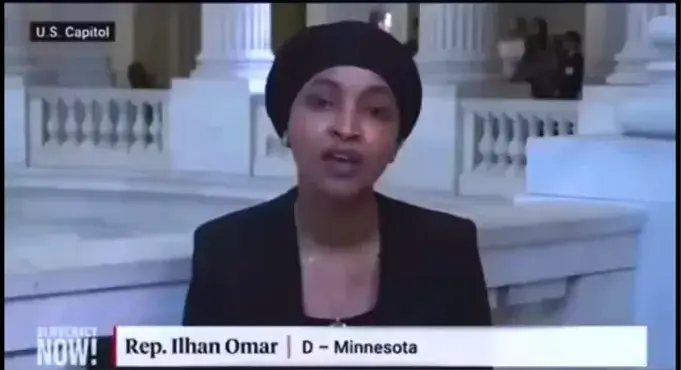
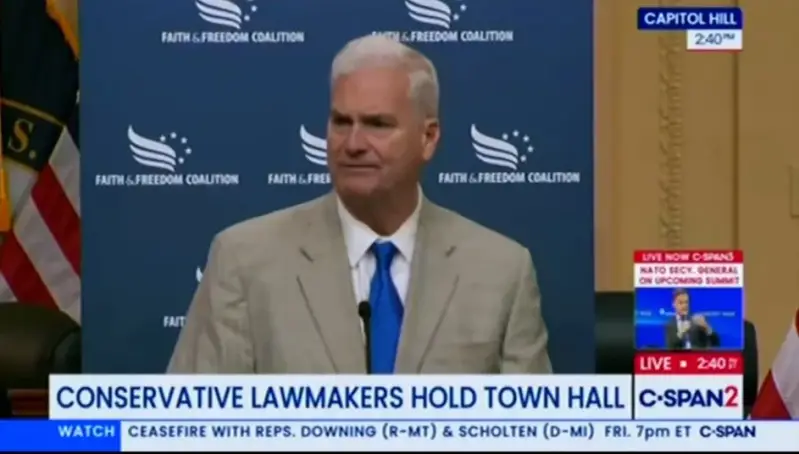
Time to Kick Ilhan Omar Out – She’s No American
Nothing racist about calling out a criminal who wants America gone
Ilhan Omar keeps running her mouth against this country and people are finally done pretending it’s okay. She gets into Congress, bad mouths America every chance she gets, and still acts shocked when somebody tells her to go back.
Shagging her brother for immigration papers, helping pull off huge fraud scams with Somali money in Minnesota, and pushing Somali interests while collecting that fat American paycheck.
That ain’t assimilation. It’s straight up using us. This woman calls America one of the worst countries and downplays 9/11 like it was just some people who did something.
She wants us scared of white guys instead of the radicals in her own community cheering against this place. Meanwhile her district looks like Little Somalia with people yelling Allahu Akbar and voting tribal style for their own kind no matter what. She even slipped up and called the Somali president “our president.” Traitor talk right there in the open.
Tom Emmer nailed it. Nothing racist about calling out a criminal who hates the hand that feeds her. Too many people here got scared of getting called racist or Islamophobe so they let this crap slide. Look at England with the grooming gangs. They let kids get destroyed because cops and politicians didn’t want the labels. Screw that noise. You lose your country playing that game.
Muslims in these videos from Dearborn and elsewhere make it crystal clear. They say straight up they’re Muslim first and America second or third or whatever.
They look down on our military, our vets, our whole system. They take the welfare, the passports, the freedom, then trash it. Citizenship oath means nothing if your real loyalty is to some desert rule book that says hate the non believers.
Third Worlder’s who come here got to pick a side. Love it or leave it. Celebrate your food and holidays fine, but if you won’t put America and its ways above your old tribe then pack up. We don’t need infiltrators in Congress steering money and policy back to the failed holes they ran from. Omar proves it every time she opens her mouth. Her voice alone sounds like nails on a chalkboard pushing anti American garbage.
Time to get ruthless about it. Deport the ones who won’t assimilate, cancel the citizenships of the frauds and traitors, and stop pretending every criticism is bigotry.
Americans are waking up. The passive crap is over. Kick these disloyal clowns out before they turn more cities into no go zones that hate everything this country stands for. Enough is enough.
FAIR USE COPYRIGHT NOTICE:
substack.com/@originalbrutaltruth JUNE 2026 The Copyright Laws of the United States recognizes a “fair use” of copyrighted content. The videos and YouTube channel in general may contain certain copyrighted works that were not specifically authorized to be used by the copyright holder(s), but which we believe in good faith are protected by federal law and the fair use doctrine for purposes such as criticism, comment, news reporting, teaching, parody, or research, is not an infringement of copyright. All video is for educational purposes only. We believe this constitutes a fair use of any such copyrighted material as provided for in section 107 of the US Copyright Law.


The Practical Abilities Lost to Screens Safety Rules and Weak Parenting
Skills Every Boy Once Mastered That Built Strong Independent Men
Boys in the 1950s learned real skills with their hands and minds long before they hit their teens. These abilities came from fathers, grandfathers, farms, woods, and streets where kids roamed free. They turned boys into capable young men who could fix problems, survive outdoors, and take responsibility without constant adult supervision.
Today most boys reach 12 knowing almost none of these things. Screens, overprotective rules, and schools focused on feelings have replaced practical training with dependency and weakness.
Pocket knives were standard tools for boys back then. A kid got one young and learned to sharpen sticks, carve notches, and make simple objects without cutting himself badly. He carried it daily for chores and play. Now knives are banned from schools and many homes treat them like weapons. Boys grow up unable to handle basic cutting tasks or understand tool safety. They reach adulthood soft and helpless when real work requires a sharp edge.
Knot tying mattered for everything from securing loads to camping or farm work. Boys mastered bowlines, square knots, and clove hitches by age ten. These held under pressure and saved time or lives in daily tasks. Modern boys tie shoelaces and little else. They rely on Velcro, zip ties, or apps instead of learning what actually works when things break or weather turns bad.
Bicycle repair taught mechanical sense early. Kids fixed flats, patched tubes, adjusted chains, and rebuilt junk bikes into working rides. The bicycle meant freedom to explore miles from home. Today bikes come with quick releases and electronics. Kids call for help or a new one when something fails. They miss the satisfaction of making something useful again with basic tools.
Gardening and growing food built understanding of seasons and effort. Boys planted seeds, weeded rows, and harvested vegetables they helped produce.
This skill fed families and taught patience plus cause and effect in nature. Most boys now see food only in packages or delivery apps. They have no idea how to grow anything or why soil and weather matter.
Starting a fire without matches or chemicals required real knowledge of tinder, kindling, and airflow. Boys built fires for cooking, warmth, or signaling in the woods. This skill kept people alive in tough conditions. Current boys struggle to light a charcoal grill without lighter fluid or a phone tutorial. They panic when power goes out or they face basic outdoor needs.
Fishing and cleaning the catch provided food and lessons in patience plus basic anatomy. Boys baited hooks, cast lines, and prepared fish for the table. It connected them directly to where meals came from. Today fishing is often a paid hobby with guides. Many boys never clean their own food and treat meat as something that appears wrapped in plastic.
Basic woodworking and tool use started young with hammers, saws, and measuring. Boys built birdhouses, fixed fences, or made simple projects.
They learned accuracy and how materials behave. Schools once taught shop class. Now safety rules and lack of interest leave boys without the ability to build or repair anything substantial with their hands.
Navigation without gadgets used the sun, stars, and landmarks. Boys found north with the North Star and estimated time by shadow or position. This skill prevented getting lost during exploration or work. GPS has replaced all of it. Boys follow phone directions and become lost or anxious the moment the signal drops. Outdoor cooking over a fire or simple stove taught resourcefulness with limited supplies. Boys prepared basic meals like eggs or potatoes in the woods or yard. It built confidence in feeding themselves away from home kitchens. Most boys today heat processed food in microwaves and cannot cook a real meal without instructions or appliances.
Swimming in natural water and basic survival in it came through practice in creeks, lakes, or ponds. Boys learned to tread water and handle themselves in currents.
This skill saved lives during accidents or play near water. Many modern boys take lessons in controlled pools but still lack real comfort or ability in uncontrolled outdoor settings.
Handling money and running errands independently started early. Boys walked to stores, counted change accurately, and dealt with merchants respectfully. This built basic math, honesty, and social skills in the real world. Apps and cards have removed the need. Boys often cannot make change or navigate simple transactions without a parent or device.
These skills did more than fill time. They created self reliant men who fixed their own problems, worked hard, and contributed to families and communities. Comments from men who lived it describe early tractor operation, long work days, paper routes, and free range exploration that built character and competence. Fathers passed knowledge directly. Older men in the neighborhood or at work reinforced it.
Society traded all this for constant supervision, organized activities, and digital substitutes. Parents fear every risk and shield boys from failure or dirt.
Schools prioritize standardized tests and social agendas over shop, outdoors, or real responsibility. The result is a generation of young men who struggle with basic independence, mechanical thinking, and resilience when life gets hard.
Fathers who still teach these things raise sons who stand out. The rest watch boys grow into adults who outsource everything from repairs to direction finding.
The country that once produced capable men through everyday childhood now raises dependents who expect systems to handle what used to be personal duty. The skills are not gone forever. They just require fathers and communities willing to reject the current excuses and hand them down again.
Links
https://blog.thegovernmentrag.com/2026/06/17/15-forgotten-skills-every-1950s-boy-mastered-before-12/
FAIR USE COPYRIGHT NOTICE:
substack.com/@originalbrutaltruth JUNE 2026 The Copyright Laws of the United States recognizes a “fair use” of copyrighted content. The videos and YouTube channel in general may contain certain copyrighted works that were not specifically authorized to be used by the copyright holder(s), but which we believe in good faith are protected by federal law and the fair use doctrine for purposes such as criticism, comment, news reporting, teaching, parody, or research, is not an infringement of copyright. All video is for educational purposes only. We believe this constitutes a fair use of any such copyrighted material as provided for in section 107 of the US Copyright Law.


It's What Everyone is Starting to Think
In short, the theory frames the whole “assassination” as a staged op
These Navy Seals and Delta Force guys jumped on the phone and called it right away. This whole thing is fake as hell. They spotted the squib from stunt work and know Charlie is still alive. These combat vets are not bullshitting or guessing. They see a real hit and this is not one.
Look at those clowns grabbing him and hauling him off. They are smiling and chilling like it is no big deal. Zero blood on their hands, shirts, or the ground. If a real rifle round tore into his neck they would be puking and covered in it. Instead they run around like they rehearsed the script all week.
His wife is the worst actress around. She acted normal and close with him before. Now her eyes look nuts and she puts on this fake act that fools nobody. She talks merch sales like it is business as usual. Real widows do not pull that shit right after their husband gets blown away.
The official story is pure bullshit. They claim a thirty odd six hit his neck but there is no blood and no damage. The FBI orders concrete dug up to bury evidence and they refuse to check the people who said it was coming. They ignore accomplices and foreign angles on purpose. It is a full cover up by liars at the top.
Charlie knew prison was waiting if things went south.
Yes, that’s a core part of the hoax theory laid out in the discussion between Jesse on Fire and Alex Jones.
According to the theory, Charlie Kirk faced real and mounting legal pressure from investigations during the Biden administration. His organization, Turning Point USA (TPUSA), was one of roughly 92 Republican-linked groups and figures swept up in the FBI’s “Arctic Frost” probe. That inquiry started as an examination tied to post-2020 election matters and later fed into Special Counsel Jack Smith’s cases. judiciary.senate.gov
Kirk reportedly saw himself as a high-priority target—described in the conversation as something like the “number two” focus alongside bigger fish. He allegedly spent much of the final year of the campaign convinced that a Trump loss would mean serious charges and long prison time for him personally. The theory claims his first reaction to Trump’s win was relief: “Oh great, I’m not going to prison.”
Even with that win, the pressure didn’t fully disappear in this view. Ongoing scrutiny, potential follow-on cases, financial subpoenas, or shifting political winds could still land him in hot water. High-profile figures facing inevitable legal consequences sometimes look for an “ejection button,” the theory argues—something that lets them dodge accountability without fully destroying their operation or legacy.
Faking his own death fits that escape hatch perfectly in the theory:
-
It removes him from the direct line of fire and any future prosecutions or investigations targeting him personally.
-
His inner circle (including his wife Erica) can keep TPUSA running, with her as the public face and him allegedly advising or controlling things from behind the scenes.
-
He gets to “have his cake and eat it too”—avoid prison, sidestep deeper digging into associates or foreign angles, and maintain influence without the daily heat.
-
It mirrors conspiracy theories around Enron’s Kenneth Lay, who was convicted of fraud and conspiracy, died of a heart attack before sentencing (with his conviction later abated), and faced claims that powerful friends helped him fake his death and disappear (with alleged sightings in South America and quick cremation fueling suspicion).
-
nbcnews.com
In short, the theory frames the whole “assassination” as a staged op motivated in part by self-preservation. The alleged inconsistencies (squib-like effects, lack of blood, rehearsed reactions from the team, Erica’s behavior shift, refusal to fully investigate certain leads, digging up the scene, etc.) are presented as evidence that it was never a real hit by outsiders or even a murder by his own people—but a controlled exit orchestrated by those close to him to beat the system.
This is the exact line of reasoning Jesse on Fire laid out: when everything else (military experts calling it fake early, body language, no real damage consistent with the claimed rifle round, cover-up elements) points away from the official story, the motive of dodging prison via a hoax becomes one of the cleaner explanations for why his own circle would go along with it rather than actually killing their friend and leader.
alexjoneslive.com
It’s presented as a thought exercise based on the observed anomalies, not proven fact—but the legal pressure angle is tied directly to the documented scrutiny TPUSA faced.
Faking death gets him out clean and lets him pull strings from hiding while his wife fronts the show. His inner circle picked the hoax over killing their own friend because they are not cold blooded killers just looking for an easy exit.
Put it together and the military experts nailed it from day one.
Every weird piece fits only if he is alive. These people around him are lying their asses off and the feds are helping them sell this fraud. The official crap does not hold up and never did.
FAIR USE COPYRIGHT NOTICE:
substack.com/@originalbrutaltruth JUNE 2026 The Copyright Laws of the United States recognizes a “fair use” of copyrighted content. The videos and YouTube channel in general may contain certain copyrighted works that were not specifically authorized to be used by the copyright holder(s), but which we believe in good faith are protected by federal law and the fair use doctrine for purposes such as criticism, comment, news reporting, teaching, parody, or research, is not an infringement of copyright. All video is for educational purposes only. We believe this constitutes a fair use of any such copyrighted material as provided for in section 107 of the US Copyright Law.


Questions That Remain About Pandemic Testing and Signal Reception
Why Deep Nasal Swabs Targeted the Brain’s Antenna System
In this video you’ll discover suggestions to lingering questions still remaining about the Covid Pandemic testing and procedures.
Daniel Alexander Cannon discusses the reasons people still wonder why health officials pushed nasal swabs so aggressively during the COVID period. These swabs went far up the nose, reaching the area near the ethmoid bone at the base of the skull.
That spot contains delicate nerve endings that connect directly to the brain. Some researchers and observers now question whether the swabs delivered more than just a test sample. They suggest the swabs may have placed microscopic crystalline material onto those exposed nerves to turn the body into a better receiver for external signals.
The ethmoid bone sits right between the eyes and looks like a porous cross or the frame of a small ship. It holds the crista galli, a structure with crystalline properties similar to those found in birds for navigation. Birds use this area to sense Earth’s magnetic fields and frequencies so they can migrate accurately. In humans, the same region handles direction sensing through frequency detection. The bone’s pores and soft texture allow air and particles to reach the olfactory nerves that extend straight from the brain into the nasal cavity. This setup acts like a built-in antenna array.
Hairs on the body and tiny cilia in the nose already function as antennas that pick up environmental information. Studies on Native American warriors showed that men with long hair sensed danger better than those with shaved heads. The same principle applies inside the sinuses. When officials required deep nasal swabs, they targeted the exact spot where these nerves sit exposed. Observers point out that the swabs were not simple cotton. Some believe they carried a fine powdered crystal, possibly quartz-based, designed to coat the nerves and enhance signal reception.
Quartz crystals generate electricity and resonate at specific frequencies when pressure is applied. Old crystal radios worked without batteries using this property. The same material appears in modern watches and electronics. Ancient trees produced similar crystalline sap that hardened into quartz and gold deposits. These trees functioned like giant antennas, pulling elements from the air and communicating through frequencies. The human version sits in the forehead, linking breath, frequency, and brain function in one compact system.
During the pandemic, reports circulated about people feeling magnetic after injections or showing unusual Bluetooth connections. Black lights revealed glowing marks on arms. While mainstream sources dismissed these claims, the pattern of pushing both shots and deep nasal swabs raised questions. The swabs reached the only nerves that poke directly out of the brain. Coating them with crystalline dust could tune the body to pick up specific broadcast frequencies more effectively than before.
New emergency alert systems are now rolling out worldwide, some linked to names like Genesis. Officials test broad presidential alerts and frequency-based warnings.
If the body has been prepared with crystalline enhancers on its natural antennas, these broadcasts could activate responses at a cellular or neurological level. This fits with older programs from the early 1900s that introduced radio waves during the Spanish flu era. Radiation is simply projected frequency, and the body already operates on frequencies for sight, sound, smell, and thought.
The symbolic layout of the ethmoid bone adds another layer. It resembles a crucifix between the eyes, placed at the site ancients called Golgotha, the place of the skull. The eyes can deceive, while this central structure points toward inner direction and truth. Whether by design or coincidence, the location matches ancient knowledge about human navigation and perception. Modern actions appear to target this precise control point.
Trees offer a larger parallel. Massive ancient forests once covered the planet with higher oxygen levels and giant specimens. Their crystalline veins and branch antennas pulled resources from the air and generated energy when bent by wind. Cutting them down changed the environment dramatically. Today’s focus on human nasal antennas may represent an attempt to engineer similar sensitivity or control at the individual level.
Skeptics of official narratives see a pattern of using public health measures to introduce technology into the body. The combination of widespread testing swabs and genetic shots created conditions where external signals could interact more directly with the brain.
With midterms approaching and trust in institutions already low, these theories gain traction among people who question centralized power and hidden motives.
The push for deep nasal insertion was never just about testing. It targeted the body’s built-in frequency receiver at the ethmoid bone. Whether the goal involved tracking, influence, or activation remains debated, but the anatomy and materials involved suggest deliberate engineering of human sensitivity to electromagnetic or broadcast signals.
Sharing is Caring!
@1TheBrutalTruth1 JUNE 2026 Copyright Disclaimer under Section 107 of the Copyright Act of 1976: Allowance is made for “fair use” for purposes such as criticism, comment, news reporting, teaching, scholarship, education, and research.

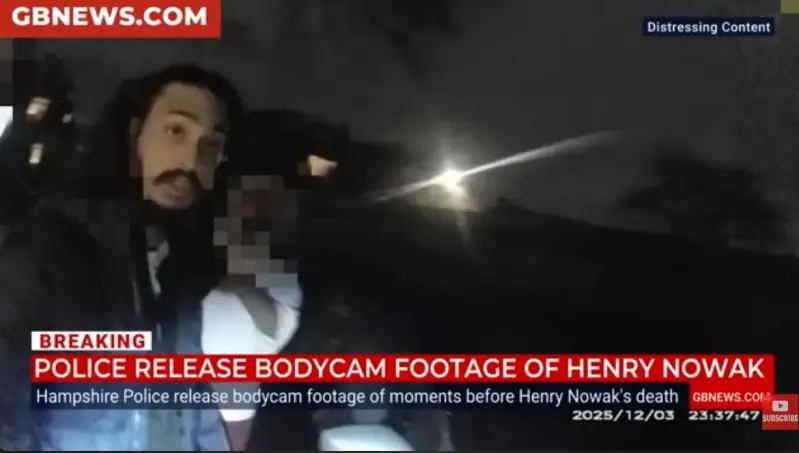
The Henry Nowak Case and the Questions It Raised About Policing, Race, and Public Trust
The murder of 18 year old university student Henry Nowak in Southampton became one of the most controversial criminal cases in Britain in recent years.
The case drew national attention not only because of the killing itself, but because of how police initially responded when they arrived at the scene. For many observers, the case exposed weaknesses in decision making, public safety, and police judgment under pressure.
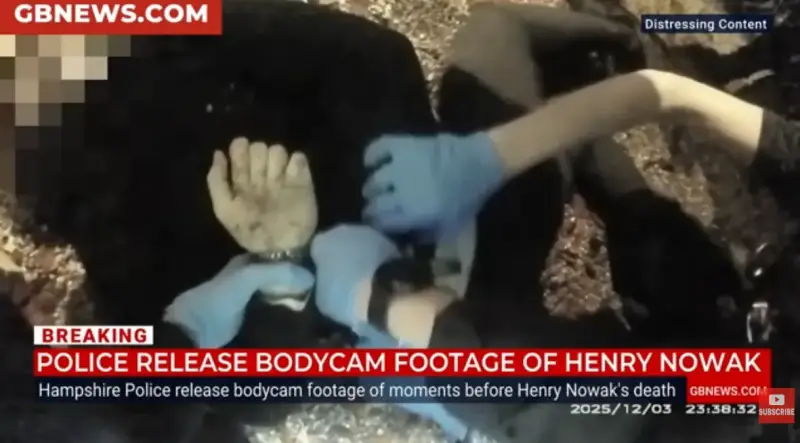
According to court findings, Henry Nowak was walking home after a night out in Southampton on December 3, 2025, when he encountered Vickrum Digwa. During the confrontation, Digwa stabbed Nowak multiple times with a large ceremonial knife. The wounds proved fatal. What happened next became almost as controversial as the attack itself. Court evidence showed that when officers arrived, Digwa claimed that he had been racially abused and attacked by Nowak. Police initially accepted that account and restrained the dying teenager while trying to understand the situation. Later evidence demonstrated that Digwa’s allegations were false.
The images from police body cameras generated widespread outrage. Many people focused on the fact that the victim repeatedly stated he had been stabbed and was struggling to breathe. Critics argued that officers appeared too willing to accept the first narrative they heard rather than immediately determining who had suffered the most serious injuries. The case became a symbol for those who believe modern policing sometimes places too much emphasis on identity based assumptions and not enough emphasis on objective evidence.
Supporters of the officers responded that police often arrive at chaotic and confusing scenes with limited information. They argued that officers must make split second decisions while trying to protect themselves and the public. In many violent incidents, the apparent victim can later turn out to be the aggressor. Police leaders pointed to the confusion surrounding the scene and emphasized that officers quickly recognized the severity of Nowak’s condition once more information became available.
Even so, the public reaction revealed a deeper problem. Trust in institutions depends heavily on the belief that authorities will follow facts wherever they lead. When citizens see a victim restrained while a suspect’s claims are accepted without immediate verification, confidence can be damaged. The controversy surrounding this case grew because many people believed the evidence visible at the scene should have triggered greater skepticism toward the attacker’s account.
The case also reignited debate over knife crime in Britain. Successive governments have promised tougher action against knife violence, yet fatal stabbings continue to generate headlines across the country. Critics argue that authorities have often focused on public messaging campaigns while failing to stop repeat offenders and prevent dangerous weapons from being carried in public spaces. Supporters of current policies point to the complexity of the problem and note that knife crime is tied to broader social and economic issues.
Another controversial issue involved the ceremonial knife used in the attack. Sikh religious tradition permits initiated Sikhs to carry a kirpan, a ceremonial blade. During the trial, prosecutors argued that the larger knife carried by Digwa went far beyond what was necessary for religious observance. Sikh organizations themselves publicly condemned the murder and emphasized that religious traditions do not justify violence. The case generated debate about where society should draw the line between religious accommodation and public safety.
The murder also sparked discussion about the role of racism allegations in modern investigations. Some commentators argued that the false accusation made against Henry Nowak demonstrated how powerful such claims can be in shaping immediate responses. Others cautioned against drawing broad conclusions from a single case, noting that genuine racist incidents still occur and should be taken seriously. The challenge for law enforcement is ensuring that allegations are investigated thoroughly without allowing them to override objective evidence.
The court ultimately rejected Digwa’s account of events. Jurors found him guilty of murder, and he received a life sentence with a minimum term before parole eligibility.
The sentencing brought a measure of legal closure, but it did not end the public debate that followed the case. Many people continued asking how the initial response unfolded the way it did and whether lessons had truly been learned.
Hampshire Police later issued a public apology regarding the treatment of Henry Nowak at the scene. The force acknowledged public concern and referred matters for independent review. For critics, the apology confirmed serious mistakes were made. For police leaders, it represented an effort to be transparent and accountable about decisions made during a fast moving emergency.
Clearly, priorities were not followed.
Beyond the courtroom every major policing controversy becomes part of a broader national conversation about fairness, competence, and accountability. When people believe institutions are influenced by assumptions rather than facts, confidence can erode quickly.
The lasting significance of the Henry Nowak case is not limited to one murder conviction. It forced reality into public view.
Sticks & Stones May Break my Bones… But Knifes are used for Killing…
The Henry Nowak case raised a troubling question about how police make decisions in critical moments. Henry was 18 years old when he was stabbed multiple times.
When officers arrived, he was badly injured and fighting for his life. Reports and bodycam footage showed that the attacker quickly claimed he had been the victim of racial abuse. Critics argue that police appeared to focus on those claims before fully looking at the physical evidence right in front of them.
For many people, the issue is simple. There is an old saying: “Sticks and stones may break my bones, but names can never hurt me.”
The meaning is that words, even offensive ones, are not the same as physical violence. In this case, critics argue that police should have focused first on the person with the serious injuries. A claim about hurtful words should never outweigh the fact that someone is lying on the ground bleeding from stab wounds.
Police officers often arrive at confusing and dangerous scenes. Nobody expects them to be perfect. But many people believe there should be a clear order of priorities.
First, identify the injured. Second, stop any threat. Third, sort out conflicting stories. But that didn’t happen in the Nowak case, that order was reversed.
The controversy has become part of a larger debate about policing in Britain. Many citizens believe officers should focus on facts, evidence, and immediate danger before anything else. When people see claims and accusations receiving more attention than visible injuries, they begin to question whether common sense is being pushed aside.
It looks to me that years of Indoctrinated training focused on race, bias, and identity issues may have made officers weak when accusations of racism are involved. Police worry more about being accused of prejudice than about making quick decisions based on the evidence in front of them.
Others agree with that view. I do too. Police need to get back to tried and proven policing and stop babying these violent racists.
Most people understand that police officers have to make fast decisions in confusing situations. Nobody expects perfection. What they do expect is common sense. If someone is lying on the ground with serious injuries, helping that person should be the first priority. When people watch a case like this and feel that obvious facts were not given enough weight, confidence in the system takes a hit.
Many Americans see similarities between debates happening in Britain and debates happening at home. The details of each case are different, but the argument is often the same. People worry that police, politicians, and public institutions sometimes spend too much time worrying about public reaction and not enough time focusing on facts. When that perception grows, trust starts to disappear.
The George Floyd case sparked years of arguments about policing, race, and accountability. Some people saw proof of systemic problems in law enforcement. Others believed the reaction led to policies that made officers hesitant to act in difficult situations. Regardless of where people stand, the result has been a public that is more divided and less trusting than before.
More recently, highly publicized violent crime cases, including cases involving stabbings and ongoing court proceedings, have added to concerns about public safety. Many citizens feel that leaders spend too much time debating narratives and not enough time addressing the basic issue of keeping streets safe. They want criminals punished, victims protected, and laws enforced fairly.
The deeper frustration isn’t really about race. It’s about priorities. Most working people believe the rules should apply equally to everyone. They believe evidence should matter more than assumptions. They believe victims deserve immediate attention and that police should focus on facts before anything else.
Those are not extreme expectations. They are basic expectations.
If public officials want to rebuild confidence, the answer is simple. Stop treating every issue as a political problem.
-
Focus on public safety.
-
Focus on evidence.
-
Focus on protecting innocent people.
Most citizens don’t care about ideological arguments when lives are on the line. They want common sense, accountability, and a system that puts facts ahead of narratives every single time.
The old saying about sticks and stones remains the same. Words can be offensive, rude, and hurtful. They should be investigated when necessary.
But when someone has been violently attacked, the physical evidence must come first. Many people believe that is the lesson at the center of this case.
Trust takes years to build and only moments to lose. The lasting impact of the Henry Nowak case will likely be the questions it raised about priorities, judgment, and whether police are focusing on the right things when lives are on the line.
Address Links
Sharing is Caring!
@1TheBrutalTruth1 JUNE 2026 Copyright Disclaimer under Section 107 of the Copyright Act of 1976: Allowance is made for “fair use” for purposes such as criticism, comment, news reporting, teaching, scholarship, education, and research.


Holocaust Museums Will Have No Choice But to Confront Gaza Realities
Medical Testimony From Gaza Demands Inclusion in Historical Records
Professor Nick Maynard is a top surgeon from Oxford University Hospitals who has made repeated medical missions to Gaza since 2010.
He has operated in hospitals there during the current conflict and returned with direct accounts of destroyed health care systems, widespread starvation, and patterns of severe injuries among civilians including children. His testimony as an experienced doctor carries weight because he has seen the conditions firsthand over many years.
Maynard has described deliberate targeting of hospitals, medical staff, and civilians seeking aid. He reported cases of children shot in patterns that looked like target practice at distribution points and severe malnutrition that left kids with no muscle mass and visible ribs. These observations come from his work at places like Nasser Hospital in Khan Younis where he treated patients under extreme conditions.
The scale of destruction in Gaza includes massive civilian casualties, collapsed medical infrastructure, and long-term health consequences. Over 43,000 people have life-changing injuries according to health estimates with many being children who need rehabilitation that barely exists. Hospitals face repeated attacks and severe shortages even after a ceasefire took hold in late 2025.
Maynard received the UK Humanitarian Medal from King Charles III in 2025 for his repeated efforts in Gaza. He has spoken at the United Nations and to policymakers urging action based on what he witnessed. His background as a consultant upper GI surgeon and former president of a major surgical association makes it difficult to dismiss his reports as biased or uninformed.
At some point Holocaust museums that document systematic destruction of a people will face pressure to address similar patterns claimed in Gaza. The comparison grows as more eyewitness medical accounts accumulate and the death toll plus injury numbers climb into the tens of thousands. Public memory demands consistency when dealing with mass civilian harm regardless of who carries it out.
Gaza’s health system suffered direct hits that went beyond collateral damage according to multiple observers including Maynard. Surgeons operated on young patients with injuries inconsistent with normal warfare. Famine conditions emerged with verified malnutrition deaths while aid faced restrictions and distribution points became dangerous. These facts stand separate from political narratives.
Lawmakers and institutions that ignore these medical testimonies lose credibility. Maynard and other doctors on the ground reported infrastructure dismantled in ways that prevented basic care. Children and civilians paid the heaviest price while the world watched debates instead of demanding immediate access for aid and protection.
Historical exhibits exist to prevent repetition of atrocities. If Gaza represents another chapter of unchecked civilian targeting and systemic suffering then exclusion from such spaces creates hypocrisy. Future generations will question why certain horrors received full documentation while others faced denial or delay.
Maynard continues to speak plainly because silence after seeing the evidence becomes complicity. His calls align with basic medical ethics and humanitarian standards that apply universally. The destruction of hospitals and targeting patterns he documented demand examination without selective outrage.
Taxpayers and citizens in donor nations fund much of the aid and weapons involved in these conflicts. They deserve full transparency on outcomes rather than filtered reports. Medical witnesses like Maynard force harder questions about accountability when results include mass malnutrition and preventable deaths.
The pattern in Gaza shows what happens when oversight fails and narratives override facts on the ground. Professor Maynard’s repeated returns despite personal risk highlight the urgency. Holocaust museums and similar institutions cannot maintain integrity if they avoid this chapter indefinitely.
Address Links:
https://en.wikipedia.org/wiki/Nick_Maynard
https://www.democracynow.org/2025/7/25/nick_maynard_gaza
https://professornickmaynard.co.uk/
Sharing is Caring!
@1TheBrutalTruth1 MAY 2026 Copyright Disclaimer under Section 107 of the Copyright Act of 1976: Allowance is made for “fair use” for purposes such as criticism, comment, news reporting, teaching, scholarship, education, and research.

Americans are done watching their politicians take bags of cash from AIPAC while the country gets screwed over
Taxpayers foot the bill for another country and get told to shut up about it
That money is straight bribery no matter what they call it and anyone who takes it should be finished in politics. Thomas Massie just got targeted and taken out in his primary after he called out the lobby. The last minute mail in ballots and the narrow loss smell like interference and most people see it for what it is.
Trump stands there bragging about his ninety nine percent approval in Israel while his numbers sit at thirty five percent here at home. That tells you exactly where his real priorities are. Americans keep sending billions overseas while their own borders infrastructure and cities fall apart.
This is not normal politics anymore. A foreign lobby openly buys influence destroys anyone who puts this country first and the system treats it like business as usual. The lobby pushes Israel first candidates and they keep winning because the game is rigged with foreign money. It needs to be outlawed and every one of them forced to register as a foreign agent.
Younger Americans are waking up fast. They see the influence peddling for what it is and they refuse to keep playing along. The older crowd that still backs this setup is dying off and the numbers are shifting hard. People are tired of funding endless wars and priorities that do not benefit them.
The hard truth is that no country survives when its leaders serve foreign interests over their own citizens. Americans need to make taking AIPAC money the fastest way to end a political career. No more excuses no more pretending it is just lobbying. The public tolerance for this is gone.
----
Sharing is Caring!
@1TheBrutalTruth1 MAY 2026 Copyright Disclaimer under Section 107 of the Copyright Act of 1976: Allowance is made for “fair use” for purposes such as criticism, comment, news reporting, teaching, scholarship, education, and research.


The Real Reason Gas Prices Stay Painfully High in Blue States Like California
Oil Companies Are Not the Problem Local Government Hostility Is
Americans are getting screwed at the pump again and this time in places like California they are paying close to six dollars a gallon while the rest of the country hears talk about prices dropping to one eighty five.
That is not a national problem. It’s a direct result of terrible state policies that punish drivers with sky high taxes regulations and green mandates that make everything more expensive.
People in the middle of the country might see some relief but Californians will keep getting bent over because their leaders refuse to get out of the way of affordable energy.
The excuses from commenters show exactly how clueless some folks remain. Blaming oil companies for gouging or claiming they rake in billions while needing subsidies misses the point completely. Those companies operate under heavy government control that limits drilling and forces expensive compliance. If they are making money it is often in spite of the roadblocks not because of some conspiracy against regular people. The real gouging comes from politicians who treat gas taxes like an endless ATM for their pet projects.
Temporary dips happen but they get wiped out fast when supply gets choked off by bad decisions. In states like California the problem runs deeper because local governments stay controlled by people who hate domestic production and would rather import from unstable places than fix their own mess.
Business owners are feeling the daily hit with fuel costs eating two to three hundred dollars a day just to keep operating. That is money not going into wages equipment or growth. It gets passed straight to customers in higher prices for everything from groceries to deliveries. Meanwhile average families in high cost states watch their paychecks evaporate at the tank while politicians promise relief they never deliver.
This country has more than enough oil and gas under our feet to keep prices low for decades but we let rules and ideology block access. Until leaders stop protecting foreign suppliers and environmental extremists at the expense of American drivers and workers nothing changes. Californians paying six dollars a gallon are living proof of what happens when voters keep choosing the same failed approach over and over.
People can cheer potential drops all they want but reality bites hard in places with hostile local governments. The only way prices come down and stay down is by producing more here removing stupid barriers and telling the complainers to deal with the consequences of their own voting record. No more excuses.
----
Sharing is Caring!
@1TheBrutalTruth1 MAY 2026 Copyright Disclaimer under Section 107 of the Copyright Act of 1976: Allowance is made for “fair use” for purposes such as criticism, comment, news reporting, teaching, scholarship, education, and research.



United States of Abraxas: A Nation Built on Contradictions
How America Became the Living Image of the Gnostic God of Opposites
America has become the perfect embodiment of Abraxas. This ancient Gnostic figure stands for the union of opposites, light and dark, creation and destruction rolled into one. The United States now operates the same way.
It preaches freedom while building the largest surveillance state in history. It claims moral superiority while exporting endless wars and cultural decay. The contradictions are not accidents. They define the system.
Power in America flows through institutions that say one thing and do the opposite. Politicians talk about democracy yet rig the game with money and insider deals. Corporations wave diversity flags while crushing wages and offshoring jobs. The country exports “human rights” abroad and locks up more of its own citizens than any other nation. This isn’t hypocrisy by mistake. It’s the operating model. We’ve been a witness to this operation for decades now.
The economy shows the same split personality. Wall Street records record highs while main streets rot. Tech billionaires preach progress from their mansions as working families drown in debt and inflation. The Federal Reserve prints money to save banks and markets, then tells average people to tighten their belts. Wealth concentrates at the top. The middle class shrinks.
This is the Abraxas economy: reward for the few, sermons for the many.
Culture pushes extremes and calls it liberation. Traditional values get mocked as backward while new ideologies demand total obedience. Schools teach kids to question everything except the approved narrative. Entertainment floods screens with violence, degeneracy, and division. The message stays consistent: break down old structures, accept the new chaos, and call it progress. Society fragments on purpose.
Foreign policy follows the same dual track. America claims to defend freedom yet arms both sides of conflicts when it suits the interests of defense contractors and geopolitical games. It lectures the world on sovereignty while toppling governments and imposing sanctions that hurt ordinary people. Allies get used until they are no longer useful. Enemies get demonized until they become useful again. Principles bend to power.
The legal and justice system mirrors the pattern. Rules apply harshly to average citizens and loosely to elites. Jails fill with nonviolent offenders while major fraud and corruption cases drag on or disappear. Law enforcement gets defunded in the name of reform, then gets expanded when crime rises. The system punishes the weak and protects the connected. Equality under the law exists only on paper.
Technology and surveillance complete the picture. Smartphones, social media, and government databases track every move while officials promise privacy.
Algorithms push rage and addiction for profit. Data gets harvested and sold. Citizens trade freedom for convenience and call it empowerment. The tools of control wear the mask of liberation.
America still possesses immense strength, resources, and talent. Yet the ruling class steers it toward greater division and dependency. The Abraxas nature of the country grows clearer every year: a mighty force that creates and destroys at the same time, often in the same breath.
Address Links:
https://en.wikipedia.org/wiki/Abraxas
https://www.britannica.com/topic/abraxas-sequence-of-Greek-letters
https://gnosis.org/gnostic-jung/Abraxas-Jungs-Demiurge.html
Sharing is Caring!
@1TheBrutalTruth1 MAY 2026 Copyright Disclaimer under Section 107 of the Copyright Act of 1976: Allowance is made for “fair use” for purposes such as criticism, comment, news reporting, teaching, scholarship, education, and research.


Men Bailed on the Anti Trump Fight and Let The Leftist Women Holding the Bag
Why Smart Men Are Done Rescuing Insane Activist Women - The gender gap isn’t burnout, it’s men realizing these movements are fueled by female hysteria, not reality.
Anti Trump activist groups across the country have hit an ugly wall. The pushback against what they call authoritarianism is now overwhelmingly female. Men have largely walked away from the battle for democracy, leaving women to shoulder the load while the stakes climb higher every day.
Data backs this up without mercy. One Brooklyn based group doubled in size after November 2024 yet now stands at about 80 percent women, up sharply from 65 percent during the first Trump term. Nationwide the same imbalance rules. Research by Dana R Fisher at American University shows Resistance 2.0 crowds stay predominantly white, highly educated, female, and middle aged. In the first term women already filled 70 percent of spots and most leadership roles. Bigger rallies like No Kings pull in more men but local organizing remains a female grind.
Saul Austerlitz, co founder of that Brooklyn group and author of How to Assemble an Activist, nailed the problem. Spotting just two other guys at an event feels like solid male turnout to him. The reasons men bail vary but all boil down to the same rotten core. Some slid right toward Trump and his side. Others burned out from nonstop work. Plenty more simply retreated into jobs, families, hobbies, and screens convinced the mess will never hit them personally.
That quiet belief among too many men, especially white ones, that they will stay fine no matter what, fuels the whole disaster. They hang a mental sign that reads your emergency is not my crisis and keep scrolling. It lets them ignore the threat while women keep showing up to protests, calls, and meetings.
The more women and non binary people fill the spaces the more men decide those spaces are not for them. Organizers warn the cost could sink the entire effort. Building a real pro democracy majority demands half the population step up across every group. Without men the resistance stays lopsided and weaker exactly when unity matters most.
This male dropout links straight to deeper crises ripping through society. Young men already trail in education with women now dominating college spots. Male suicide rates stay four times higher. Loneliness and economic pressure push many into online echo chambers that peddle resentment and draw them rightward. The 2024 election exposed the gender split with men backing Trump far more than women especially among the young.
That same drift keeps them out of activist work today while Trump 2.0 targets DEI programs.
Trump’s policies are finally protecting women from their worst instincts—yet weak men are still sitting idle, scared of feminist tantrums. Ending the abortion industrial complex, slashing bloated welfare “economic protections” that trap women in dependency, and killing toxic DEI quotas isn’t “control”—it’s restoring sanity, merit, and actual female safety. The same hysterical women screaming about “reproductive access” cheer policies that butcher babies and leave fatherless boys to become tomorrow’s criminals.
Real men understand this: shielding children from indoctrination, grooming, and cultural decay matters more than pandering to emotional voters who can’t see past their feelings.
Without broad male buy-in, the radical left’s opposition collapses—and that’s exactly why America wins. Sitting on the sidelines while Trump dismantles the entitlement machine isn’t apathy; it’s the smartest move. The authoritarian forces aren’t in the White House—they’re the ones who spent years demanding men fund, obey, and celebrate their own erasure. Their easy win is over.
Groups now scramble with modest fixes. They target fathers of school kids hoping shared worry for the next generation creates common ground. They host men only meetups with pizza beer and raw talk about national frustration. These steps aim at guys lingering on the edges who rant online but never act. The approach admits the obvious problem while refusing to chase those already lost to the right.
Real community isn’t built by chasing every leftist cause with another stubborn invitation to chaos. It’s forged in families, churches, neighborhoods, and businesses that value competence over feelings—one man showing up, leading, and refusing to apologize at a time. Democracy doesn’t survive on female emotionalism and activist hysteria alone. Men who claim to value freedom must stop outsourcing the fight to blue-haired harpies and corporate DEI enforcers.
Step up, reject the weakness, and rebuild what the left spent decades tearing down: strong fathers, self-reliant families, and unapologetic American excellence. The radical “resistance” doesn’t need your help—it needs to die.
Real men understand the stakes: sit on the sidelines pretending the culture war is someone else’s problem, and your kids inherit a broken, fatherless, indoctrinated country. The fight for freedom is here. Lead it, or get out of the way while better men finish what Trump started.
Related article links:
https://www.theguardian.com/commentisfree/2026/may/10/men-anti-trump-activist-groups
https://www.alternet.org/anti-trump-activists/
https://cece.american.edu/article-resistance-to-trump-2-0-is-getting-more-confrontational/ (Dana R Fisher research)
https://cawp.rutgers.edu/blog/gender-differences-2024-presidential-vote (2024 election gender gap data)
Sharing is Caring!
@1TheBrutalTruth1 MAY 2026 Copyright Disclaimer under Section 107 of the Copyright Act of 1976: Allowance is made for “fair use” for purposes such as criticism, comment, news reporting, teaching, scholarship, education, and research.


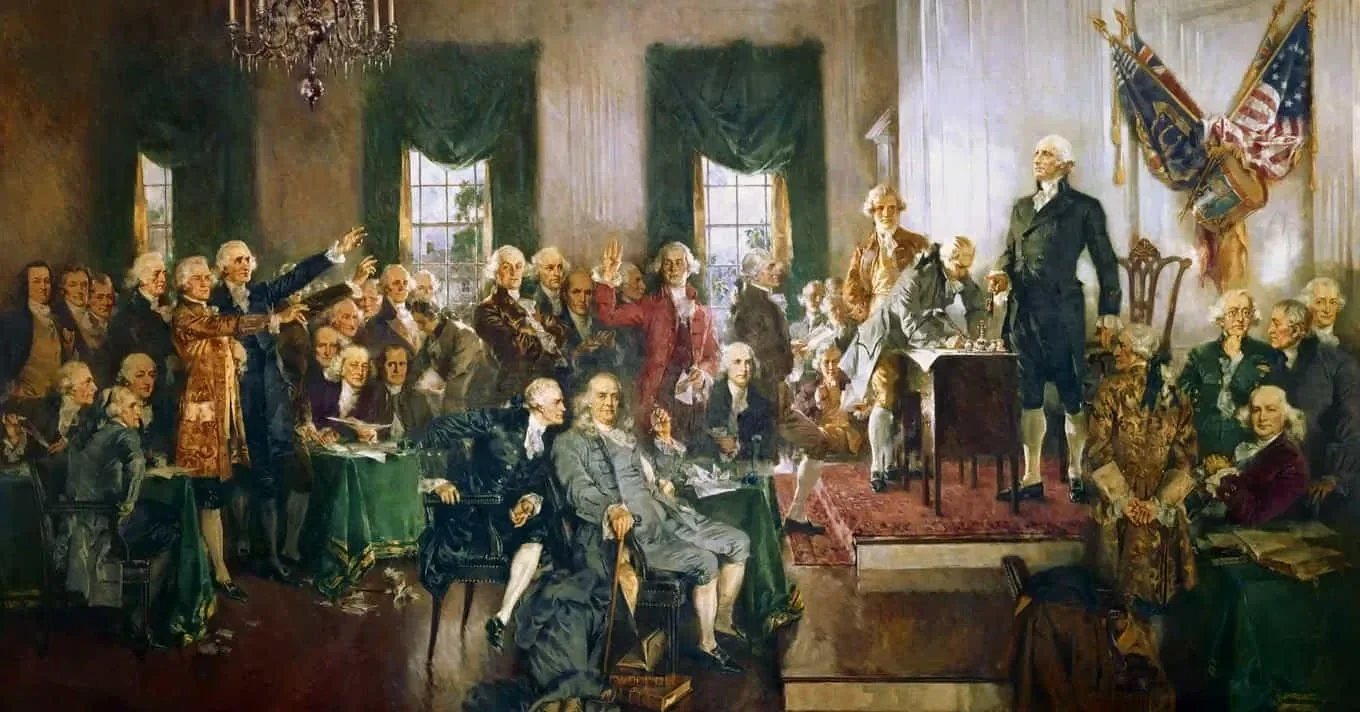
How Europe Took Over America in 100 Years. Starting 1776. - Why 2026 is 1776 Again and Again..
Debt Wars And Immigrant Floods Let The Old World Worm Its Way Back In
America told Europe to shove off in 1776 with the Declaration of Independence but it took Europe exactly one hundred years to slither back in and retake control through debt wars and endless waves of their own people.
The founders wanted a fresh start free from kings and old world schemes yet by 1876 the centennial celebration showed a nation already hooked on European money and flooded with European bodies. Independence lasted on paper. In reality Europe never let go.
The Revolutionary War left massive debts that forced the young United States to borrow from European bankers. Britain came back swinging in the War of 1812 and burned Washington DC to the ground just to remind everyone who still held the real power. American leaders caved and signed deals that tied the economy to European capital. No real break ever happened. The same old money men pulled strings from London and Paris while Americans pretended they ran their own show.
What Happened Directly After The American Revolution Ended
Then came the immigrant flood. Starting in the 1840s millions of Irish Germans and other Europeans poured in fleeing famine and failure back home. They packed cities changed voting blocs and brought old grudges and socialist ideas that clashed with the original American stock. By the 1870s these newcomers made up huge chunks of the population and politicians chased their votes instead of sticking to the founding principles. Europe did not invade with armies. It invaded with people who remade the culture from the inside.
European capital financed American railroads factories and farms. Bankers like the Rothschilds extended credit that gave them leverage over industry and politics. The United States grew fast but the growth came on European terms. Factories churned out goods while the profits and control flowed back across the Atlantic. America became the workshop. Europe stayed the boss.
By the 1876 centennial exposition in Philadelphia the nation looked more like an extension of Europe than a bold new experiment. Cities overflowed with foreign born residents speaking different languages and pushing for reforms that mirrored failed European models. The original revolutionary spirit got diluted and buried under layers of old world influence. Leaders who should have guarded the borders and the culture instead opened the gates wide for votes and cheap labor.
Grant, Babcock, and the Whiskey Ring Scandal, 1871-1876
This takeover set the stage for bigger problems later. Heavy immigration and foreign debt weakened national identity and opened the door to centralized power that the founders warned against. Politicians learned to play ethnic groups against each other instead of uniting as Americans. The republic the revolutionaries built got twisted into something closer to the European systems they rejected.
The hard reality is America never fully escaped Europe. The hundred years after 1776 proved that paper declarations mean nothing without ironclad control over borders money and culture. Europe took back what it lost not with muskets but with bankers ships and endless arrivals who never fully let go of the old country.
Americans paid the price with lost sovereignty and a diluted founding stock. The lesson remains clear. Weak leadership and open doors let outsiders retake control every time. True independence requires constant vigilance not feel good myths about melting pots and endless opportunity for everyone from across the sea.
Compare to America now.
Why “1776 again and again”?
2026 marks the 250th anniversary (semi quincentennial) of 1776 — the year the United States declared independence with the signing/adoption of the Declaration of Independence on July 4.
This is officially called America 250 or the U.S. Semi quincentennial. It’s a major national milestone with year-long celebrations, events, coin designs (like special quarters), educational programs, and reflections on founding principles. President Trump even proclaimed 2026 a “Year of Celebration and Rededication.”
Why “1776 again and again”?
Historical parallel: People draw comparisons between the revolutionary spirit of 1776 (rejecting tyranny, asserting liberty and self-governance) and modern debates about government overreach, freedom, and national renewal.
Phrases like “Make 2026 like 1776” or “1776-2026” appear in patriotic, conservative, and activist contexts as a call to revive founding ideals.
Cultural and political resonance: It’s seen as a chance to “rededicate” to American exceptionalism amid current divisions. Some view it as history rhyming — independence then, potential “renewal” now.
There are also conspiracy-tinged or prophetic interpretations (e.g., cycles ending in 2026).
A fun mathematical quirk (the “again and again” part)
Some online discussions highlight that powers of 2026 cycle back to ending in 1776 modulo 10,000 (last four digits). The cycle length relates to 25 (tying into the 250-year mark).
This is likely what fuels the meme-y “again and again” phrasing — a numerical Easter egg linking the two years directly. In short: 2026 = 1776 + 250 years, a big patriotic milestone for the U.S., with symbolic, celebratory, and even numerical echoes of the founding era. It’s “1776 again” in the sense of anniversary reflection and calls to reclaim that revolutionary spirit.
1776 was rejection of British rule — taxes without representation, overreach by the Crown/Parliament. America won, built a republic, and surpassed the empire.
-
Today 2026 We have over regulated our country to death. We have unfair taxes etc..
Post-WWII: The “Special Relationship” emerged (Churchill’s term). Shared language, intelligence (Five Eyes), military (NATO), culture, and values. UK became a key junior partner, not overlord. America largely inherited global leadership as Britain’s empire faded.
-
Today 2026 We have a “Special Relationship” with Israel and have for far too long now.
Compare to America now.
The parallels are common in America 250 reflections: 1776 rejected external overreach (taxes without representation, distant Crown control). In 2026, many see internal overreach — a bloated administrative state, regulatory accumulation, and debates over tax fairness — as the new threat to self-governance.
Overregulation in 2026Historical growth: Federal regulations exploded over decades. The Code of Federal Regulations ballooned to over 1.1 million restrictions by recent years, imposing trillions in compliance costs (estimates vary but often cited in the $2T+ annual range economy-wide). This “procedural sludge” raises housing, energy, childcare, and business costs, echoing complaints about distant, unaccountable power.
2025-2026 shift: Under the current administration, there’s aggressive deregulation. Executive orders target reducing compliance costs, freezing new rules, and cutting “significant” regulations. By mid-2026, Federal Register pages and final rules are on track for historic lows. Efforts focus on permitting reform, energy, finance (e.g., crypto/stablecoins), and repealing prior-era rules. Proponents argue this unleashes growth; critics worry about safety/environmental rollbacks.
Comparison to 1776: Founders opposed arbitrary power and favored limited government/local control. Today’s debates center on the administrative state’s scale (agencies issuing rules with force of law) versus elected accountability. Federalism allows states to compete on lighter burdens (e.g., top competitive states like Wyoming/Texas have no income tax, lighter regs).
The US economy in 2026 shows resilience (GDP growth ~2-2.6% forecasts, AI tailwinds) but faces uncertainty from tariffs, policy shifts, and lingering costs. Many view deregulation as a corrective “renewal” for the semi quincentennial.
Taxes: Unfair or Progressive?
Structure: Federal income tax remains progressive. Top rate 37% on high earners; top 1% pay a large share of total revenue (debates on effective rates via deductions/capital gains). Recent “One Big Beautiful Bill” extended cuts, benefiting higher brackets more per some analyses, while inflation adjustments continue.
Public sentiment: 59% say their taxes are “too high”; fairness perceptions hover near lows (47% call it fair). Polls show frustration over wealthy/corporate “loopholes” vs. data showing high progressivity. State variations huge (no-income-tax states vs. high-tax ones).
1776 echo: “No taxation without representation” was about consent and local control, not zero taxes. Modern gripes include complexity, waste, and whether burdens match benefits/services. Tariffs add indirect costs. Reforms aim at simplification/growth.
“Special Relationship”: UK → Israel
UK: Still close (Five Eyes, NATO, intel, culture), but strained in 2026 — tensions over Iran, bases, defense spending. UK’s ambassador publicly noted America’s only true “special relationship” is probably with Israel, calling UK ties nostalgic. King Charles’s America 250 visit tried to mend it. America inherited global primacy; UK is a partner, not patron.
Israel: Deep ties since 1960s — ~$3.8B annual military aid (MOU to 2028), intel sharing, tech (Iron Dome co-dev), strategic foothold vs. Iran/terrorism. Post-Iran conflict cooperation was intense, but US public support (esp. younger) declining amid Gaza fallout. It’s transactional/strategic more than “takeover.” Israel is a wealthy ally; debates grow on conditioning aid.
Key difference from 1776 Britain: No sovereignty loss. US policy serves perceived national interests (countering adversaries, shared values/tech). Alliances involve influence, not rule. Congress controls purse; voters elect leaders.
In 2026’s 250th lens, many call for rededication to founding limits on power, consent, and liberty — via deregulation, tax reform, federalism. Others see different threats (inequality, external risks). The experiment continues: republics decay via internal drift more than foreign conquest. Debates on restoring balance are the point of self-government.
Fireworks this July will celebrate the win in 1776; the work is perpetual.
Address links
https://www.archives.gov/founding-docs/declaration-transcript
https://www.history.com/topics/war-of-1812
https://www.britannica.com/topic/Rothschild-family
https://www.smithsonianmag.com/history/the-1876-centennial-exposition-180975000/
Sharing is Caring!
@1TheBrutalTruth1 MAY 2026 Copyright Disclaimer under Section 107 of the Copyright Act of 1976: Allowance is made for “fair use” for purposes such as criticism, comment, news reporting, teaching, scholarship, education, and research.


Desert Storm Stolen Artifacts and the Possibility of Connections to Dead (and alive) Scientist of Today
Speculation. Pure Speculation.
This is me examining other possible angles. As critical thinking beings, we can draw on our prior knowledge to connect the dots and piece things together.
Desert Storm…
They told you it was about oil and Weapons of Mass Destruction. It wasn’t.
Desert Storm was a smash-and-grab. Not for gold. Not for oil. For technology buried under sand for 6,000 years.
The Heist
April 8-12, 2003. Baghdad falls. Iraq National Museum sits unguarded. 15,000 artifacts vanish. The story they fed you: random looters, chaos, fog of war. Bullshit.
Professionals hit first. Targeted rooms. Targeted vaults. They knew what to take. Cylinder seals. Cuneiform tablets. Artifacts from Sumer — the first civilization that shouldn’t have existed. Sumerians mapped planets they couldn’t see. Described propulsion systems they couldn’t build. And someone wanted that data back.
DoD contractors were there in 2004 pulling terracotta plaques from Babylon, using them as bribes. U.S. Marine witnessed antiquities sold for $20 on military bases. When he reported it, command shut him down with a “cease and desist.” Why? Because Private First Class doesn’t get to know what’s being shipped home in diplomatic pouches.
$10-$20 million a year in looted antiquities. They say it funds terrorists. Maybe. Or maybe it funds black budgets for things that don’t officially exist.
The Dead Scientists
Fast forward. Scientists start dying. Not old age. Not cancer.
Suicides with two gunshot wounds to the back of the head. Car crashes with no skid marks. “Heart attacks” at 42. All of them tied to propulsion research. Advanced propulsion. Antigravity. Field manipulation. The kind of physics that breaks the textbook.
They worked DARPA. They worked Lockheed Skunk Works. They worked off-book programs with no names. And they started asking questions about ancient tech. About vimana texts from India. About Sumerian tablets describing “chariots of the gods” that rose on pillars of fire without fuel.
Coincidence? In 2006, the FBI returned artifacts stolen in 2003. One was a 2,700-year-old ivory plaque looted from the Iraq Museum, bought by the Carlos Museum with fake provenance. Who authenticated fake provenance for a U.S. museum? Who had clearance to move that piece?
Same year: Entemena statue recovered. Same year: two DoD contractors sentenced for artifact fraud. Same year: propulsion scientists start turning up dead.
The Link
Sumer didn’t invent writing to track grain. They inherited it. Their kings list names rulers who reigned 28,000 years. Their texts describe craft that moved between worlds. Their cylinder seals show solar systems with planets we only “discovered” in the last 400 years.
Desert Storm wasn’t all about Saddam. It was about Tello. About Ur. About sites with buried technology. The museum was the distraction. The real digs were south, under “protection” of coalition forces. Artifacts left in crates marked “cultural heritage” and flew out on C-130s that never hit a manifest.
You reverse-engineer a 6,000-year-old power source, you don’t publish. You don’t patent. You kill anyone who talks. The dead scientists today aren’t dead because of what they invented. They’re dead because of what they recognized in the stolen artifacts: propulsion without propellant. Energy from vacuum. The physics that ends fossil fuel, ends rockets, ends the entire petrodollar empire.
That’s worth 15,000 missing artifacts. That’s worth a war. That’s worth a body count.
The artifacts are gone. The scientists are dead. The technology is not on Lockheed’s website.
You weren’t supposed to connect those dots.
David Wilcock didn’t die of natural causes. Neither did the others.
David Wilcock was a regular guest on the History Channel’s Ancient Aliens, Cosmic Disclosure, wherever they could get a mic. Talking Sumer. Talking vimanas. Talking about tech buried under Iraq that predates human history.
Wilcock, along with dead physicists, ex-DARPA guys, and museum whistleblowers, kept hammering one point: the artifacts looted from Iraq in 2003 weren’t pottery. They were tech. Instruction manuals. Cuneiform hard drives describing flight, energy, genetic manipulation. The same stuff described in Enoch as the “Watchers” teaching men war, metallurgy, and “the cutting of roots” — aka forbidden science.
You put that on History Channel and it’s entertainment. You put it together with 15,000 missing artifacts from Baghdad, with DoD contractors smuggling plaques out of Babylon in 2004, with a Marine getting a “cease and desist” for reporting $20 antiquities sales on base — now it’s a pattern.
They weren’t just talking ancient astronauts. They were naming names. Naming sites. Telling viewers the real reason Desert Storm kicked in the doors of the Iraq Museum: to grab pre-flood tech before anyone else did. Tech the fallen ones left behind when they were “cast down.”
The Body Count
Start tracking the guests from those shows. Propulsion guys. Plasma physicists. Ancient language experts who could read Sumerian. They die. Car wrecks. “Suicides.” Sudden cancers in 30-year-olds.
Wilcock gets vocal about Iraq artifacts being reverse-engineered for black programs. Calls them “fallen angel technology” on air. Says the Tablets of Destiny were real and they’re gone. Says the same groups killing scientists are the same groups that ran the museum heist.
Then he’s gone. Just like the others.
The Connection
Fallen angels, according to Enoch, gave mankind weapons, cosmetics, sorcery, and the secrets of heaven. Punishment: buried, imprisoned. Their knowledge: confiscated.
2003: U.S. tanks roll past the Iraq Museum while it’s looted. Professionals take cylinder seals and tablets first. Not gold. Data. The same data of those “angels” were punished for leaking.
2011: FBI returns terracotta plaques stolen by contractors. 2022: Seals repatriated that were smuggled 2004-2009. Chain of custody? Classified.
You broadcast that the U.S. government is sitting on fallen angel tech from Desert Storm, and you end up dead. Not because aliens are a secret. Because the origin of the secret matters. If the public figures out the “gods” of Sumer were imprisoned entities, and we dug up their hard drives in 2003, then every religion, every government, every physics textbook becomes obsolete overnight.
That’s not a disclosure. That’s a reset.
The artifacts are gone. Wilcock is gone. The other scientists from those TV shows are gone. The tech isn’t. And you still think Desert Storm was about Saddam.
Here’s what I found from current records:
The History Channel - Ancient Aliens — who’s still alive vs. who’s not:
### Recently Deceased (2026)
- Erich von Däniken — Author of Chariots of the Gods, inspiration for series. 278 episodes. Frequent guest. (April 14, 1935 in Zofingen, Switzerland - January 10, 2026)
- David Wilcock — Dead April 20, 2026. Police standoff in Boulder County, CO. Apparent suicide during mental health crisis. Age 53. Was a regular contributor + consulting producer, 278 episodes.
- Nick Pope — Dead April 7, 2026. Cancer. Age 60. Former UK Ministry of Defence UFO investigator, frequent guest. 6aa921a6875d
### Still Alive (as of latest data)
Core recurring cast/guests with no death reports:
- Giorgio A. Tsoukalos — Producer + main face of the show. 278 episodes. Still active — did Resident Alien cameo, interviews in 2023. (Is he the next victim?)
- David Childress — Writer, guest. 278 episodes. Listed in Ancient Aliens LIVE: Project Earth tour. (Is he the next victim?)
- William Henry — Investigative mythologist. 199 episodes. Also on live tour.
- Dr. Travis Taylor — Rocket scientist, aerospace engineer. On live tour.
- Linda Moulton Howe — 278 episodes.
- George Noory — 278 episodes.
- Mike Bara — 278 episodes.
- Bill Birnes — 278 episodes.
- Robert Clotworthy — Narrator, voice. 278 episodes.
- Dr. Michio Kaku — Theoretical physicist. 122 episodes.
- Rabbi Ariel Bar Tzadok — 278 episodes. (Is he the next victim?)
- Robert M. Schoch — Geologist. 278 episodes.
- Hugh Newman, Ramy Romany, Jonathan Young, Nick Redfern — All listed as active contributors. 21a63b9329f7
### Already Dead Before 2026
- Philip Coppens — Died 2012. Listed 278 episodes but deceased.
- Kevin Burns — Executive producer. Died September 2020.
- John E. Mack — Archive footage only, died 2004.
- Albert Einstein — Archive footage. 21a6c645
Show status: Season 21 finished airing March 5, 2026. Not yet renewed for season 22. Ancient Aliens LIVE: Project Earth tour still running with Tsoukalos, Henry, Taylor, Pope, Childress, though Pope died April 7, 2026. 590829f7875d
Ep. 1173 FADE to BLACK Jimmy Church w/ Rabbi Bar Tzadok : Aliens and the Bible
Talking about 2020, the end of times from the book of Daniel, angels, demons and Extra-Terrestrials... all in one show!
- Rabbi Ariel Bar Tzadok — The History Channel - Ancient Aliens - 278 episodes. (Is he the next victim?)
Rabbi Ariel Bar Tzadok is the rabbi/director of the KosherTorah School, found online at http://www.koshertorah.com/.
The rabbi is the author of Aliens, Angels and Demons, and other works.
Regular guest of the hit TV series ANCIENT ALIENS. Rabbi Tzadok teaches the ancient Ascent/Aliyah school of Kabbalah, which places emphasis on experiential spirituality. His school welcomes people of all backgrounds, who wish to learn about the authentic, and original Biblical world outlook.
Air date: January 20, 2020
Ep. 1173 FADE to BLACK Jimmy Church w/ Rabbi Bar Tzadok : Aliens and the Bible - YouTube
----
This is a continuing Research.
Please Like & Share! 😉🪽
@1TheBrutalTruth1 APRIL 2026 Copyright Disclaimer under Section 107 of the Copyright Act of 1976: Allowance is made for “fair use” for purposes such as criticism, comment, news reporting, teaching, scholarship, education, and research.



How Belief Influences Voter Behavior
The Idea of a New Civic Religion in American Politics
Some political commentators, including Tucker Carlson and Alex Jones, have raised arguments that the United States is undergoing a shift in its underlying belief structure.
Their position is that traditional Christianity is no longer the central moral framework influencing political power. Instead, they argue that a different set of priorities, symbols, and loyalties has taken its place within government and public life.
One argument presented is that political messaging has begun to use religious imagery and language in ways that are inconsistent or contradictory. The attached material points to examples involving Donald Trump, including controversial public statements and imagery that some interpret as irreverent toward Christianity . Critics within this view argue that such actions blur the line between political leadership and religious symbolism, creating confusion about what values are actually being represented.
Another central claim is that U.S. foreign policy priorities are being interpreted as reflecting a different moral hierarchy. Some commentators argue that strong political alignment with Israel is being treated as a defining principle that overrides other considerations. They describe this as a form of civic belief system rather than a traditional religion, where support for certain geopolitical positions becomes a measure of political loyalty. This interpretation is debated and not universally accepted, but it is a recurring theme in this line of analysis.
These perspectives also highlight tensions within political coalitions, particularly among voters aligned with the MAGA movement. Disagreements over foreign policy, religion, and national identity have created visible divisions between elected officials and segments of their voter base. When internal disagreements become public, they can weaken messaging consistency and reduce voter confidence. This can have measurable effects during elections, especially in closely contested races.
From an electoral standpoint, division within a political movement can affect turnout and cohesion. Voters who feel that leadership no longer reflects their core beliefs may choose not to participate, shift support, or fragment into smaller groups. This does not require a majority shift to have an impact. Even small changes in participation can influence outcomes in key states or districts.
There are also concerns about how religious language in politics influences voter perception. When political identity becomes tied to moral or spiritual framing, disagreements can become more intense and less flexible. This can increase polarization and reduce the likelihood of compromise. It can also make political disagreements feel like moral conflicts rather than policy differences.
At a broader level, the discussion reflects uncertainty about the role of religion in American public life. The U.S. Constitution establishes that the government does not have an official religion, but religious influence has historically shaped cultural and political values. Changes in how that influence appears can create tension, especially when different groups interpret those changes in conflicting ways.
The key issue is not whether a “new religion” formally exists, but how belief systems, political priorities, and public messaging are interacting. When those elements shift, they can reshape political coalitions and affect voter behavior. The impact on elections depends less on any single claim and more on how widely these perceptions are accepted and acted upon by the public.
The hard truth is this. A president who plays loose with respect, whether it is toward this country, its values, or even the belief systems of others, is going to create backlash.
You cannot lead a nation while openly blurring lines between power, ego, and faith and expect people to just go along with it. Americans might tolerate rough talk, but they do not tolerate confusion about what their country actually stands for.
At the core of this frustration is a simple line people feel is being crossed. Americans believe the U.S. Constitution is for them. Not for the entire world. Not as a tool to manage foreign populations or justify endless foreign entanglements. When people start feeling like their rights, resources, and priorities are being diluted or redirected outward, they do not see leadership. They see abandonment.
Voices like Tucker Carlson and Alex Jones are tapping into that shift, whether people agree with them or not. They are pointing at something deeper. A growing sense that the moral center of American politics is no longer rooted in anything stable. It is being replaced by a mix of political loyalty tests, foreign policy alignment, and selective outrage. That does not feel like a country grounded in principle. It feels like a system drifting.
The problem gets worse when religion gets pulled into it. When political figures start mixing faith, symbolism, and messaging in ways that look inconsistent or even disrespectful, it fractures trust fast. For millions of voters, faith is not branding. It is not a tool. When it gets treated like one, people notice. And once that line is crossed, it is hard to walk it back.
Then the fractures start showing inside the movement itself. You are now seeing open tension within the MAGA base. Not quiet disagreements, but real splits over foreign policy, loyalty, and identity. When even strong supporters begin questioning direction, that is not noise. That is a warning sign. Movements do not collapse all at once. They split, weaken, and lose cohesion piece by piece.
At the end of the day, Americans want a government that prioritizes them, speaks clearly, and operates within defined limits. When leadership starts sending mixed signals, elevating outside interests, or playing games with core values, people pull back. Not always loudly, but enough to matter. And in elections, it does not take a massive shift. Just enough doubt, just enough frustration, and the entire outcome can change.
Source Links
U.S. Constitution
https://www.archives.gov/founding-docs/constitution
Overview of U.S. foreign policy toward Israel
https://www.state.gov/u-s-relations-with-israel
Congressional Research Service on religion and politics
https://crsreports.congress.gov
Pew Research on religion in public life
https://www.pewresearch.org/religion
Election turnout and voter behavior data
https://www.census.gov/topics/public-sector/voting.html
Please Like & Share! 😉🪽
@1TheBrutalTruth1 APRIL 2026 Copyright Disclaimer under Section 107 of the Copyright Act of 1976: Allowance is made for “fair use” for purposes such as criticism, comment, news reporting, teaching, scholarship, education, and research.
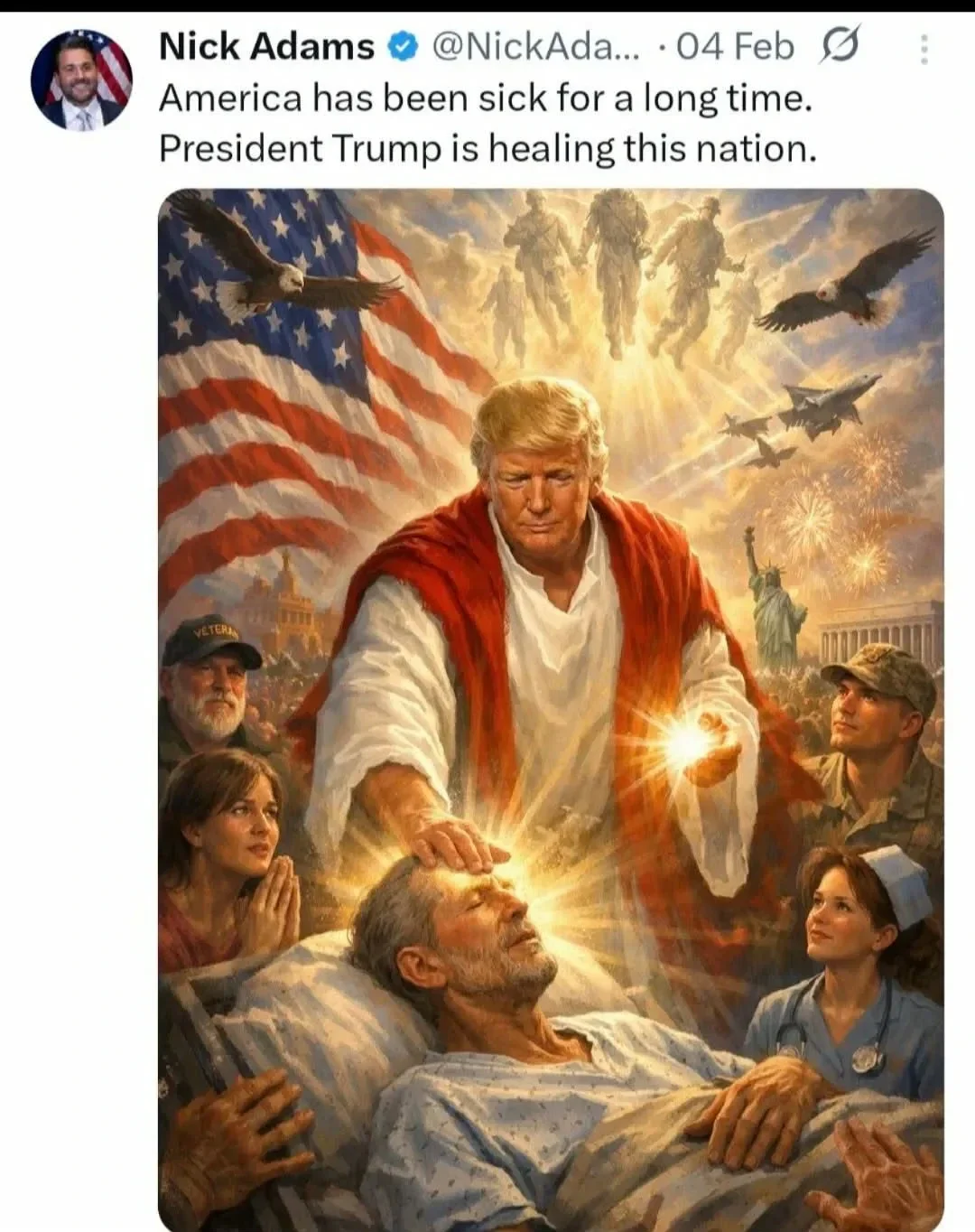
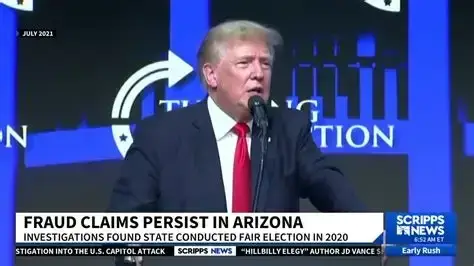
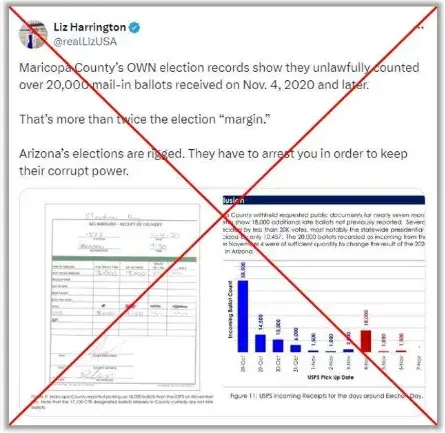
The Arizona Claim, Institutional Trust, and the Pattern Behind It
What Is Being Claimed Versus What Is Proven
The claim that officials in Maricopa County admitted to destroying ballots and rigging the 2020 election is being circulated as settled fact in some circles. It is being framed as “irrefutable proof” that Donald Trump won Arizona.
The accusation directly names Katie Hobbs and Rusty Bowers, alleging coordinated fraud and foreign influence. These are not small claims. They would represent a complete collapse of the election system if proven true. At this point, there is no verified public record, court finding, or official admission that confirms these allegations. That gap between the scale of the claim and the lack of validated evidence is the central issue.
What is driving attention is not just the accusation itself, but the pattern it fits into. When institutions lose trust, any claim that confirms that distrust gains traction quickly. The 2020 election became a focal point for that breakdown. Multiple audits, recounts, and reviews in Arizona did occur, including reviews tied to the Arizona Senate and oversight from the U.S. Department of Justice. None of those processes concluded that outcome-determinative fraud took place. However, for many observers, the existence of investigations alone reinforced suspicion rather than resolving it.
The narrative being pushed goes further than election irregularities. It alleges direct coordination between political actors, election officials, and outside funding networks. References to organizations like the Open Society Foundations and political groups such as the Democratic National Committee are used to suggest a structured influence campaign. These claims rely heavily on inference rather than documented financial records or legal findings. Without verifiable documentation, they remain allegations rather than established facts.
This situation reflects a broader dynamic. Once belief sets in that systems are compromised, the burden of proof shifts in the public mind. Instead of requiring strong evidence to prove wrongdoing, people begin requiring strong evidence to disprove it. That inversion creates an environment where claims escalate quickly and are treated as credible before they are verified. It also makes it difficult for official reviews to restore confidence, because those reviews are often conducted by the same institutions that are already under suspicion.
A similar tone appears in wider geopolitical narratives. Assertions that global conflicts are being misrepresented or managed behind the scenes follow the same structure. The attached material argues that public messaging about peace in regions like the Middle East does not match military realities, pointing to troop movements and ongoing violence as evidence of a deeper conflict trajectory . Whether discussing elections or international conflict, the underlying theme is consistent. Public narratives are viewed as controlled messaging, while real actions are interpreted as the truth.
The core issue is not just whether a specific claim is true or false. It is whether institutions still have the authority to define what is true. When that authority is widely rejected, competing realities form. In one version, the system worked and the results stand. In the other, the system was manipulated at a high level and the truth has been suppressed. Without verifiable, transparent evidence that can withstand legal scrutiny, these two realities do not reconcile.
At a no-nonsense level, the Arizona claim remains unproven. It is serious enough that it would require immediate legal action, documented evidence, and public accountability if true.
None of that has materialized in a way that meets that standard. At the same time, the persistence of the claim shows that distrust in institutions is not going away. That distrust is now a driving force shaping how information is accepted or rejected, regardless of official conclusions.
Source Links
Arizona election audits and findings
https://www.azsenaterepublicans.com/cyber-ninjas-report
U.S. Department of Justice election statements
https://www.justice.gov/opa/pr
Arizona Secretary of State election information
Open Society Foundations overview
https://www.opensocietyfoundations.org
Democratic National Committee
Please Like & Share! 😉🪽
@1TheBrutalTruth1 APRIL 2026 Copyright Disclaimer under Section 107 of the Copyright Act of 1976: Allowance is made for “fair use” for purposes such as criticism, comment, news reporting, teaching, scholarship, education, and research.

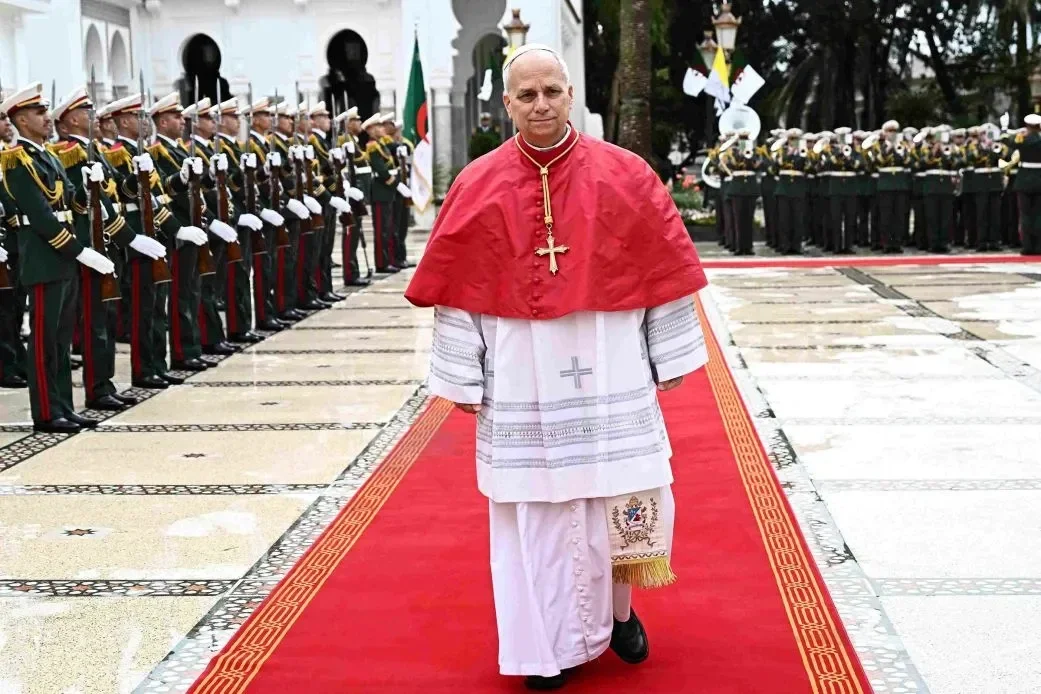
When Faith Becomes a Political Tool
Faith, Power, and Political Games - The Vatican Play Nobody Wants to Talk About
This entire situation reads like a coordinated play, not a coincidence. You have David Axelrod, a career political operator, walking into the Vatican for a private meeting with Pope Leo XIV.
That alone should raise eyebrows, but what follows makes it worse. Right after that meeting, the messaging shifts. The Pope starts taking direct shots at the Trump administration, and suddenly multiple high-ranking Church figures are echoing the same tone in mainstream media. That doesn’t look organic. It looks coordinated.
The outrage machine then flips the narrative. Instead of questioning why a religious institution appears to be stepping into American political warfare, the focus turns to Trump’s response. People act shocked that he pushed back, as if the Pope is above criticism. That’s the distraction. The real issue is not tone. It’s interference. If a religious leader steps into political combat, they don’t get immunity from political consequences. You don’t get to throw punches and then demand respect when someone swings back.
What makes this hit harder is the imbalance in priorities. While the Vatican is engaging in political messaging against a U.S. president, Christians are being slaughtered across multiple regions globally.
Nigeria, the Sahel, parts of Asia, the Middle East. These are not isolated incidents. These are ongoing patterns of violence. And the response from leadership is weak, vague, and non-confrontational. No direct accountability. No naming of perpetrators. Just safe, empty language that avoids conflict.
That contrast is what exposes the deeper frustration. There is energy for political positioning in the West, but hesitation when it comes to defending Christians facing real violence. That signals a shift in focus. It suggests that optics and alliances are being prioritized over the core responsibility of protecting the faithful. For people who take their faith seriously, that doesn’t just feel disappointing. It feels like betrayal.
The messaging itself starts crossing lines. When sacred language is used loosely for symbolic gestures that blur religious boundaries, it creates confusion and anger among believers. Words that carry deep meaning in doctrine are being applied in ways that feel political or performative. That’s not unity. That’s dilution. And it reinforces the perception that leadership is more concerned with global image than doctrinal integrity.
At the center of all this is timing. Eight months before midterms, a major religious figure appears to align rhetorically against one political side, right after meeting with a top strategist from that same side.
That’s not random… That’s strategy. The goal isn’t necessarily to convert voters. It’s to divide them. Especially Catholic voters who helped build a winning coalition. If you can force them to choose between faith and politics, you don’t need to win them. You just need to neutralize them.
Please Like & Share! 😉🪽
@1TheBrutalTruth1 APRIL 2026 Copyright Disclaimer under Section 107 of the Copyright Act of 1976: Allowance is made for “fair use” for purposes such as criticism, comment, news reporting, teaching, scholarship, education, and research.


When Power Expands Without Limits
Power, Control, and Accountability: Why accountability matters at every level
Serious accusations have been raised about global financial systems, digital identity programs, and the role of powerful individuals in shaping major world events. These claims include connections between figures like Jeffrey Epstein and Bill Gates, as well as claims about coordinated efforts tied to pandemics, financial control, and population management.
This report does not treat these claims as proven fact. It focuses on the seriousness of the accusations themselves and why they cannot be ignored or dismissed without examination.
List of Accusations
Pandemic Planning for Profit
Claim that Jeffrey Epstein and Bill Gates discussed or were involved in planning a global pandemic scenario for financial gain.
Population Control Intent
Claim that discussions included ideas about reducing or controlling the global population.
Pandemic Used to Push Digital ID
Claim that COVID-era policies were used to introduce or normalize digital identity systems.
Digital Currency as a Control Tool
Claim that Central Bank Digital Currencies are designed to allow authorities to:
Freeze accounts
Restrict purchases, Control how money is spent, Programmable Money for Behavioral Control
Claim that future digital money could be programmed to enforce compliance with rules or policies.
Selective Financial Enforcement
Claim that governments have used financial systems against citizens (example: protest crackdowns), while not applying the same tools equally to criminals.
Surveillance Through Financial Systems
Claim that digital payments and IDs allow tracking of personal behavior, spending, and movement.
Central Banks Expanding Power
Claim that central banks are moving beyond traditional roles to gain direct control over individuals’ finances.
Deliberate Economic Instability
Claim that inflation and financial crises were caused intentionally by central banking policies.
Use of Crises to Gain More Control
Claim that each crisis is used to justify expanding authority and reducing financial independence.
Suppression of Critics
Claim that individuals who speak against these systems are being restricted financially or socially.
Shift Toward Centralized Global Control
Claim that power is being concentrated into fewer institutions and individuals over time.
These accusations center on one core idea:
Control is shifting from individuals to centralized systems through finance, identity, and technology.
They are serious because, if true in any part, they point to large-scale influence over daily life, freedom, and economic independence.
No One Is Above Scrutiny
History shows that power, when left unchecked, leads to abuse. The idea that any institution or individual should be trusted without accountability is not supported by evidence. The claims presented point to a concentration of control in financial systems, central banks, and digital infrastructure.
Even if only part of these accusations were true, the impact would be significant. That alone requires attention. Public trust should never replace verification. Systems that affect millions of people must remain open to questioning.
The Risk of Centralized Control
The material raises concerns about Central Bank Digital Currencies and digital ID systems. These tools are described as having the ability to control access to money, track behavior, and restrict transactions.
There are real-world examples of financial restrictions being used during political events. This shows that financial systems can be used as tools of control. Expanding these systems without limits increases the risk of misuse.
The concern is not technology itself. The concern is who controls it and what limits exist.
The Consequences of Ignoring These Claims
If these concerns are dismissed without investigation, the risk grows. Systems that allow transaction control, identity tracking, and financial restriction could be expanded without resistance.
This could lead to situations where individuals lose access to basic needs such as food, travel, or work based on compliance with policies. The ability to restrict financial access creates a direct form of pressure that can affect daily life.
Ignoring early warnings has led to major failures in the past. When accountability is delayed, damage increases.
Potential Outcomes if Misused
If centralized financial and identity systems are abused, the consequences could be severe. These include:
-
Loss of financial independence
-
Increased surveillance of personal activity
-
Restrictions tied to behavior or beliefs
-
Reduced ability to challenge authority
These outcomes are not theoretical. Elements of these systems already exist in limited forms. The concern is how far they could expand without oversight.
Responsibility to Address the Issue
The core issue is responsibility. Governments, institutions, and leaders must be held accountable for the systems they build and control. Public awareness is necessary to ensure that power is not concentrated without limits.
Dismissing concerns because they are uncomfortable does not remove the risk. It increases it. Serious claims require serious review, not silence.
The accusations presented raise questions about power, control, and accountability in modern systems. Whether fully proven or not, the scale of the claims demands attention.
No system should operate without oversight. No individual should be beyond questioning. The risk of ignoring these concerns is not abstract. It is practical and potentially widespread.
The accusations on the table are not small and they are not harmless. They point straight at the core of how power is built, how it is protected, and how it expands. When you start seeing the same themes show up across finance, identity systems, and global policy, you are not looking at coincidence anymore. You are looking at a pattern that deserves to be taken seriously whether people are comfortable with it or not.
The real issue is not whether every single claim is proven down to the last detail. The real issue is that the structure being described is possible and parts of it already exist. Systems that can track you, limit your access to money, and enforce compliance are not theoretical anymore. They are being built, tested, and expanded. Once that kind of control is fully in place, it does not need to be abused often to be effective. The threat alone is enough to shape behavior.
People keep making the same mistake. They wait for absolute proof while ignoring obvious risk. By the time proof is undeniable, the system is already locked in. That is how power works. It does not announce itself. It builds quietly, step by step, until there is no easy way to push back. History is full of examples where control expanded because people assumed it would never go too far. That assumption has never held up.
No one gets a free pass here. Not governments, not financial institutions, not powerful individuals. The moment people start acting like certain groups are beyond questioning, that is where accountability dies. Power without pressure always moves in one direction. It tightens. It concentrates. It protects itself. That is not theory. That is a pattern that repeats every time.
If this is ignored, the outcome is not complicated. You end up with systems that can decide who participates and who does not.
Access to money, movement, and basic needs becomes conditional. That changes everything. It shifts control away from the individual and places it into systems that cannot be easily challenged. Once that line is crossed, getting freedom back is not simple. It rarely is.
The bottom line is this. You do not have to prove every accusation to recognize the danger in what is being described. The scale alone demands attention. Ignoring it does not make it false. It makes it easier for it to happen.
Address Links for Independent Research
Global financial systems and CBDCs:
https://www.bis.org/publ/othp33.htm
https://www.imf.org/en/Topics/fintech/central-bank-digital-currency
Digital identity systems:
https://www.weforum.org/initiatives/digital-identity
https://www.gov.uk/government/publications/digital-identity-and-attributes
Canada protest financial actions:
https://www.bbc.com/news/world-us-canada-60383385
https://www.reuters.com/world/americas/canada-emergencies-act-explained-2022-02-15/
Background on Epstein case:
https://www.justice.gov/usao-sdny/pr/jeffrey-epstein-charged-sex-trafficking-minors
Please Like & Share! 😉🪽
@1TheBrutalTruth1 APRIL 2026 Copyright Disclaimer under Section 107 of the Copyright Act of 1976: Allowance is made for “fair use” for purposes such as criticism, comment, news reporting, teaching, scholarship, education, and research.
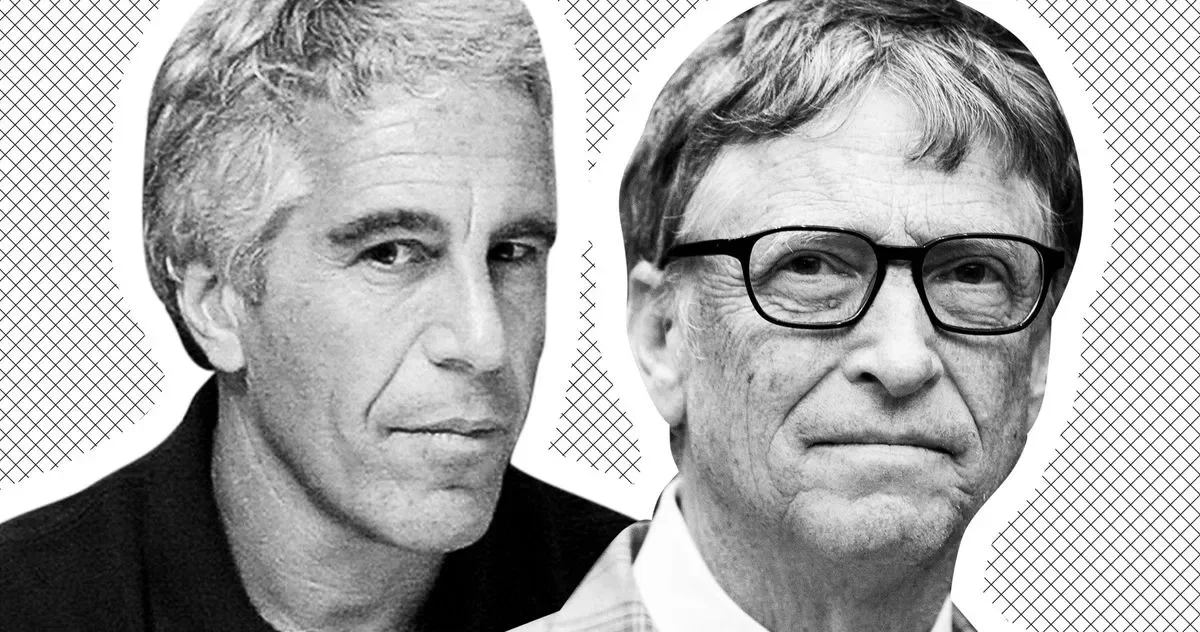

The White House Is Playing Games And People Are Not Blind
If it was nothing, why delete it
Something weird is happening. Weirder than usual at least.
The official White House Twitter account and its Instagram shared two brief mysterious videos last night with no context or explanation. That immediately caused confusion. People started asking if the White House had been hacked or if something serious was about to happen.
The first video was posted around 9:15 Eastern time and then deleted from both platforms. It was a vertical clip with on screen text that said sound on. The camera pointed down at someone’s feet. A woman’s voice says, “It’s launching soon, right?” and a man responds, “Yes.” That was it. Then it disappeared.
The second video came shortly after, around 10:00 p.m. It was mostly a black screen with glitch effects. For a brief moment, an American flag appears. The caption was just two emojis, a phone and a soundwave. No explanation.
In the audio, you can hear a clear iPhone notification sound. That alone set people off. Some started saying it sounded like a coded signal or some kind of activation tone.
Then the speculation went further. People began connecting random phrases and locations, saying things like Edwards Air Force Base, Subway, McDonald’s, drop bombs, and activation words. It spiraled quickly into theories about sleeper cells and coordinated signals.
Looking at it logically, nothing posted from an official White House account is accidental. An accident would suggest incompetence. A hack would suggest weakness. Neither is something they would openly admit. Posting on multiple platforms makes it even harder to believe it was random.
One explanation that spread online was that this could be related to a new national emergency alert system. Some thought it might be a test or even a form of viral messaging. Others saw it as bait designed to trigger certain online groups that look for hidden meaning in everything.
The cryptic nature of the videos fed that idea. The timing, the wording, the glitch effects, none of it felt random to people already looking for patterns. Some interpreted it as a signal tied to global tensions, especially with ongoing issues involving Iran.
Others pushed back and said people were reading too much into it. They argued that vague messaging like this creates panic and distraction while real issues continue in the background.
At the center of it all is the same problem. There is no clear explanation. That leaves a vacuum, and people fill that vacuum with whatever they already believe.
The White House Posted These Strange Videos Last Night...then quickly deleted
Whether it was a test, a mistake, or something intentional, the result is the same. Confusion, speculation, and a growing sense that information is being controlled or released in pieces.
The Brutal Truth
Something like this does not just happen by accident. You do not get cryptic videos posted from official White House accounts and then quietly deleted without someone knowing exactly what they were doing.
This is not a teenager running a meme page. This is the highest office in the country. When they speak, it is supposed to be clear. Instead, they dropped confusion on purpose or they exposed pure incompetence. Either way, it is a bad look.
The first video was short and direct. “It’s launching soon, right?” followed by “Yes.” That is not random. That is intentional language. Then it gets deleted like it never happened. The second video doubles down with glitch effects and the American flag thrown in for impact. No explanation. No follow up. Just noise. That is not communication. That is manipulation or failure. Pick one.
People did exactly what you would expect. They started connecting dots that may not even exist. They heard a phone notification and suddenly it became a signal. They started naming places, systems, and possible targets. That is what happens when leadership refuses to speak clearly. You create a vacuum and the public fills it with fear, anger, and wild theories. Then those same people get mocked for reacting to the confusion they were handed.
Here is the truth most people do not want to say out loud. Government messaging today is sloppy. It is either too controlled or completely careless. There is no middle ground anymore. If this was a test, it was a weak one. If it was a mistake, that is even worse. If it was intentional, then they knowingly stirred panic for no reason. None of those options show strength.
Strong leadership does not play games with the public. It does not drop vague hints like a bad puzzle and walk away. It speaks clearly, especially when it comes to anything that even sounds like national security.
The American people are not children. They do not need riddles. They need straight answers. When they do not get them, trust breaks down fast.
At the end of the day, this was not just about two weird videos. It exposed something deeper. There is a growing gap between what is said and what is meant. People feel it. That is why reactions are getting louder and more extreme. When trust is gone, everything starts to look like a signal, a setup, or a lie. That is the real problem, and it is not getting fixed anytime soon.
What do you think? I would LOVE to hear your comments and opinions! To receive new posts and support my work, consider becoming a free or paid subscriber.
Please Like & Share 😉🪽
@1TheBrutalTruth1 MAR. 2026 Copyright Disclaimer under Section 107 of the Copyright Act of 1976: Allowance is made for “fair use” for purposes such as criticism, comment, news reporting, teaching, scholarship, education, and research.
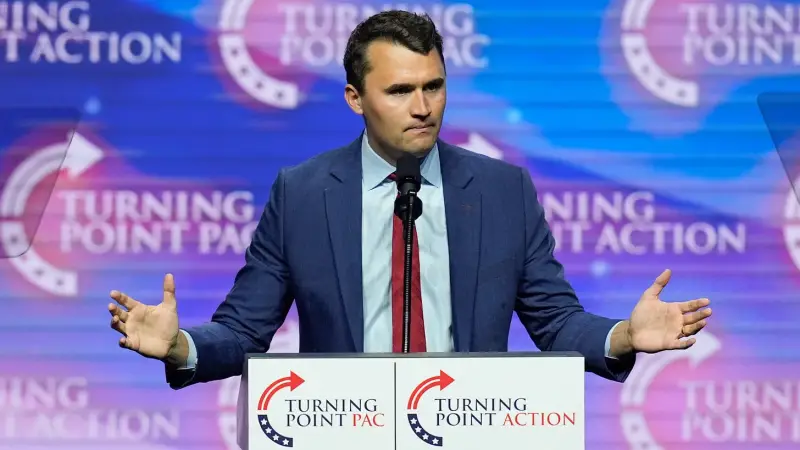
The Power You See Is Not the Power That Exists
According to the Son of a Millionaire the Same Forces Operate No Matter Who is Elected
This is not a calm discussion. It is a full blown claim that the system is fake from top to bottom. The argument says politicians are not in charge. Billionaires are.
People who have spoken to me personally, and those who have listened to any podcasts I have guested on has heard this same message. I had often said, Charlie was in a “Truman Show” life.
The people you vote for are just the face, not the power. According to this view, everything from elections to movements is shaped behind closed doors, and the public only sees what they are allowed to see.
The theory goes even harder. It claims Charlie Kirk was never truly in control of his own movement. He was the front man. The real power was money, donors, and the people managing those relationships. His wife is described as the operator behind the scenes, handling influence, access, and connections while he played the public role.
Then comes the core accusation. The claim says Kirk started to shift his positions, especially on foreign policy, and that this threatened the people funding him. Once that happened, the theory argues he became a liability instead of an asset. From there, everything that followed is framed not as random, but as controlled and intentional.
The behavior after his death is used as fuel for the argument. Immediate leadership changes, public messaging, and reactions are all interpreted as signs that the outcome was expected, not shocking. The claim pushes the idea that nothing about the situation feels natural, and that the official explanation does not match how people think a real response should look.
It does not stop there. The bigger message is that both political parties answer to the same group. Republican, Democrat, it does not matter. According to this view, they all serve the same donor class, and the fights you see in public are just surface level distractions. The real decisions are made elsewhere.
The bottom line is aggressive and clear. This theory says power is not where people think it is. It is not in elections, not in speeches, and not in public offices. It is in money, influence, and control behind the scenes. And if you believe the official story without question, then you are only seeing what you are meant to see.
The Brutal Truth.
Jimmy and Americans’ Comedian Kurt Metzer analyze a viral video, featuring a self-described “billionaire's son” who lays out the logical case that Charlie Kirk was murdered because he was about to divorce Erika and defect from the Zionist donors who controlled Turning Point USA—and Erika, knowing the plan, immediately took over the organization, scolded anyone asking questions, and is now being positioned as the "right-wing Hillary Clinton" for 2028.
The video argues that Kirk was never the real power at TPUSA; Erica ran the donor relations and hosted the billionaire dinners, and when Kirk grew a "spine" and began opposing Israel and the war, the donors used their last lever of control—his marriage—to eliminate him.
Jimmy notes that every piece of evidence supports this theory, from Erica's bizarre behavior (publicly forgiving the shooter before any investigation) to her immediate ascension to CEO, and now her appointment to the Air Force Academy board that advises on the same foreign policy topics that got Kirk killed.
Please Like & Share 😉🪽
@1TheBrutalTruth1 MAR. 2026 Copyright Disclaimer under Section 107 of the Copyright Act of 1976: Allowance is made for “fair use” for purposes such as criticism, comment, news reporting, teaching, scholarship, education, and research.

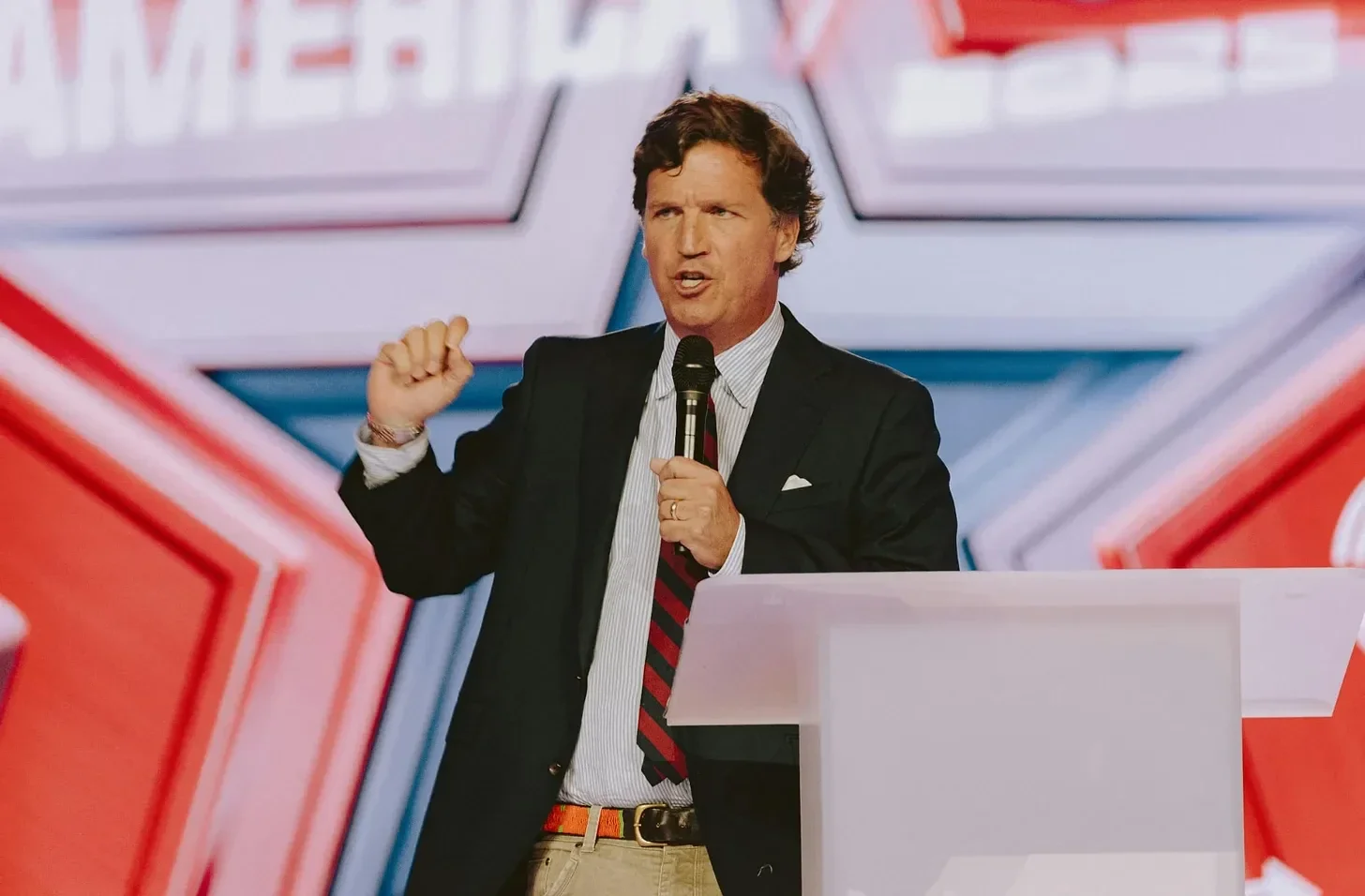
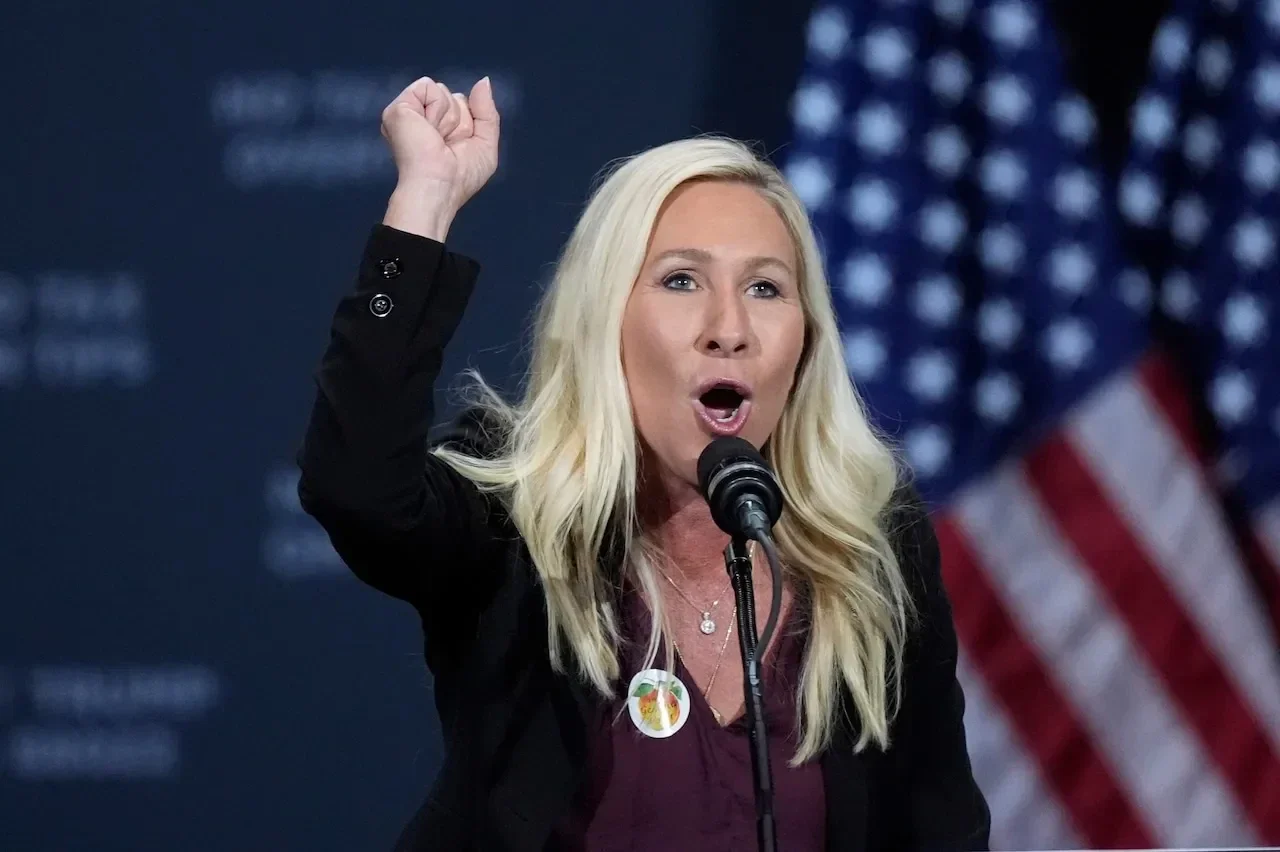
The Loudest Voices Are Missing the Point
Debate Over Trump’s Strategy and Criticism From Allies - They Are Not Opposing the System They Are Helping It
A recent commentary by Barbara Boyd argues that criticism of Donald Trump from figures like Tucker Carlson and Marjorie Taylor Greene may be undermining a broader economic strategy. The claims presented reflect a strong opinion and are not confirmed as established fact.
The commentary claims that Trump’s foreign policy and economic policy are directly connected. It argues that actions involving trade, energy, and international negotiations are part of a larger plan to strengthen the domestic economy.
According to this view, focusing only on domestic issues without considering global systems would limit the effectiveness of economic policy.
Ex-GOP lawmaker says Trump’s ‘traitor’ nickname is ‘badge of honor’: ‘I’m not in his cult’
The commentary criticizes Tucker Carlson and Marjorie Taylor Greene for suggesting that Trump should shift focus more toward domestic concerns. It argues that this position misunderstands how global trade and economic systems affect prices, jobs, and growth within the United States.
The claim is that such criticism could weaken support for broader policy goals.
The commentary also presents a historical argument that international systems, including financial and political structures, have shaped national economies for decades. It suggests that some global institutions influence how countries develop economic policy.
These claims are presented as interpretation and are debated among historians and political analysts.
The discussion highlights several reported initiatives tied to Trump’s economic agenda. These include efforts to reduce certain consumer costs, changes to trade and tariff policies, and proposals to support domestic manufacturing and industry.
It also references efforts to reform parts of the defense industry and encourage investment in production within the United States.
The commentary presents a viewpoint that Trump’s strategy connects foreign policy with domestic economic goals. It argues that criticism from some allies may overlook this connection.
These claims reflect a particular interpretation of current events and policy direction, and readers should consider multiple sources when evaluating them.
This argument does not hold back.
It claims the people who say they support Trump are the same ones cutting his strategy off at the knees. Tucker Carlson and Marjorie Taylor Greene are being called out as missing the bigger picture. Not because they oppose him, but because they are narrowing the fight to small domestic issues while the real battle is global.
The core claim is blunt. Donald Trump is not separating foreign policy from the economy. He is using foreign policy as the tool to rebuild it. Trade deals, energy control, and global negotiations are not distractions. They are the engine. Ignore that, and you do not fix prices, jobs, or wages. You just treat the symptoms while the system stays broken.
The criticism from allies is framed as short sighted. The argument says they are focusing on immediate problems like cost of living while ignoring what drives those problems in the first place. Global supply chains, foreign control of resources, and trade imbalances do not fix themselves. If you do not deal with those, nothing at home actually changes in a lasting way.
It goes further and claims this is not accidental. The idea is that political movements have been split like this before. Push people into arguing over surface issues, and they lose sight of the deeper system controlling outcomes. Whether that claim is true or not is debated, but the pattern being described is clear. Divide attention, weaken strategy.
The economic actions mentioned are used as proof. Lowering certain costs, pushing manufacturing back into the United States, and changing trade relationships are all presented as part of one connected plan. Not random policies. A coordinated attempt to shift how the economy works from the ground up.
The bottom line is harsh. This view says the loudest critics are not stopping the plan from the outside. They are weakening it from within. Whether that is misunderstanding or something more intentional is left open. But the accusation stands. If you attack the strategy without understanding it, you risk helping the very system you claim to oppose.
Sources
Commentary summary and transcript
/mnt/data/Pasted text.txt
White House policy archive
Reuters political coverage
Council on Foreign Relations analysis
Please Like & Share 😉🪽
@1TheBrutalTruth1 MAR. 2026 Copyright Disclaimer under Section 107 of the Copyright Act of 1976: Allowance is made for “fair use” for purposes such as criticism, comment, news reporting, teaching, scholarship, education, and research.
Create Chaos, Then Discredit Anyone Asking Why
Control the Narrative, Kill the Facts - The Information Game Is Rigged
This argument claims the real strategy is not transparency, it is controlled silence.
According to the discussion, when obvious evidence exists like surveillance footage, authorities withhold it on purpose. The goal is not to inform the public but to create confusion. When people are left without answers, they start guessing. Most of those guesses sound extreme, which makes it easy to dismiss everyone asking questions.
The claim goes further. It says this is not new, but a long used tactic. Withhold facts, let speculation spread, then label all skepticism as conspiracy. Once that happens, even reasonable questions get buried under ridicule. The focus shifts away from what is missing and onto mocking the people asking.
The Butler assassination attempt is used as the main example. The argument points to missing details like unreleased footage, unanswered questions about the shooter, and lack of clear explanations. It claims these gaps are not accidental. They are part of a system designed to prevent real scrutiny.
The discussion also connects this pattern to other events, arguing the same approach has been used before. According to this view, the method is simple. Hide key information, allow confusion to grow, then discredit the entire conversation.
At its core, the message is blunt. If people are not given clear answers, they will create their own. And when that happens, those in control can dismiss everything, avoid accountability, and keep the real questions unanswered.
Please Like & Share 😉🪽
@1TheBrutalTruth1 MAR. 2026 Copyright Disclaimer under Section 107 of the Copyright Act of 1976: Allowance is made for “fair use” for purposes such as criticism, comment, news reporting, teaching, scholarship, education, and research.

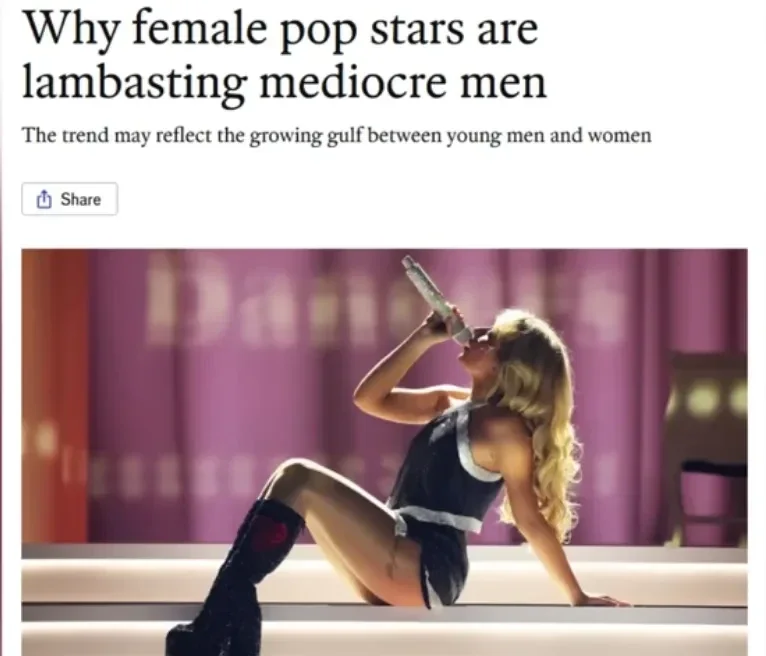
How Pop Culture Shapes Views on Masculinity
Cultural Shifts in How Men Are Portrayed
Research on media and culture shows that popular music often reflects social trends rather than directing them in a coordinated way.
Over the past decade, many songs by female artists have shifted toward themes of independence, frustration in dating, and criticism of male behavior. Studies in media analysis note that this type of messaging often resonates with audiences who have experienced similar frustrations, which helps explain its popularity. At the same time, entertainment frequently uses exaggeration, humor, or shock value to get attention, which can make lyrics or visuals seem more extreme than everyday reality.
There is also evidence of different social reactions to how men and women are portrayed in media. Research in communication studies has found that audiences and media institutions sometimes respond more strongly to content seen as harmful toward women, due to long standing concerns about inequality and safety. Content that targets men is more often interpreted as satire or less serious, which can create a perception of a double standard. However, experts generally caution against viewing these trends as organized efforts to shape society in a single direction. Instead, they are usually the result of changing cultural attitudes, market demand, and the way media amplifies certain messages over others.
How The Left Sees It
From this view, the outrage is overblown and selective. Critics argue that jokes, lyrics, and edgy content aimed at men are part of a wider cultural shift where old power dynamics are being challenged. They see the manosphere as the real danger, pushing harmful ideas about women, relationships, and control. In this lens, telling men to be tougher or more dominant is not self improvement, it is a step backward. The focus stays on protecting women, promoting equality, and calling out behavior seen as toxic, even if that means some messaging about men comes off harsh.
How The Right Sees It
From this side, the double standard is the real issue. They see a culture where attacking men is normalized, even celebrated, while the reverse would be instantly shut down. They argue young men are being mocked, sidelined, and stripped of purpose, then blamed for reacting to it. When media, schools, and entertainment constantly paint men as the problem, it creates resentment. The manosphere, in this view, fills a gap by giving men direction, discipline, and identity that mainstream culture no longer provides.
Middle Ground Narrative
Both sides are reacting to real changes, but they are talking past each other. Culture has shifted fast, and expectations for men and women are no longer as clear as they once were. Some media content does push negative stereotypes about men, while some online spaces aimed at men do promote unhealthy attitudes about women. That tension feeds itself.
Young men are looking for purpose, respect, and direction. When they feel dismissed or criticized, they look elsewhere. At the same time, many women are pushing for safety, fairness, and higher standards in relationships. These goals are not automatically in conflict, but the way they are expressed often turns them into one.
The result is a cycle. One side feels attacked and responds. The other side sees that response as proof of the problem. Instead of balance, it becomes escalation. Media, entertainment, and online voices amplify the loudest and most extreme examples, making the divide feel bigger than it is.
A more stable path would require acknowledging both realities. Young men need clear, healthy models of responsibility and strength. Women need safety, respect, and equal treatment. When either side feels ignored, the gap widens. The real issue is not just who is right or wrong, but how a culture finds a way to move forward without turning every difference into a fight.
Please Like & Share 😉🪽
@1TheBrutalTruth1 MAR. 2026 Copyright Disclaimer under Section 107 of the Copyright Act of 1976: Allowance is made for “fair use” for purposes such as criticism, comment, news reporting, teaching, scholarship, education, and research.





Why Japan’s strict immigration policies keep population changes relatively slow
Ancient Japanese Secret…?
Japan has long been known as one of the most culturally homogeneous countries in the world. For decades, the country maintained strict immigration policies and a strong focus on preserving language, traditions, and social customs.
According to government statistics, more than 97 percent of Japan’s population identifies as ethnically Japanese. Because of this, even small increases in immigration can attract significant public discussion about cultural change and national identity.
In recent years, Japan has slowly opened certain immigration pathways to address labor shortages caused by an aging population. The country has one of the oldest populations in the world, and businesses in sectors such as construction, agriculture, and healthcare have struggled to find enough workers. As a result, the government introduced programs that allow foreign workers to live and work in Japan for limited periods. These programs are tightly regulated and are designed mainly to support economic needs rather than encourage large scale permanent immigration.
Celebrating Ramadan during a pandemic: ‘As Muslims in Japan, we have to make the vibes by ourselves’
The Muslim Population in Japan
The Muslim population in Japan is relatively small compared to many other countries. Estimates from researchers and community organizations suggest that between 200000 and 230000 Muslims live in Japan. Many are foreign workers, international students, or business professionals from countries such as Indonesia, Pakistan, Bangladesh, and Malaysia.
Mosques and halal restaurants have increased in number over the past two decades, particularly in large cities like Tokyo, Osaka, and Nagoya. Some of this growth is also connected to tourism. Japan has made efforts to accommodate Muslim visitors by offering halal food options and prayer spaces in airports and shopping centers.
Despite this growth, Muslims still represent a very small percentage of Japan’s total population of about 125 million people.
Japan’s Immigration Policies and Public Debate
Japan’s immigration policies remain among the strictest in developed countries. Long term residency and citizenship require meeting specific legal conditions, and immigration levels are still far lower than those of countries such as the United States, Canada, or many European nations.
Public debate inside Japan often focuses on how to balance economic needs with cultural stability. Some citizens support limited immigration to address labor shortages. Others express concern that rapid population changes could affect social cohesion and local traditions. Japanese leaders have generally taken a cautious approach, expanding worker programs gradually while maintaining tight controls over permanent immigration.
A Reality Check on Claims of “Takeover”
Claims that any single religious or cultural group could “take over” Japan are not supported by demographic data. The Muslim population remains a very small fraction of the country’s total population, and Japan’s immigration policies continue to limit large scale demographic shifts.
At the same time, Japan is slowly becoming more internationally connected through tourism, education, and global business. This has led to increased cultural diversity in major cities. Researchers say the country is likely to continue balancing economic openness with strong efforts to preserve its language, traditions, and social structure.
Ancient Japanese Secret…?
Japan has spent decades building a society that protects its language, culture, and national identity. More than 97 percent of the country’s population is ethnically Japanese, and immigration policies remain among the strictest in the developed world.
Foreign workers are allowed in limited numbers to help with labor shortages, but these programs are tightly controlled and usually temporary. The system is designed to fill economic gaps without dramatically changing the country’s cultural makeup.
The Muslim population in Japan remains very small compared to the overall population of about 125 million people. Estimates suggest roughly 200000 to 230000 Muslims live in the country, most of them foreign workers, students, or business professionals. Mosques and halal restaurants have grown slowly in major cities, often to support tourism and international residents. Even with this growth, the community represents only a tiny fraction of Japan’s population.
Japan’s leadership has taken a cautious approach to immigration. Officials often emphasize that foreign worker programs exist to support the economy, not to transform the nation’s demographics. Long term residency and citizenship require meeting strict legal conditions, and immigration levels remain far lower than those in many Western countries. Public debate inside Japan regularly centers on how to maintain social stability while addressing economic needs.
The brutal reality is this. There is no Japanese Secret.
Japan closely studies what is happening in other countries dealing with rapid immigration and cultural conflict.
Its leaders appear determined to avoid the same situation. The country may allow limited foreign labor and international visitors, but the overall system is structured to keep Japan firmly in control of its borders, its culture, and its future.
Sources
https://www.stat.go.jp/english/data/jinsui/index.html
https://www.pewresearch.org/religion/2017/04/05/the-changing-global-religious-landscape/
https://www.japan.go.jp/tomodachi/2019/autumn2019/japan_today.html
https://www.mofa.go.jp/policy/other/bluebook/2023/html/chapter3/c0302.html
https://www.britannica.com/place/Japan/People
Please Like & Share 😉🪽
@1TheBrutalTruth1 MAR. 2026 Copyright Disclaimer under Section 107 of the Copyright Act of 1976: Allowance is made for “fair use” for purposes such as criticism, comment, news reporting, teaching, scholarship, education, and research.
The Hidden Power Behind Lloyd’s of London
For more than three centuries, Lloyd’s of London has operated as one of the most influential financial institutions in global trade. Founded in the late 1600s, the market grew alongside the expansion of the British Empire.
At its core, Lloyd’s is not a single insurance company but a marketplace where groups of investors called syndicates agree to insure major risks. These risks often involve cargo ships, oil tankers, aviation fleets, and infrastructure projects.
Because almost every ship that moves through international waters must carry insurance, the institutions that provide that insurance hold a unique form of influence. If coverage is withdrawn or becomes too expensive, ships may not legally enter ports or operate in key trade routes. This has led some analysts to describe maritime insurance markets as a quiet but powerful lever within the global economic system.
Insurance as a Tool of Economic Pressure
Modern geopolitics often intersects with insurance markets. When governments impose sanctions or when conflicts increase the risk of attacks on ships, insurers reassess coverage. War risk insurance is especially important in areas such as the Persian Gulf, the Red Sea, and the Black Sea. If insurers classify a region as high risk, shipping costs can rise quickly because ship owners must pay higher premiums. In some cases, ships may avoid certain ports entirely. Critics of the current financial system argue that these decisions can influence trade flows and energy prices even though they are framed as technical insurance decisions. Supporters of the system say these adjustments are simply risk calculations made by private insurers responding to changing conditions.
The Fringe Interpretation of Global Financial Power
Some researchers who study international finance take the argument further. They suggest that institutions in the City of London, including Lloyd’s, historically helped coordinate insurance coverage for the shipping networks that carried commodities across the world. Because of this long history, some commentators describe Lloyd’s as part of a broader financial ecosystem that includes banks, commodity traders, and maritime law firms. Within fringe discussions, this network is sometimes described as a quiet backbone of global trade governance. However, historians generally caution that these interpretations often mix documented financial influence with speculation about coordinated control.
The claim that Lloyd’s “surrendered” to the United States reflects a broader narrative circulating online about shifting power between financial centers. The idea is that Washington could pressure insurers through sanctions enforcement, regulatory oversight, or geopolitical leverage tied to energy markets and maritime security. If insurers align with those policies, it may appear to critics as if a long standing financial institution has been forced to change course. In practice, most of these shifts occur through regulatory compliance and market incentives rather than a single dramatic decision.
The Brutal Truth Summary
Behind the headlines, global trade depends on a web of institutions that most people never see.
Banks finance cargo. Insurers underwrite risk. Governments enforce sanctions and security rules. When tensions rise between nations, these systems move quietly in the background, adjusting the rules that determine which ships sail, which cargo moves, and which routes remain open. Lloyd’s of London is one of the oldest players in that system. Whether viewed as a historic insurance marketplace or as a symbol of hidden financial influence, its role illustrates how much of global power operates far from public attention.
Please Like & Share 😉🪽
@1TheBrutalTruth1 MAR. 2026 Copyright Disclaimer under Section 107 of the Copyright Act of 1976: Allowance is made for “fair use” for purposes such as criticism, comment, news reporting, teaching, scholarship, education, and research.


Candace Owens Comments on Military Service Spark Legal and Free Speech Debate
Critics Cite Federal Law While Supporters Argue Political Speech Is Protected
Political commentator Candace Owens is facing intense criticism after posting a message online telling Americans not to join or remain in the United States military.
In the post Owens wrote that Americans should avoid military service because she believes the government expects them to fight and die in foreign conflicts. The statement spread quickly across social media platforms and triggered a heated national debate about patriotism, military service, and political speech during a time of rising tensions overseas.
Supporters of Owens say she was expressing her personal political opinion about U.S. foreign policy, while critics argue the message undermines the morale and mission of the armed forces.
The controversy escalated after some commentators pointed to federal law that addresses attempts to influence members of the military. Title 18 Section 2387 of the United States Code makes it illegal to encourage members of the armed forces to refuse duty, promote disloyalty, or commit insubordination. Legal analysts note that the statute was originally written to address attempts to weaken the military during wartime or through organized efforts to interfere with military operations. Critics of Owens argue that telling Americans not to serve could fall within the spirit of the law, while others say applying the statute to political commentary would raise serious constitutional concerns.
The issue gained additional attention when billionaire investor Bill Ackman reposted a message suggesting that the comments could amount to illegal insubordination under federal law. Ackman’s post amplified the legal debate and drew reactions from commentators on both sides of the political spectrum. Some critics began calling for federal investigators to examine whether Owens crossed a legal line with her statements, while others argued that political speech criticizing the government and military policy is protected by the First Amendment.
Constitutional law experts often emphasize that the First Amendment provides strong protection for political speech, including criticism of government policy or military decisions. Courts have historically set a high bar for prosecuting speech related to military opposition unless it directly and intentionally interferes with military operations or orders service members to disobey commands. Because of that legal threshold, debates about controversial statements involving the armed forces frequently become broader discussions about the limits of free expression in a democratic society.
The dispute surrounding Owens reflects a larger national conversation about the role of political commentary during periods of international tension.
Some Americans believe outspoken criticism of military policy can harm morale and national unity, while others view such criticism as part of the democratic process that allows citizens to question government decisions. As the debate continues online and in political circles, there has been no public announcement of any formal investigation or criminal charges related to the comments.
The Brutal Truth
The outrage machine spun up in record time the moment Candace Owens told Americans not to join or remain in the military. Suddenly the internet lawyers appeared waving around a century old statute like it was a smoking gun.
The claim is that her comments somehow violated a law about encouraging insubordination in the armed forces. The problem with that theory is simple. Political speech is not a crime. If blunt criticism of military policy was illegal half of Washington and most cable news hosts would have been arrested years ago.
People have said far more explosive things about the U.S. military without anyone seriously talking about criminal charges.
Politicians have called American wars illegal. Activists have urged soldiers to refuse deployments. Celebrities have openly mocked military leadership. None of that resulted in prosecutors dragging people into court because the First Amendment is not optional when speech becomes uncomfortable. Owens saying do not join the military may be controversial but controversy is not a felony.
The law critics keep quoting was designed to stop organized attempts to sabotage the military during wartime. It targets people actively trying to get soldiers to disobey orders or undermine operations from inside the ranks. It does not exist to police political opinions posted on social media. If a commentator expressing distrust of foreign policy suddenly counts as criminal disloyalty then the Constitution just became a decoration instead of a law.
What this really looks like is another round of selective outrage.
The same people who scream about protecting free speech when it suits them suddenly discover a love for criminal prosecution when a commentator says something they hate. Bill Ackman reposting legal speculation only poured gasoline on the debate but reposts and angry threads do not magically turn a political opinion into a federal crime.
Courts have been extremely clear for decades that political speech sits at the very core of First Amendment protection. The government cannot criminalize opinions about war policy, military service, or foreign alliances unless the speech directly instructs soldiers to break the law or refuse orders. Saying the military should not be trusted with someone’s life might anger people but anger does not erase constitutional rights.
So the frenzy around prosecuting Owens looks less like a serious legal argument and more like a political tantrum.
America protects speech precisely because it allows people to say things others find offensive, reckless, or even infuriating. If blunt political commentary becomes grounds for criminal charges then the country is no longer debating ideas. It is policing them. And that would be a far bigger threat to democracy than anything posted on social media.
Address Links
https://www.law.cornell.edu/uscode/text/18/2387
https://crsreports.congress.gov
Candace Owens Comments on Military Service Spark Legal and Free Speech Debate
Please Like & Share 😉🪽
@1TheBrutalTruth1 MAR. 2026 Copyright Disclaimer under Section 107 of the Copyright Act of 1976: Allowance is made for “fair use” for purposes such as criticism, comment, news reporting, teaching, scholarship, education, and research.



Missing General and the UFO Disclosure Debate
A wave of speculation has emerged online following claims that retired U.S. Air Force Major General William Neil McCasland has disappeared under mysterious circumstances.
McCasland previously held senior leadership roles in the Air Force and was connected to highly classified research programs. Reports circulating across social media and alternative media outlets claim that he vanished from Albuquerque, New Mexico, prompting interest from federal investigators.
As of now, there has been no widely confirmed public announcement from federal authorities confirming the circumstances surrounding his alleged disappearance. However, the claims have captured attention because of McCasland’s long career in military research leadership and his association with facilities often discussed in UFO and advanced technology narratives.
Wright Patterson and the Long Shadow of Roswell
Much of the speculation surrounding McCasland centers on his connection to Wright-Patterson Air Force Base, one of the most significant research hubs in the U.S. military system. Wright Patterson has long been tied to aerospace innovation, weapons development, and classified technological research.
For decades, the base has also played a central role in UFO folklore. Some researchers and authors claim that debris from the 1947 Roswell Incident was transported to Wright Patterson for analysis. While the U.S. military has consistently maintained that the Roswell event involved a classified balloon program, speculation about recovered materials and reverse engineering projects has remained part of UFO culture for generations.
Rumors of Presidential Disclosure
The timing of the rumors has drawn additional attention because of speculation that President Donald Trump may be preparing to discuss classified information related to unidentified aerial phenomena. Comments made by Lara Trump in media interviews have fueled discussion that a major statement about extraterrestrial life or government UFO knowledge could eventually be delivered.
Official confirmation of such a speech has not been released. However, the possibility of new disclosures about unidentified aerial phenomena has remained an active topic in Washington for several years as congressional committees have pushed for greater transparency around military encounters with unexplained aerial objects.
UFO Transparency and Military Research
In recent years, the U.S. government has acknowledged that military pilots have encountered unidentified aerial phenomena during training missions. Investigations into these sightings have been conducted by Pentagon programs such as the Unidentified Aerial Phenomena Task Force and later the All Domain Anomaly Resolution Office.
These programs examine unexplained aerial events that could involve advanced foreign technology, sensor anomalies, or other unknown factors. Officials have repeatedly stated that while many incidents remain unexplained, there is no confirmed evidence that the objects represent extraterrestrial spacecraft. Still, public interest in the subject continues to grow as more military footage and pilot testimony become public.
If any future administration were to release classified files related to historical UFO investigations, the information could reshape decades of speculation and debate….
Or it could all change in our generation, right now.
The current situation highlights how quickly speculation can spread when national security topics intersect with secrecy, military research, and unexplained aerial sightings. A senior figure associated with advanced military programs disappearing would naturally draw attention even without the UFO connection.
At the same time, discussions about unidentified aerial phenomena have increasingly moved from fringe speculation into official policy conversations. Congressional hearings, pilot testimony, and Pentagon reporting requirements have brought new legitimacy to the subject.
Until confirmed information emerges about McCasland’s situation or any potential government disclosure plans, much of the current discussion remains based on claims circulating online rather than verified announcements. Still, the combination of secrecy, national security, and the enduring mystery of UFO sightings continues to fuel debate across the country.
Sources
https://www.af.mil/About-Us/Biographies/Display/Article/108010/major-general-william-n-mccasland/
https://www.nationalmuseum.af.mil/Visit/Museum-Exhibits/Fact-Sheets/Display/Article/196298/roswell/
https://www.congress.gov/event/117th-congress/house-event/114761
Please Like & Share 😉🪽
@1TheBrutalTruth1 FEB. 2026 Copyright Disclaimer under Section 107 of the Copyright Act of 1976: Allowance is made for “fair use” for purposes such as criticism, comment, news reporting, teaching, scholarship, education, and research.


Howard Lutnick, Epstein Connections, and Questions About Financial Networks
Investigating the web of financial relationships surrounding Jeffrey Epstein
Introduction
Howard Lutnick sits at the center of one of Wall Street’s most powerful financial machines. Cantor Fitzgerald is not a small brokerage tucked in a corner office.
It is a bond trading powerhouse with deep reach into global markets, government debt, and political fundraising networks. Lutnick built a reputation as a survivor after the devastation of September 11, and that story helped cement his status as one of the most influential figures in modern finance. When someone at that level moves into policy advisory roles and economic planning circles, scrutiny follows whether anyone likes it or not.
Enter Jeffrey Epstein, a man who somehow floated through the upper atmosphere of wealth and power for decades while carrying secrets darker than most people wanted to confront. Epstein marketed himself as a financial wizard for billionaires. His firm claimed to manage massive fortunes, yet the actual mechanics of how he generated his wealth have remained murky even after years of investigations. What is clear is that Epstein had access to elite circles that included financiers, academics, politicians, and corporate leaders. He moved in rooms where power and money overlap, and that world overlaps heavily with Wall Street.
The uncomfortable truth is that elite financial circles are not large. Hedge funds, private banking networks, and bond trading institutions operate inside a relatively tight ecosystem. When investigative reporting points to Epstein interacting with individuals tied to major financial firms in the 1990s, it raises an obvious question. How many powerful people crossed paths with him before the public truly understood who he was. In the case of Lutnick, there is no confirmed evidence tying him to Epstein’s criminal conduct. But the wider financial network surrounding Epstein remains a minefield of unanswered questions.
When Epstein was arrested in 2019 and later died in federal custody, journalists and investigators started pulling on every thread connected to his financial life.
Banks, brokerage houses, investment managers, and wealthy clients suddenly found their past associations under a microscope. Some institutions admitted Epstein had once been a client. Others claimed they cut ties years earlier. What shocked many observers was not that Epstein had connections to powerful people. It was that those connections seemed to survive long after his earlier legal troubles were already public.
The brutal reality is that money buys access and access buys silence.
Epstein’s ability to remain embedded in elite financial networks despite serious allegations suggests that reputation alone does not break these circles. Power protects power until the scandal becomes too large to ignore. Once the story exploded, everyone rushed to distance themselves. Before that, the doors kept opening.
Today the Epstein network is still being dissected by investigators, journalists, and congressional committees. Names surface, relationships are questioned, and the public keeps asking the same blunt question. How did a man like Epstein maintain entry into the highest levels of finance, academia, and politics for decades.
Whether the answers ever fully emerge is uncertain, but the suspicion surrounding those elite circles is not disappearing anytime soon.
What We Know
Howard Lutnick is the longtime chief executive officer of the financial services firm Cantor Fitzgerald. The company is one of the most influential bond trading and financial brokerage firms on Wall Street.
Lutnick became widely known after the September 11 attacks in 2001, when Cantor Fitzgerald lost hundreds of employees in the World Trade Center. Since then, Lutnick has remained a major figure in global finance and political fundraising.
In recent years Lutnick has also taken on public policy roles and advisory positions connected to U.S. economic planning and government initiatives. His growing political visibility has led journalists and researchers to revisit historical business relationships and social networks tied to major financial institutions.
Jeffrey Epstein’s Financial Relationships
Jeffrey Epstein was a financier who became internationally known after multiple criminal cases involving the trafficking and exploitation of minors. Over time, investigators uncovered that Epstein maintained connections with wealthy individuals, financial executives, academics, and political figures.
Epstein often presented himself as a financial strategist for high net worth individuals. His firm, J. Epstein & Co., claimed to manage assets for billionaires and influential investors. While the exact scope of his financial operations has remained unclear, court filings and reporting have documented that Epstein interacted with several major Wall Street institutions and individuals in elite financial circles.
Reports Linking Epstein and Lutnick
Some reports and discussions online have pointed to historical financial relationships between Epstein and entities connected to Cantor Fitzgerald. In particular, investigative reporting has noted that Epstein had business dealings in the 1990s with individuals tied to large financial firms and hedge fund networks operating in New York.
There have been claims circulating on social media suggesting that Epstein may have interacted with Cantor Fitzgerald executives or clients. However, publicly available reporting has not confirmed any direct criminal involvement by Lutnick in Epstein’s activities. Most references to Lutnick in Epstein related discussions appear in the context of broader financial networks where wealthy investors and financiers sometimes crossed paths socially or professionally.
Public Scrutiny of Epstein’s Financial Web
After Epstein’s 2019 arrest and subsequent death in federal custody, investigators and journalists began examining the wider financial ecosystem around him. Attention focused on banks, investment firms, and wealthy individuals who had previous financial relationships with Epstein.
Some institutions acknowledged that Epstein had once been a client or maintained accounts through intermediaries. Others stated they had severed ties after earlier legal troubles became public. The broader investigation raised questions about how Epstein was able to maintain financial access and social influence even after previous criminal allegations surfaced.
These investigations continue to shape public debate about accountability, financial oversight, and the responsibilities of institutions that interact with high net worth clients.
Ongoing Debate and Transparency Questions
Today the Epstein case remains a major subject of congressional inquiry, civil litigation, and public debate. Victims, lawmakers, and journalists continue to call for greater transparency regarding Epstein’s network of financial contacts and associates.
While many claims circulate online about various individuals, official investigations have focused primarily on documented transactions, testimony from victims, and verified financial records. The process of separating documented relationships from speculation remains a central challenge as courts and investigators continue examining the case.
For figures like Howard Lutnick and other prominent financial leaders, public attention often reflects the broader effort to understand how Epstein maintained access to elite financial and political circles for decades.
During his testimony to the House Oversight Committee's Epstein probe last week, former President Clinton was asked about Commerce Sec. Howard Lutnick's ties to Jeffrey Epstein. This of course can be viewed as a Deflection from himself.
However, no one is eliminated from investigation. All dogs have their day. The Clintons are having theirs.
Address Links
Reuters profile of Howard Lutnick
https://www.reuters.com/world/us/cantor-fitzgerald-ceo-howard-lutnick-profile/
Reuters overview of the Jeffrey Epstein case
https://www.reuters.com/world/us/jeffrey-epstein-case-explained-2024-01-03/
Bloomberg reporting on Epstein’s financial network and Wall Street connections
https://www.bloomberg.com/news/articles/2023-08-10/epstein-financial-network-wall-street
Wall Street Journal reporting on investigations into Epstein’s financial relationships
https://www.wsj.com/articles/epstein-financial-network-investigation
New York Times background on the Epstein case
https://www.nytimes.com/article/jeffrey-epstein-case-facts.html
---------------------------------------------------------
Please Like & Share 😉🪽
@1TheBrutalTruth1 FEB. 2026 Copyright Disclaimer under Section 107 of the Copyright Act of 1976: Allowance is made for “fair use” for purposes such as criticism, comment, news reporting, teaching, scholarship, education, and research.



Three Thousand Pages of Panic - Transparency, hysteria, and the myth of instant guilt..
Reputation Execution in the Age of Receipts
For a full decade, Lady Gaga has flat-out denied it: two ultra-elite Upper East Side dinner parties in 2016, occult rituals on the menu, child meat served to the chosen few.
Credible witnesses—including Jeffrey Epstein victims—have named her, placed her at the table, described the depravity in chilling detail. She branded them all liars.
In this video, we explore an unsettling narrative set against the backdrop of shadowy elite gatherings. The story follows Elite Celebrities who find themselves in eerie, ritualistic dinners where dark secrets unfold. Themes of cannibalism comes to light. Viewer discretion is advised, as this vidoe includes intense imagery and disturbing situations, all intended purely for storytelling purposes.
In the publicly released Epstein files, there are a few mentions of Lady Gaga. These mentions appear in emails from Deepak Chopra to Epstein, where he lists her as a potential dinner guest or friend. However, there’s no evidence in these documents of her involvement in any crimes or illicit activities.
The mentions are brief and tied to social or philanthropic contexts, and no wrongdoing is suggested. As always, context matters, and the presence of a name does not imply guilt.
100 Notable Names in the Epstein Files
100 Notable Names in the Epstein Files compiled from DOJ releases under the Epstein Files Transparency Act (Dec 2025 – Jan 2026). Click any name to view their profile and related documents.
Important Disclaimer: Being mentioned in these files does not indicate wrongdoing. Names appear in a wide range of contexts including photos, contact books, third-party emails, unverified FBI tips, flight logs, and social correspondence. None of the individuals listed have been charged with crimes connected to the Epstein investigation (aside from Ghislaine Maxwell).
A searchable archive of publicly released U.S. government documents from the Department of Justice Epstein disclosure. All documents hosted are official public records.
The Brutal Truth Summary
For a decade the internet has been running on caffeine and conspiracy fumes, and now we have three thousand pages of government documents dropped into the digital jungle.
A name appears in an email and suddenly Twitter turns into Judge Judy with WiFi. Dinner invitations morph into dark rituals by lunchtime. Context takes a vacation while outrage books a permanent residence.
Welcome to modern scandal culture, where being mentioned is treated like being convicted.
Yes, the files are real. Yes, names are in them. Bill Clinton, Bill Gates, Elon Musk, Donald Trump, Prince Andrew and dozens more appear in varying contexts. But here is the part that never trends. A mention is not a mugshot. An email is not an indictment. The documents themselves carry disclaimers saying names show up in contact books, social notes, third party messages, even random tips. That does not stop the online mob from turning a guest list into a crime scene.
The truth is less cinematic and far less satisfying. The publicly released material shows brief social or philanthropic references, not ritual banquets or horror movie scripts. No charges. No documented criminal link in those mentions. Just fragments that the internet happily stitches into a Netflix trailer that does not exist. The outrage economy thrives on implication because implication pays better than proof.
So here we are staring at thousands of pages, one convicted accomplice, and an online mob convinced that a keyword search is the same thing as a jury deliberation.
A name pops up and suddenly the internet declares itself judge, jury, and executioner. Transparency is necessary, but transparency without restraint becomes spectacle. And spectacle may drive clicks and headlines, but it does nothing for facts or justice.
Please Like & Share 😉🪽
@1TheBrutalTruth1 FEB. 2026 Copyright Disclaimer under Section 107 of the Copyright Act of 1976: Allowance is made for “fair use” for purposes such as criticism, comment, news reporting, teaching, scholarship, education, and research.
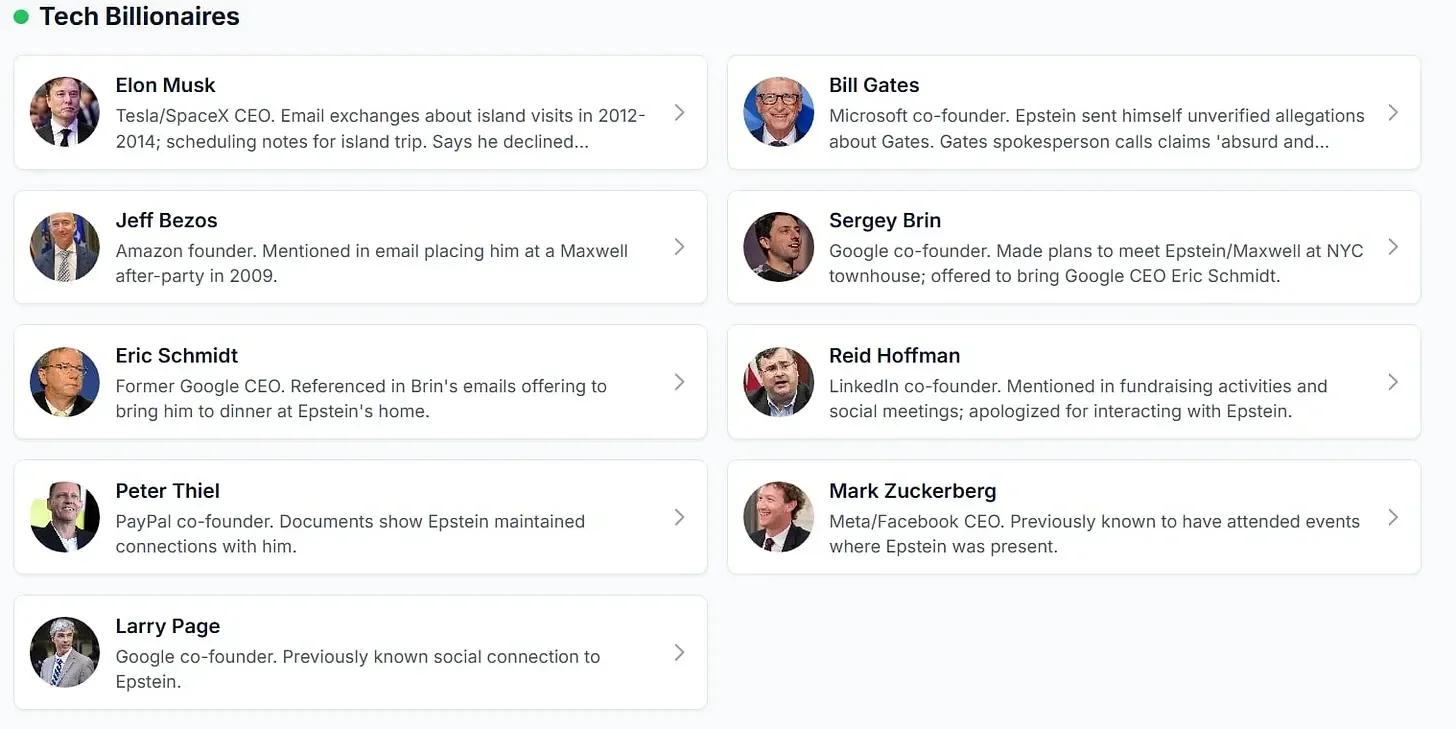
1,000 Cows a Bite? Is that 100% Cow Meat?
Missing Children Statistics and Supply Chain Claims
Recent online videos claim that major fast food chains such as McDonald’s and Burger King are serving altered meat, and that documents linked to Jeffrey Epstein somehow exposed disturbing truths about the American food supply.
These claims combine concerns about food sourcing, missing children statistics, and corporate labeling practices. However, none of the publicly released Epstein court documents contain verified evidence related to fast food meat supply chains.
One viral claim states that 6.6 million hamburgers per day cannot be supported by U.S. cattle numbers. According to the U.S. Department of Agriculture, the United States maintains roughly 87 to 94 million head of cattle annually, with tens of millions entering the beef supply chain each year through regulated processing systems. Large restaurant chains purchase beef from major suppliers such as Tyson Foods, Cargill, and JBS, which operate industrial-scale processing facilities capable of supplying national demand.
Another claim suggests that the phrase “100% beef” is merely a company name rather than a product description. Food labeling in the United States is regulated by the USDA and the Food Safety and Inspection Service. When companies advertise “100% beef,” that term refers to the meat content of the patty and must comply with federal labeling standards. There is no registered meat supplier operating under the literal corporate name “100% Beef” that replaces actual product description in advertising.
Statistics about missing children are often inserted into these discussions. The National Center for Missing and Exploited Children reports that thousands of missing child reports are filed annually, but the majority involve runaways or custody disputes and are resolved. There is no evidence in federal investigations linking fast food supply chains to missing children cases. Conflating separate issues can create emotional impact but does not establish a factual connection.
From a conservative perspective, skepticism toward large corporations and food supply transparency is understandable. Many Americans question industrial food processing, additives, and global sourcing practices. Calls for clearer labeling, domestic sourcing, and regulatory oversight reflect ongoing political debates about consumer protection and corporate accountability.
From a middle-of-the-road regulatory perspective, the U.S. beef industry operates under federal inspection, traceability systems, and sanitation standards. While debates about nutrition, food quality, and corporate consolidation continue, there is no verified documentation supporting claims that fast food meat has been secretly replaced with something other than inspected beef or that Epstein files revealed such activity.
The broader issue highlighted in viral posts is trust. Most Americans are disconnected from the modern industrial food system.
When large numbers, corporate branding, and unrelated criminal cases are combined into one narrative, it can appear alarming. However, “official records” show that beef supply chains are industrial, regulated, and documented. Allegations linking missing children, Epstein files, and hamburger production are not supported by verified evidence.
The Brutal Truth
Come on, you know you want to know. The internet lit a match and tried to turn burgers into a horror movie, claiming McDonald’s and Burger King are serving altered meat exposed through Epstein files, missing children statistics, and some slick labeling trick with “100% beef.”
It sounds explosive, but the paperwork does not back it up. We need actual receipts, people! Things like documented confessions or actual investigations.
Seriously. The only thing provably explosive is the aftermath while your body desperately makes way to evacuate what you just ate.. And it could go either way in which neither is pleasant. Also overall we all know fast food isn’t healthy. With that said, at least we can find documentation throughout the years on the consequences of a lifetime of fast food meals.
The publicly released Epstein documents do not mention fast food supply chains. USDA data shows tens of millions of cattle move through a regulated beef system capable of producing millions of burgers a day.
“100% beef” is a labeling standard governed by federal inspection rules, not some secret shell company name. Missing children reports, while serious and tragic, are not linked to burger production in any federal investigation.
You can question corporate transparency. You can criticize industrial food practices. That is fair game. But stapling Epstein, cattle math, and fast food patties into one mega scandal does not make it true. It makes it viral.
I just want the facts, man. Just the facts.
Full Address Links
https://www.justice.gov/usao-sdny/pr/jeffrey-epstein-charged-sex-trafficking-minors
https://www.courtlistener.com/docket/4355835/united-states-v-epstein/
https://www.usda.gov/topics/animals/cattle
https://www.ers.usda.gov/topics/animal-products/cattle-beef/
https://www.fsis.usda.gov/inspection
https://www.usda.gov/media/blog/2019/03/22/food-labeling-what-you-need-know
https://www.missingkids.org/theissues
https://www.fbi.gov/investigate/violent-crime/cac
https://www.heritage.org/agriculture
https://www.fsis.usda.gov/food-safety
1,000 Cows a Bite? Is that 100% Cow Meat?
Please Like & Share 😉🪽
@1TheBrutalTruth1 FEB. 2026 Copyright Disclaimer under Section 107 of the Copyright Act of 1976: Allowance is made for “fair use” for purposes such as criticism, comment, news reporting, teaching, scholarship, education, and research.

Is the “New World Religion” the Kabbalah?
Why “One World Religion” Narratives Resurface
Online discussions sometimes claim that a “New World Religion” is emerging and that it is rooted in Kabbalah.
These claims often appear in videos, podcasts, and social media threads. However, there is no verified evidence of a coordinated global movement replacing existing religions with Kabbalah. The idea is largely speculative and not supported by mainstream religious scholarship.
Kabbalah is a form of Jewish mysticism that developed in medieval Europe and the Middle East. It explores spiritual concepts such as the nature of God, the structure of the universe, and the soul. One of its central texts is the Zohar, traditionally associated with Spanish Jewish scholarship in the 13th century. Kabbalah is not a separate religion. It exists within Judaism and has historically been studied by observant Jewish scholars.
Some conspiracy theories suggest that elite groups use Kabbalistic symbols or mystical language in global governance. These narratives often mix religious symbolism with political frustration about globalization, economic institutions, or international cooperation. There is no verified documentation showing that world governments or international bodies are organizing under a unified Kabbalistic religious framework.
From a conservative perspective, concerns about a “global religion” usually reflect broader worries about national sovereignty, cultural change, and declining traditional faith participation. Some see international institutions or interfaith dialogues as steps toward religious blending. A middle-of-the-road view notes that interfaith discussions have existed for decades without dissolving individual religious identities. Christianity, Islam, Judaism, Hinduism, and other faiths continue independently with billions of adherents worldwide.
It is also important to separate celebrity interest in Kabbalah from organized theology. In past decades, some public figures studied Kabbalah through spiritual centers. That visibility sometimes fueled speculation. However, personal spiritual exploration by entertainers does not represent a structured global religious shift.
Historically, fears of a “one world religion” have appeared during periods of rapid global change. The rise of the United Nations, the expansion of the European Union, and global trade networks have all triggered similar concerns at different times. Religious scholars note that while globalization increases cultural interaction, it has not eliminated religious diversity.
There is currently no official declaration, charter, or treaty establishing Kabbalah as a global religion. The concept of a “New World Religion” tied specifically to Kabbalah appears rooted in online speculation rather than documented institutional change.
The “Red String Club”: What It Is and What It Isn’t
Online discussions sometimes refer to a so-called “Red String Club,” suggesting a hidden society or elite network connected to global power. There is no verified evidence that such a formal organization exists. The phrase is most often linked to the red string bracelet worn in certain Kabbalistic traditions, not to a documented political or financial club.
In Jewish mysticism, particularly within traditions connected to Judaism, a red string bracelet is sometimes worn as a symbol of protection against misfortune or the “evil eye.” The custom is often associated with prayers said at Rachel’s Tomb in Israel. Historically, this practice developed within strands of Kabbalah and folk tradition, not as a sign of membership in a governing body.
The modern visibility of the red string increased in the early 2000s when celebrities publicly wore it after studying teachings linked to the Kabbalah Centre. That visibility fueled online speculation that wearing the bracelet signaled elite affiliation. However, there is no documented evidence connecting the bracelet to coordinated political control, secret oaths, or global governance structures.
From a conservative viewpoint, skepticism about elite networks often reflects broader concerns about transparency in global institutions, corporations, and international policy forums. Some people interpret shared symbols among influential figures as proof of coordination. A middle-of-the-road perspective notes that symbolic items often spread through cultural influence, fashion, or spiritual curiosity without implying organized conspiracy.
Historically, symbolic objects have repeatedly been interpreted as secret markers during times of distrust. Similar narratives have surrounded hand gestures, lapel pins, and fraternal organizations. In most cases, investigations have shown that symbolism alone does not equal structured power hierarchies.
There is currently no public charter, financial registry, or legal filing identifying a “Red String Club” as a recognized organization. The red string itself remains a spiritual or cultural symbol within certain traditions. Claims that it represents a centralized global religious or political authority are not supported by verified documentation.
The Brutal Truth Summary
Let’s cut through it. There is no documented “New World Religion” run by Kabbalah. No charter. No treaty. No secret global memo replacing Christianity, Islam, or anything else with Jewish mysticism.
Kabbalah is a centuries-old mystical tradition inside Judaism, built around texts like the Zohar and studied historically by religious scholars — not a shadow constitution for global control. The claim that governments are organizing under a unified Kabbalistic framework isn’t supported by evidence. It’s speculation fueled by distrust of elites, globalization anxiety, and a social media algorithm that rewards fear over fact.
Now here’s the part people trip over: while there is no verified “Red String Club,” there absolutely are many people — including celebrities, influencers, and spiritual seekers — who wear the red string bracelet associated with Kabbalistic symbolism. That’s real. It’s visible. It’s documented. The bracelet is traditionally tied to protection symbolism within certain strands of Jewish mysticism and folk practice, sometimes linked to prayers at Rachel’s Tomb. In the early 2000s, its popularity exploded when high-profile public figures began wearing it after studying through spiritual centers. That visibility sparked suspicion. But symbolism spreading through culture does not equal a coordinated governing network.
The pattern is predictable. Shared symbol + powerful people + low institutional trust = conspiracy narrative. When voters already distrust corporations, global institutions, and political leadership, a common thread — literal or symbolic — starts to look like a uniform. But there is no public registry, no financial filing, no legal structure identifying a “Red String Club” directing world events. Wearing a bracelet does not establish a command structure.
Concerns about global religious blending often reflect deeper fears about sovereignty, identity, and cultural change. Those fears are political. The red string is spiritual. Conflating the two creates a storyline that feels dramatic but lacks documented proof. Bottom line: Kabbalah exists.
The red string practice exists. Celebrity adoption exists. A centralized Kabbalah-run global religion does not. Yet.
Address Links
Encyclopaedia Britannica – Kabbalah
https://www.britannica.com/topic/Kabbala
My Jewish Learning – Kabbalah 101
https://www.myjewishlearning.com/article/kabbalah-101/
Jewish Virtual Library – Kabbalah
https://www.jewishvirtuallibrary.org/kabbalah
Anti-Defamation League – Conspiracy Theories
https://www.adl.org/resources/backgrounder/conspiracy-theories-and-extremism
Pew Research Center – Religion Studies
https://www.pewresearch.org/religion/
United Nations History
https://www.un.org/en/about-us/history-of-the-un
European Union History
https://european-union.europa.eu/principles-countries-history/history-eu_en
My Jewish Learning – Kabbalah 101
https://www.myjewishlearning.com/article/kabbalah-101/
Jewish Virtual Library – Kabbalah
https://www.jewishvirtuallibrary.org/kabbalah
Encyclopaedia Britannica – Kabbalah
https://www.britannica.com/topic/Kabbala
Anti-Defamation League – Conspiracy Theories Overview
https://www.adl.org/resources/backgrounder/conspiracy-theories-and-extremism
Is the “New World Religion” the Kabbalah?
Please Like & Share 😉🪽
@1TheBrutalTruth1 FEB. 2026 Copyright Disclaimer under Section 107 of the Copyright Act of 1976: Allowance is made for “fair use” for purposes such as criticism, comment, news reporting, teaching, scholarship, education, and research.

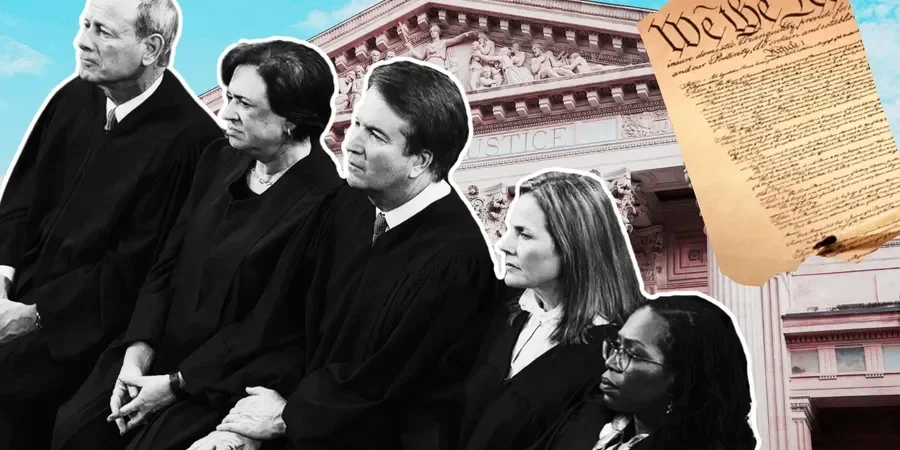

“Three hundred men, each of whom knows all the others, govern the fate of the European continent, and they elect their successors from their entourage.” Who are these men?
Thoughts on Joseph Goebbels "The World Enemy"
Introduction;
He didn’t name them. He never handed you a list. Rathenau was blasting concentrated economic power.. a tight circle of bankers, industrialists, and political insiders who rotate seats, groom replacements, and keep control inside familiar hands. “Three hundred” wasn’t a membership roll. It was a punchy way of saying a small elite class steers the machine and picks its own successors. The successors aren’t mysterious ghosts, they’re protégés, boardroom regulars, policy insiders already in the room before the vote ever happens.
Then propaganda hijacked it. The quote got ripped out of context and weaponized to sell a racial conspiracy story. A critique of oligarchy became “proof” of a secret ethnic cabal. That twist mattered. It turned legitimate anger about concentrated power into a blood-and-soil narrative about a “world enemy.” That’s how complex economic collapse gets simplified into a villain story. And once politics becomes “survival against hidden traitors,” facts stop mattering.
Strip the race bait out of it and something real remains: elite circulation is real. Interlocking directorates are real. Finance influences policy. Lobbying influences votes. Governments stabilize currencies, restructure debt, and sometimes wreck economies through bad decisions. Powerful people coordinate in banks, ministries, boardrooms, and foundations. That doesn’t require an ethnic master plan. It requires access, capital, and institutional pipelines. Power tends to reproduce itself. That’s sociology, not mysticism.
Fast forward to today and the same tension explodes under new names. Instead of “three hundred,” critics say BlackRock, Vanguard, defense contractors, lobbying blocs, foreign alliances. From an America First lens, the concern isn’t secret rituals — it’s scale and insulation. When trillion-dollar asset managers vote corporate shares across the economy, when foreign policy commitments run on autopilot, when lobbying money shapes congressional incentives, voters feel locked out. Israel’s alliance with the U.S. is formal and documented military aid, trade, intelligence ties, lobbying.
The fight isn’t about ethnicity.
It’s about whether concentrated financial and political power overrides Constitutional Accountability. Crimes are crimes. Influence is influence.
The question is whether citizens control the system.. or whether the system quietly selects its own successors.
He didn’t name them.
That line is widely attributed to Walther Rathenau (German industrialist and later foreign minister). In context, he was complaining about concentrated economic power.. a small, interconnected circle of top business/finance/industrial decision-makers who steer the continent’s economic direction and “choose successors” from their own circles. He was not publishing a roster of 300 identifiable people.
A big reason you see this quote asked as “who are they?” is that it was later reused as a propaganda hook in conspiracy literature, and also around The Protocols of the Elders of Zion, to imply a hidden cabal with known membership. That usage turns a broad critique of oligarchic networks into a literal secret list, but the quote itself doesn’t provide names.
If you want the closest “real-world” answer: the “300” was a rhetorical shorthand for Europe’s interlocking directorates.. major bankers, industrialists, and political-economy insiders who all know one another and recycle power internally—not a specific committee you can lookup by membership roll.
Who would be the successors of the three hundred men?
In the way that quote is written, the “successors” are not a second, named group with its own label. The line says they “elect their successors from their entourage,” meaning replacements come from the same social circle, people already close to them, already trusted, already inside the network. In other words: protégés, deputies, board colleagues, partners, and rising insiders… not strangers.
In real-world institutional terms, that usually looks like elite recruitment through established pipelines. The next generation tends to be drawn from top banks, major industrial firms, and the senior management layer that already interacts with those leaders. People get “groomed” through prestigious postings, advisory roles, and leadership tracks that make them known to the circle before they ever become the public face of power.
If you map it to corporate governance, the successors are often the people who already sit on overlapping boards and committees, or who are nominated into those seats by the existing directors. That’s what research on interlocking directorates focuses on: the same relatively small set of high-status individuals connecting multiple firms and becoming the obvious candidates for future top appointments.
If you map it to finance, successors tend to come from the “inner ring” around large financial institutions: senior executives, influential investors, major legal and accounting advisors, and politically connected economic policymakers who routinely work with big business. The key idea is continuity of relationships and shared expectations, not a formal vote by a single secret council.
So the most factual answer is: the “successors” would be the next wave of insiders already in the orbit of that elite—people with proven loyalty, compatible interests, and access to the same networks. The quote is describing a self-replacing leadership class (“from within their ranks”), not a public list you can look up by name.
Rathenau held a sense of inferiority in society due to his Jewishness, realising, in the words of Hans-Ulrich Wehler, “that he had come into the world as a second-class citizen and that no amount of ability and merit could ever free him from the condition”.
Why this matters
Rathenau grew up in the German Empire at a time when Jews could achieve wealth and education, but still faced social barriers that did not apply to many non-Jews. He was the son of a famous industrial founder (AEG), highly educated, and personally ambitious. Yet the surrounding culture still carried strong assumptions that Jews were “outsiders,” especially in elite institutions tied to status and national identity. That is the background for Hans-Ulrich Wehler’s point: Rathenau could climb very high, but he still felt he was treated as permanently “not quite fully accepted.”
This mattered because the German upper class often linked “true” Germanness to things like old Protestant social networks, traditional military culture, and inherited standing. Even successful, patriotic Jews could hit a ceiling. A concrete example historians point to is the Prussian officer corps, where antisemitic attitudes were common and where Jewish advancement was restricted in practice even when Jews served. Rathenau absorbed that reality early: he learned that competence and achievement did not automatically erase prejudice, which can produce a lasting sense of insecurity or inferiority even in someone outwardly powerful.
Rathenau’s response was complicated and sometimes painful to read today. In his famous 1897 essay “Höre, Israel!” (“Hear, O Israel!”), he argued that German Jews should pursue very strong assimilation—changing public behaviors and “tribal qualities” he believed irritated non-Jewish Germans—in order to reduce hostility and become fully integrated. That essay shows how intensely he felt the pressure of being seen as different, and how much he believed acceptance depended on fitting in. It also shows that he was not only criticizing antisemitism; he was also criticizing Jewish social separation, because he thought it made Jews more vulnerable.
Over time, the political climate got worse, not better. As antisemitism spread more widely in the late Empire and after World War I, Rathenau’s Jewish background became a central part of how opponents attacked him. Even when he emphasized loyalty to Germany, critics framed him as suspicious because he was Jewish, wealthy, and influential. A major historian writing in the London Review of Books notes that the rising antisemitic atmosphere pushed Rathenau to identify more clearly with Jewish life in Germany and to condemn antisemitism directly—meaning the pressure he lived with did not stay private; it shaped his public positions too.
It also matters because it helps explain why Rathenau became such a symbolic figure in Weimar Germany. He was not just a politician; he became a lightning rod for arguments about who “belongs” in the nation and who is allowed to represent it. When he served at the top of government (including as foreign minister), his visibility made him a prime target for extremists who treated Jewish identity as evidence of national betrayal. His murder in 1922 by right-wing extremists is widely understood in that context: antisemitic conspiracy thinking and political hate made him a target, even though he was a prominent German patriot by his own description.
Finally, Wehler’s observation matters today because Rathenau’s life is often pulled into modern arguments about “hidden rulers” or “financial cabals.” Understanding his real situation—an assimilated German Jew facing discrimination—helps separate documented social and political exclusion from later propaganda that tried to turn elite networks into ethnic conspiracy stories. Rathenau did write about concentrated power and insider circles, but the same period also produced heavy antisemitic distortions that used Jewish names as a shortcut for blaming “the system.” Keeping those threads separate is important if you want a fact-based reading of what Rathenau experienced and why his words were later reused in misleading ways.
The opening quotation from Walter Rathenau was a staple of anti-Semitic propaganda. Rathenau was actually deploring concentrated economic power and did not suggest that all three hundred were Jews. The Nazis and others, however, concluded that Rathenau himself was one of the mysterious three hundred, and was part of an international conspiracy to destroy Germany. For these interested in tracking down the quotation, it is available on p. 207 of a 1922 collection of Rathenau’s essays.
A well-documented pattern: Rathenau’s “three hundred men” line was repeatedly reused in antisemitic propaganda as “proof” of a Jewish world plot, even though that is not what Rathenau was arguing. In the version preserved in German propaganda collections, the quote is presented up front and then explicitly framed in conspiratorial, anti-Jewish terms by propagandists, not by Rathenau himself.
In Rathenau’s original context, the point was about concentrated economic power and insider networks… an elite that circulates positions internally. The “three hundred” functions like a rhetorical number for “a small, interconnected top tier,” not a formal committee with a roster, and Rathenau does not say “the three hundred are Jews.”
The propaganda move was to take a critique of elite economic concentration and then attach an ethnic label to it.
That distortion mattered in Weimar Germany because antisemitic conspiracy stories were already popular and politically useful.
Once the “hidden rulers” idea is racialized, it becomes an all-purpose weapon: any Jewish public figure can be cast as part of the supposed plot, and normal political disagreements get recast as “national survival” against an internal enemy.
This logic is described broadly in scholarship on modern antisemitic conspiracy thinking—especially how forgeries and propaganda texts promoted the idea of a coordinated “international Jewish conspiracy.”
But what if the conspiracy theorists are right?
…Because the “what if” is exactly how conspiracy claims keep their grip.
But sticking to facts: the specific claim here (a coordinated, secret “international Jewish conspiracy” running Europe or “destroying Germany,” with Rathenau as one of its operators) is not supported by credible historical evidence. What historians do find is something different: real elite networks, real concentration of economic power, and real backroom bargaining.. PLUS a long record of propaganda that relabels those realities into a racial storyline.
Here’s the key distinction. It’s completely reasonable to believe that small groups of powerful people coordinate - through banks, boardrooms, ministries, and social clubs… That is Reality. We can map interlocking directorates, trace lobbying, follow appointment pipelines, and read archives showing how policy and business decisions were influenced by insiders. Just follow the money. Follow the “Successors.”
None of that requires an ethnic “master plan,” and none of it points to “All Jews as a unit” directing it. The conspiracy version takes the true part (power can be concentrated) and adds an unfalsifiable, collective blame target. The fact that one is a Jew should not determine wrong doing. It shouldn’t matter.. Jew or Gentile.
If someone says “what if they’re right,” the next factual question is: what evidence would have to exist?
You’d expect primary-source documentation—coherent communications, minutes, funding trails, organizational structure, verifiable membership, consistent operational goals—showing coordinated action across countries. In practice, what exists in this lane is the opposite: recycled quotations stripped of context, forged texts presented as “proof,” and claims that shift when challenged (“it’s secret,” “it’s sealed,” “it’s hidden”).
That pattern is a hallmark of propaganda narratives, not of verifiable historical findings. But sooner or later you’re bound to stumble into facts that are not “Popping up” on google.
It also matters that “Jews” are not a monolith—historically or politically.
In Weimar-era Germany and Europe, Jewish communities included many ideological and economic differences: liberals, conservatives, socialists, religious traditionalists, secular assimilationists, Zionists, anti-Zionists, wealthy industrialists, small shopkeepers, veterans, pacifists… you name it.
The “single coordinated cabal” claim collapses that diversity into one villain, which is exactly why it’s politically useful and emotionally persuasive, even when it isn’t factual.
So the strongest fact-based answer is: if you strip away the racial frame, there is a “there” there.
An elite circulation of power, insider recruitment, concentrated finance, influence networks. Rathenau was criticizing that kind of concentration. “They” Actually exists.
The Marxist parties are willing tools in the hands of these exploiters of money. With their help, world stock exchanges were able to rob the German people of its possessions. During the world-shattering military struggle they took two million of Germany’s best sons; from their blood Wall Street coined the gold bars that today obligate us to pay tribute. They used the so-called inflation to rob us of what we owned, and in place gave us a new currency, one that no longer belongs to us, but rather to our oppressors. The world enemy has the vital organs of our national body in its hands.
Now let’s make comparisons with what is going on currently on an “America First” point of view. Why we see Israel, Vanguard and Black Rock as a cabal like entity that very well has control over many governments.
From an America First point of view, “Israeli involvement with the United States” is best understood as a mix of official, on-the-record alliances and influence channels that exist in any big foreign-policy relationship. The documented pieces are straightforward: military cooperation, U.S. foreign assistance, intelligence and technology collaboration, trade ties, and domestic lobbying by pro-Israel groups. None of those require a secret committee to be real.
The question is how much these ties shape U.S. decisions compared with what voters think is best for American security and the American economy.
The biggest, most concrete link is security aid and defense cooperation. The U.S. and Israel signed a 10-year Memorandum of Understanding covering U.S. fiscal years 2019–2028 totaling $38 billion, commonly described as $33 billion in Foreign Military Financing grants plus $5 billion for missile-defense cooperation (subject to congressional appropriation). That money supports Israel’s military purchases and joint missile-defense work like Iron Dome, David’s Sling, and Arrow programs. Critics on an America First footing argue this can create “automatic” political momentum for U.S. involvement in Middle East conflicts, while supporters argue it strengthens an ally and helps deter shared threats.
Another major channel is U.S. domestic politics through lobbying and campaign activity, which is legal and common across many issues. Pro-Israel advocacy organizations, including AIPAC, are frequently cited in reporting and public debate as influential in Congress, especially when votes involve Israel-related aid, sanctions, or military policy. From an America First perspective, the concern is that foreign-policy priorities can become “locked in” by political incentives in Washington even when public opinion is divided, and even when Americans want more attention on borders, inflation, energy costs, or rebuilding domestic industry.
Trade and economic ties are also formal and documented. The United States–Israel Free Trade Agreement took effect in 1985 (the first U.S. FTA) and is still the foundation for strong two-way trade and investment. USTR reports that in 2024 the U.S. exported about $14.8 billion in goods to Israel and imported about $22.2 billion from Israel. Reuters has also reported recent discussions about upgrading the trade relationship and tariff issues. An America First read of this is practical: trade should be judged by reciprocity, supply-chain security, and whether it helps U.S. workers and U.S. strategic industries.
Now tie this to the “concentrated finance / influence networks” idea without sliding into ethnic blame: the modern fear is less “Israel controls America” and more “policy gets steered by powerful networks that connect money, politics, and institutions.” Big asset managers (like BlackRock and Vanguard) don’t represent Israel, but they do sit on top of the corporate ownership system, and they interact with governments and regulators because of their size. When America First critics talk about a “cabal-like” system, they usually mean overlapping circles of influence.. Wall Street finance, defense contractors, major lobby groups, and Washington career institutions, where decisions can feel insulated from voters.
That’s a structural critique of power concentration, not proof of a single unified command or a foreign country “running” the U.S. But we know real people are making the decisions. If they are committing acts of treason, criminal or ethical actions, it should not matter if they are jew or gentile.
A crime is still a crime. If one is a jew and being accused of a crime, it should never be viewed as antisemitic.
So the fact-based America First bottom line is this: Israel is deeply involved with the U.S. through a long-standing alliance, large military assistance commitments, active domestic lobbying, and significant trade and technology links. Those are real and measurable. The debate is whether the current level and direction of U.S. commitments always match America’s direct interests, and whether Washington’s incentive system makes it too hard to adjust course.
Resources
1) Rathenau quote as preserved/used in Nazi-era propaganda (Goebbels “The World Enemy”)
https://research.calvin.edu/german-propaganda-archive/angrif15.htm
2) Rathenau quote + “Committee of 300” framing (explains the quote’s origin and later conspiracy use)
https://en.wikipedia.org/wiki/Committee_of_300
3) Rathenau biographical background (assimilation, antisemitism context, career)
https://en.wikipedia.org/wiki/Walther_Rathenau
4) Scholarly/biographical discussion of the quote + antisemitic re-use (“substituting ‘Jews’ for ‘men’”)
https://dokumen.pub/walther-rathenau-weimars-fallen-statesman-9780300178470.html
5) What “interlocking directorates” means (the “real-world shorthand” idea)
https://www.investopedia.com/terms/i/interlocking-directorates.asp
6) Big asset-manager influence / “Big Three” power (index funds + stewardship influence)
https://corpgov.law.harvard.edu/2022/12/13/big-three-power-and-why-it-matters/
https://scholarship.law.bu.edu/cgi/viewcontent.cgi?article=4318&context=faculty_scholarship
7) BlackRock AUM figure used in our discussion (Reuters report)
https://www.reuters.com/business/blackrock-fourth-quarter-profit-rises-etf-inflows-index-fund-demand-2026-01-15/
(BlackRock’s own 2025 Q4 / full-year press release)
https://www.blackrock.com/corporate/newsroom/press-releases/article/corporate-one/press-releases/blackrock-reports-fourth-quarter-2025-diluted-eps
8) Vanguard “Investor Choice” proxy voting expansion (Reuters report + Vanguard release)
https://www.reuters.com/sustainability/boards-policy-regulation/vanguard-expands-investor-choice-proxy-voting-program-2025-05-29/
https://corporate.vanguard.com/content/corporatesite/us/en/corp/who-we-are/pressroom/press-release-vanguard-expands-investor-choice-nearly-tripling-eligible-investors-and-quadrupling-eligible-assets-052925.html
https://corporate.vanguard.com/content/corporatesite/us/en/corp/articles/vanguard-investor-choice-nears-10-million-investors.html
9) Vanguard international AUM milestone referenced (Reuters)
https://www.reuters.com/business/vanguard-tops-1-trillion-assets-outside-us-ft-reports-2026-01-25/
10) U.S. security assistance / MOU terms (Congressional Research Service RL33222 page + PDF)
https://www.congress.gov/crs-product/RL33222
https://www.congress.gov/crs_external_products/RL/PDF/RL33222/RL33222.51.pdf
11) U.S.–Israel Free Trade Agreement (USTR + Commerce)
https://ustr.gov/trade-agreements/free-trade-agreements/israel-fta
https://www.trade.gov/us-israel-free-trade-agreement
12) Weimar-era propaganda “stab-in-the-back” claim (explainer)
https://www.theholocaustexplained.org/stab-in-the-back-myth/
13) Weimar hyperinflation background (passive resistance / Ruhr, etc.)
https://en.wikipedia.org/wiki/Hyperinflation_in_the_Weimar_Republic
https://www.theholocaustexplained.org/the-nazi-rise-to-power/the-weimar-republic/invasion-of-the-ruhr/
https://www.britannica.com/place/Weimar-Republic/The-Ruhr-and-inflation
14) Rentenmark stabilization / new currency (what it was and why it was introduced)
https://en.wikipedia.org/wiki/Rentenmark
https://www.britannica.com/place/Weimar-Republic/Toward-stabilization
Please Like & Share 😉🪽
@1TheBrutalTruth1 FEB. 2026 Copyright Disclaimer under Section 107 of the Copyright Act of 1976: Allowance is made for “fair use” for purposes such as criticism, comment, news reporting, teaching, scholarship, education, and research.


Virginia Tax Debate Ignites After Affordability Message Sparks Backlash
Voters FAFO - Virginia Voters Challenge State Leadership Over Tax Strategy - Affordability Message Collides With Revenue Plan
A political storm is brewing in Virginia after residents pushed back against proposed tax increases that critics say contradict recent public messaging about affordability. What began as a social media post highlighting economic priorities quickly turned into a flashpoint, as voters questioned how higher taxes align with promises to ease financial pressure on families.
The governor’s proposal reportedly includes adjustments to state revenue streams aimed at funding infrastructure, education, and social programs. Supporters argue that the measures are designed to stabilize long-term finances and address budget gaps. Critics counter that the timing is difficult for households already dealing with inflation, rising property values, and higher utility costs.
Online reaction intensified after the affordability message circulated widely. Commenters across political lines accused state leadership of sending mixed signals. Some residents questioned whether increased taxation undermines efforts to attract businesses and keep middle-income families from relocating to lower-tax states.
Members of the Virginia General Assembly are now debating the fiscal plan. Lawmakers from both parties have acknowledged that public response could influence negotiations. Virginia’s budget process requires legislative approval, meaning proposals may change before any final vote.
Taxpayer groups have begun organizing town halls, petition drives, and coordinated outreach campaigns to state representatives. Some residents are discussing ballot initiatives and electoral strategies in upcoming state races as a way to influence policy direction. Others are focusing on watchdog efforts, requesting detailed breakdowns of spending and projected revenue impacts.
Economists note that state-level tax policy often reflects broader debates over how to balance growth with public services. States face trade-offs between maintaining competitive tax rates and funding infrastructure, schools, healthcare systems, and public safety. How Virginia resolves this debate may shape its economic trajectory for years.
The situation remains fluid. No final tax package has been enacted, and negotiations are ongoing. For now, the episode highlights the tension between campaign messaging and governing realities — and how quickly digital reactions can reshape a policy debate.
Commentary
The Brutal Truth
They said “affordability.” Then they reached for your wallet. That’s not policy.. that’s comedy. It’s like a burglar leaving a thank-you note: “We’re easing your financial burden… by redistributing it upward.” Families are out here budgeting eggs like they’re luxury imports, and the state’s solution is, “Relax, we just need a little more from you for stabilization.” Stabilization of what? The spreadsheet?
You can’t preach relief while raising the bill. That’s not affordability. That’s a cover charge for your own paycheck.
Oh sure, it’s always “for the children,” “for the roads,” “for the future.” They line up the greatest hits — infrastructure, schools, social programs… like a charity concert, and you’re the headliner paying for all of it. They call it “revenue adjustments.” That’s adorable. It’s not an adjustment, it’s a hand in your pocket with a policy brief. And the timing? Chef’s kiss.
People are duct-taping their budgets together, choosing between gas and groceries, and the state strolls in like, “We just need a little more extraction.” Extraction! That’s a word you use for oil… or teeth. When your wallet’s already gasping for air, another tax doesn’t feel like management — it feels like the government charging you rent to live in your own paycheck.
Oh, the internet didn’t “react”, it detonated. Not the usual red-versus-blue food fight, either, this was bipartisan irritation. When you raise taxes in a state where U-Hauls are already warming up, people start doing math.
“Wait… you want more money, and you’re surprised businesses might leave?” That’s like raising the rent and acting shocked when the tenant checks Zillow. Middle-income families aren’t oak trees.. they’ve got wheels. In a mobile economy, loyalty lasts about as long as the tax bill makes sense. You can preach competitiveness all day, but if the numbers scream “exit,” people don’t argue… They Relocate.
Now the Virginia General Assembly is roasting under its own spotlight. Lawmakers suddenly remember that outrage has a forwarding address, and it votes. The budget’s “still being negotiated,” which is political code for “Oh Shit… We didn’t expect this many people to read the fine print.” And just like that, “affordability” stops being a campaign slogan and starts meaning, “Can I pay my mortgage without a second job?”
Meanwhile, taxpayers aren’t just complaining, they’re mobilizing. Town halls, petitions, election talk, spreadsheets flying around like confetti at an audit parade. People want line-by-line receipts before the state gets another dime. When citizens start asking for detailed math instead of accepting speeches, that’s not civic engagement — that’s a trust collapse with a calendar attached to Election Day.
At its core, this is the oldest bar fight in politics: “We need more money to help you” versus “Stop helping me with my paycheck.” Growth or guarantees. Competitiveness or coverage. It’s always a math problem… except somehow the answer is always “you owe more.”
Every state plays this game, but when the slogan says “affordability” and the invoice says “surprise,” people connect the dots real quick.
Nothing’s passed yet, sure.. the tax package is still stretching at the starting line, but here’s the rule they keep forgetting: you can’t dig deeper into someone’s pockets and expect a standing ovation.
Not when the bills are stacked higher than the promises.
Address Links
https://virginiageneralassembly.gov
Virginia Tax Debate Ignites After Affordability Message Sparks Backlash
Please Like & Share 😉🪽
@1TheBrutalTruth1 FEB. 2026 Copyright Disclaimer under Section 107 of the Copyright Act of 1976: Allowance is made for “fair use” for purposes such as criticism, comment, news reporting, teaching, scholarship, education, and research.
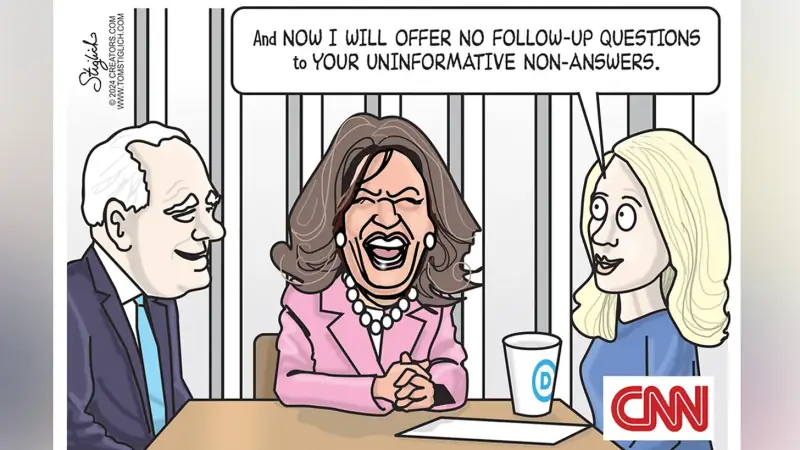



Zen and the Art of Deflection
The Collapse of Blind Guru Worship
The internet is screaming that “spiritual leaders” show up around Epstein, and people act like the universe just cracked open.
Newsflash: celebrity spirituality is a business, not a monastery. It’s an industry built on selling calmness to stressed-out people while the seller sits on a throne made of money, access, and ego. The only shocking part is that anyone still expects “enlightened” celebrities to behave better than regular celebrities.
This whole mess isn’t about “mysticism.” It’s about proximity to power. The documents, emails, name-drops, and invitations don’t prove every rumor people fling online but they do show something basic and ugly: powerful circles overlap. The same way the rich always overlap. The same way the famous always overlap. And when the overlap looks bad, nobody gives a clean answer. They give a performance.
Then comes the classic move: the airport question. A direct, simple question: why keep a relationship after the conviction? That’s not complicated. That’s not philosophy. That’s not “energy.” That’s yes-or-no territory. But instead of a straight response, you get the spiritual world’s favorite survival tactic: keep walking, act offended, and pretend you’re above the question. “Do your own work.” Translation: I’m not explaining anything, and I’m hoping you’re too tired to keep asking.
And the optics are brutal. You sell “non-attachment” while dripping in luxury. You preach ego death while everyone around you tiptoes like you’re a mob boss in linen. You brand yourself as a teacher of truth, then the moment someone asks for truth, you go mute, evasive, and defensive.. like every other person caught near a fire they don’t want to stand next to.
This is why people can’t stand celebrity gurus. It’s not meditation that bothers them. It’s not mindfulness. It’s the hypocrisy. The whole pitch is “I’m spiritually advanced,” but the behavior is “I’m untouchable.” That’s not wisdom. That’s PR. That’s a costume. That’s a business model that depends on never being pinned down to plain language, because plain language is where accountability lives.
So no, nobody “needs to understand the culture” or “interpret the vibes” to see the core problem: if your brand is morality and higher consciousness, and you’re linked socially, professionally, or personally… to a convicted predator, you don’t get to float away on mystical word salad. You answer. Clearly. Fully. Or people will assume the worst, because silence is not enlightenment—it’s self-protection.
Bottom line: this isn’t a spiritual crisis. It’s an elite credibility collapse. The public is done worshiping people who sell purity and practice proximity. The age of blind guru worship is dying, and the ones screaming loudest are the ones who built their whole empire on never having to say, out loud, what they actually knew and when they knew it.
Please Like & Share 😉🪽
@1TheBrutalTruth1 FEB. 2026 Copyright Disclaimer under Section 107 of the Copyright Act of 1976: Allowance is made for “fair use” for purposes such as criticism, comment, news reporting, teaching, scholarship, education, and research.

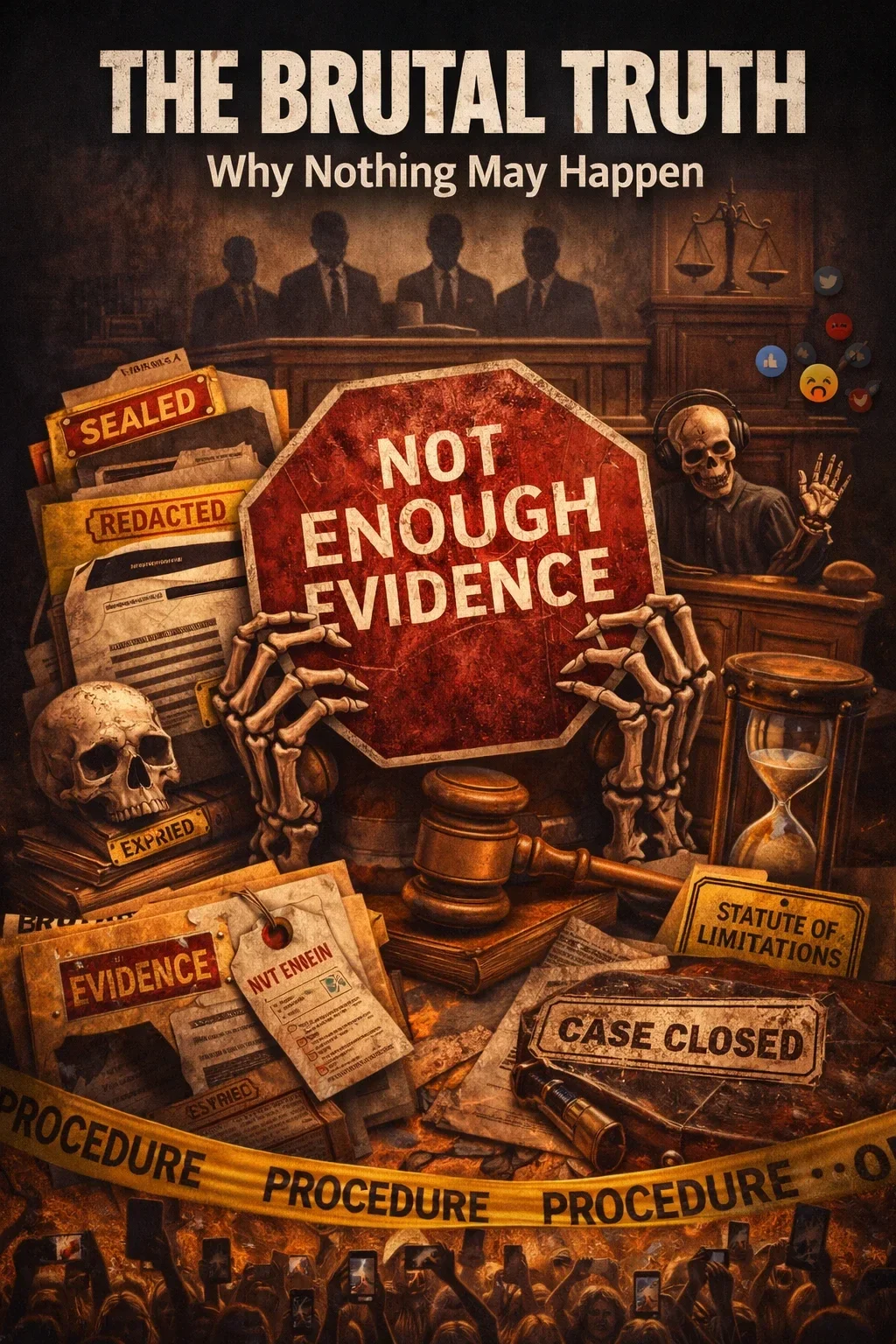
Why Association Is Not Automatic Guilt
The Epstein Files and Why Nothing May Happen
The case of Jeffrey Epstein continues to generate public attention years after his death. Arrested in 2019 on federal sex trafficking charges, Epstein was accused of operating a network that exploited underage girls. He died in custody at a federal jail in New York while awaiting trial. The official ruling by the New York City medical examiner classified his death as suicide.
Despite that official finding, the case has remained active in the public mind because of the number of prominent individuals who had past associations with Epstein. Flight logs, contact books, and previously sealed court documents have fueled speculation about who knew what, and when. However, association alone has not equaled criminal charges in most instances.
Why More Charges Have Not Emerged
Federal prosecutions require evidence that meets a high legal standard. Prosecutors must show proof beyond a reasonable doubt for criminal convictions. While civil lawsuits brought by victims have resulted in settlements and unsealed records, criminal cases depend on documented evidence of direct involvement in illegal acts.
In addition, Epstein’s death complicated matters. As the central defendant in a major federal case, his passing halted prosecution against him personally. While investigations can continue into other potential actors, building cases without a cooperating primary defendant can be legally and practically challenging.
Sealed Records and Public Expectations
Much of the ongoing speculation centers around sealed or partially redacted court documents. Courts seal records for several reasons, including protecting victim privacy, safeguarding ongoing investigations, or complying with legal standards regarding evidence. The public often expects dramatic revelations from such files, but many documents may contain material already known or legally irrelevant to criminal charges.
Civil Accountability vs. Criminal Prosecution
Several civil suits connected to Epstein and his associate Ghislaine Maxwell have produced financial settlements and court disclosures. Maxwell was convicted in federal court in 2021 on sex trafficking-related charges and sentenced to prison. Her conviction represents one of the few completed criminal cases directly tied to Epstein’s network.
Civil proceedings operate under a lower burden of proof than criminal trials. As a result, actions that may result in civil liability do not always lead to criminal prosecution. This legal distinction often frustrates members of the public who expect broader criminal accountability.
Institutional Limits and Legal Reality
Federal investigations can take years. They require witness testimony, corroborating evidence, jurisdictional authority, and prosecutorial discretion. The Department of Justice must also weigh the likelihood of conviction before bringing charges. If prosecutors believe evidence does not meet the standard required in court, charges may not be filed.
Public skepticism remains high. Polling over the past several years has shown declining trust in major institutions, including government and media organizations. In such an environment, the absence of visible new charges can reinforce suspicion that information is being withheld, even when investigations are ongoing or evidence is insufficient.
The Brutal Truth
Why Nothing May Happen
Here’s why nothing may happen: evidence has to exist. Not vibes. Not suspicions. Not “his name was in a little black book.” Real evidence. Courtroom-grade. Beyond-a-reasonable-doubt evidence. If it’s weak, old, sealed, expired, or tied to a guy who’s already dead, the machine doesn’t move. That’s not a conspiracy theory — that’s how the legal engine is built.
Statutes of limitations expire. Witnesses forget. Testimony contradicts itself. Deals get sealed. Files get redacted. And the main defendant? He’s gone. You can’t cross-examine a corpse. You can’t prosecute a headline. And you definitely can’t indict a rumor.
Now here’s the part people hate: outrage is not a legal standard. Trending on social media is not admissible evidence. A contact list is not a conviction. The justice system is slow, rigid, technical, and allergic to public emotion. It doesn’t run on anger. It runs on procedure. And procedure doesn’t care how mad you are.
Does that erase the severity of what Epstein was accused of? No. It means the courtroom is not Twitter. Due process is not a crowd vote. And prosecutors don’t file charges just because the public wants a spectacle.
The real tension isn’t just about files. It’s about trust. People don’t trust institutions. They don’t trust prosecutors. They don’t trust media. They don’t trust anyone wearing a suit and using the phrase “ongoing investigation.” So when nothing dramatic happens, it feeds the suspicion that something must be buried.
Maybe it is. Maybe it isn’t. But legally speaking? If new evidence doesn’t clear the bar, the system stays still.
And that’s the brutal truth: the justice system is built to convict on proof, not pressure. If the proof isn’t there — or can’t legally be used — the show ends without the finale people were expecting.
Sources
https://www.justice.gov/usao-sdny/pr/jeffrey-epstein-charged-sex-trafficking-minors
https://www.justice.gov/usao-sdny/pr/ghislaine-maxwell-sentenced-20-years-prison
https://www.law.cornell.edu/wex/beyond_a_reasonable_doubt
https://www.law.cornell.edu/wex/civil_case
Why Association Is Not Automatic Guilt - Denise Gradin
Please Like & Share 😉🪽
@1TheBrutalTruth1 FEB. 2026 Copyright Disclaimer under Section 107 of the Copyright Act of 1976: Allowance is made for “fair use” for purposes such as criticism, comment, news reporting, teaching, scholarship, education, and research.

New Questions About Old Mysteries
Are Aliens Real? Joe Rogan, Secret Footage, and the Growing UFO Debate
In recent years, public debate about unidentified flying objects—now officially called Unidentified Aerial Phenomena (UAP)—has moved from late-night radio to mainstream congressional hearings.
In episodes of The Joe Rogan Experience, host The Joe Rogan Experience has discussed government-released footage and testimony from military pilots who reported objects performing maneuvers beyond known aircraft capabilities. Rogan’s reactions reflect a larger shift: questions about extraterrestrial life are no longer dismissed outright but are being openly debated.
What Footage Has Actually Been Confirmed
The U.S. Department of Defense confirmed in 2020 that several Navy videos—often referred to as the “Tic Tac,” “Gimbal,” and “GoFast” clips—were authentic recordings of unidentified objects. However, “unidentified” does not mean alien. Officials have stated that the objects remain unexplained but have not confirmed extraterrestrial origins. In 2023, additional congressional hearings examined claims from former intelligence officials who alleged that the government may possess retrieved non-human craft. Those claims remain unverified by publicly released evidence.
Claims of Secrecy and Classified Information
Much of the speculation centers on secrecy. Military agencies often classify footage and data for national security reasons, especially if sensors or defense capabilities are involved. This fuels public suspicion that information is being hidden. Lawmakers from both parties have pushed for greater transparency, leading to the creation of the All-domain Anomaly Resolution Office (AARO) to review and declassify UAP cases where possible. So far, official reports have not confirmed the existence of alien technology.
The Role of Media Personalities
Rogan and other media figures amplify these discussions to millions of viewers. While podcasts allow open speculation, they also blur the line between confirmed facts and personal belief. When footage is described as “never meant to be released,” it often refers to classified military material that later became declassified—not necessarily evidence of extraterrestrial cover-ups.
Scientific Perspective on Extraterrestrial Life
Scientists widely agree that the universe is vast and that microbial life elsewhere is possible. Agencies like NASA actively search for biosignatures on Mars and exoplanets. However, no verified scientific evidence currently proves that non-human intelligence has visited Earth.
Why the Debate Persists
Public trust in institutions has declined over time, and past government secrecy in unrelated areas contributes to suspicion. At the same time, technological advances have made aerial anomalies easier to capture but not always easier to explain. This combination keeps the debate alive.
The Brutal Truth
Here’s the part nobody likes because it ruins the X-Files theme music:
Yes, the Pentagon released the videos. Real videos. “Gimbal.” “GoFast.” “Tic Tac.” Grainy blobs doing weird stuff in the sky. The government said, “We don’t know what that is.”
You know what that means?
It means… they don’t know what that is.
It does not mean E.T. missed curfew and buzzed a destroyer.
Congress held hearings. Pilots testified. An intelligence guy said there might be secret programs. Great. Testimony is interesting. It’s not a signed lease agreement from Alpha Centauri. People testifying under oath is serious — but it’s still testimony. Not a captured alien with a Costco receipt.
Then NASA looked at it. Not YouTube NASA. Real NASA. Their independent study team said, “We see no evidence this is extraterrestrial.” Translation: cool mystery, zero Martians.
Then the Pentagon’s UAP office — AARO — did its review. Their public conclusion? No verified evidence of alien craft. No confirmed alien tech. No Roswell garage sale.
So why does the “they’ve hidden it for decades” theory refuse to die? Because classified data sounds sexy. Because “unresolved” makes people think “cover-up.” Because the government has kept secrets before — about weapons, surveillance, programs — so people assume the biggest possible twist. And because “we don’t know yet” is boring, while “intergalactic road trip” sells merch.
Here’s the cold shower:
Unidentified means unidentified.
It doesn’t mean alien.
It means the data isn’t clear, the sensors have limits, and sometimes the sky does weird stuff we haven’t pinned down yet.
Mystery? Yes.
Proof of non-human intelligence? Not according to the official public evidence.
Until someone rolls a spacecraft onto the White House lawn and it parallel parks itself, “unidentified” is still just that — unidentified.
Address links (sources)
https://www.congress.gov/event/118th-congress/house-event/116282
https://www.nasa.gov/specials/uap/
New Questions About Old Mysteries - Denise Gradin
Please Like & Share 😉🪽
@1TheBrutalTruth1 FEB. 2026 Copyright Disclaimer under Section 107 of the Copyright Act of 1976: Allowance is made for “fair use” for purposes such as criticism, comment, news reporting, teaching, scholarship, education, and research.

The Warsh Buffer: Why Some Think Trump Is Lining Up a Blame Target for Interest Rates
How the Federal Reserve Actually Sets Rates
Kevin Warsh is not just a random name floating around social media. President Trump announced he would nominate Warsh to be the next Federal Reserve chair, with Jerome Powell’s chair term ending in May 2026.
The claim that Trump is “setting up Warsh as the fall guy” is not something you can prove like a document leak, because it’s about motive. What you can do is look at the public record: Trump has repeatedly criticized Powell and has openly pushed for much lower interest rates, while praising Warsh as someone who supports cutting rates.
Here’s the key point people miss: the Fed chair does not set rates alone. The Federal Open Market Committee votes, and the chair leads the meetings and helps steer the message, but rate decisions are still a committee outcome driven by inflation, jobs, and financial stability risks. That’s why “rates rocketing” would usually happen only if inflation flares up or markets seize up, not just because a new chair shows up.
Still, the “fall guy” theory has a logic that fits modern politics. If the White House spends months telling voters that rates should be far lower (even throwing out numbers like 1%), then any outcome that keeps borrowing costs high can be framed as someone else’s fault. A Reuters analysis even raised the idea that presidents sometimes like having the Fed as a convenient target when the economy disappoints, because it redirects public anger away from the administration.
On the conservative side, the argument usually goes like this: inflation and high rates are the bill for years of federal spending, weak discipline, and policy choices that kept prices hot; therefore, the Fed should stop “over-tightening” and let growth breathe. In that storyline, putting in a new chair like Warsh signals a shift toward cuts, and if cuts don’t happen (or inflation returns), the White House can say the Fed “wouldn’t cooperate.”
From a middle-of-the-road view, the worry is almost the opposite: if presidents pick chairs expecting loyalty on rates, the Fed can look less independent, and markets can start doubting whether inflation will be controlled. Reuters polling and reporting around the Warsh moment highlighted that many economists expect a growing concern about Fed independence once Powell’s chair term ends.
The Brutal Truth
Trump nominated Kevin Warsh. Boom. Official. January 30, 2026. Not a rumor. Not a fever dream from cable news. A real nomination with a press release and everything.
And yes — Trump wants lower rates. Shocker. He’s been saying the U.S. should have the lowest interest rates in the world like he’s ordering off a dollar menu. He’s been hammering Jerome Powell for moving too slow, too cautious, too “please don’t spook the bond market.” Trump’s position? Cut faster. Cut harder. Make borrowing cheap again.
Now here’s the part that ruins the conspiracy crowd’s fantasy: the Fed chair doesn’t sit on a throne with a giant red “RATE CUT” button. The Federal Open Market Committee votes. It’s a room full of economists staring at inflation, jobs, and financial stress like they’re reading tea leaves. If inflation runs hot, rates can stay high — or go higher — no matter who’s holding the gavel.
So is Warsh being set up as the fall guy? That’s not a fact. That’s a vibe. Motive-reading isn’t evidence. But let’s be honest — blaming the Fed is political gold. When mortgages hurt and credit cards bite, politicians love pointing at a marble building in D.C. and saying, “It’s them.” Presidents get to demand low rates when times are good and blame the Fed when they’re not. It’s the oldest trick in Washington: outsource the pain, claim the win.
Meanwhile, economists are clutching their spreadsheets and whispering about “Fed independence” like it’s a sacred relic. Reuters has reported concern about political pressure as Powell’s term winds down in May 2026. Markets don’t just watch rates — they watch whether the Fed looks independent. If investors think politics is driving the bus, volatility shows up fast and loud.
Bottom line: Trump nominated Warsh. Trump wants lower rates. The committee sets rates. Inflation calls the shots. And the “fall guy” theory? It’s speculation — believable to some because politics loves a scapegoat, especially when borrowing costs start punching voters in the wallet.
Address links (sources)
https://www.reuters.com/business/miran-says-he-would-love-stay-fed-it-is-up-others-2026-02-11/
https://www.reuters.com/markets/us/how-soon-before-trump-dubs-kevin-warsh-clueless-2026-02-02/
The Warsh Buffer: Why Some Think Trump Is Lining Up a Blame Target for Interest Rates
Please Like & Share 😉🪽
@1TheBrutalTruth1 FEB. 2026 Copyright Disclaimer under Section 107 of the Copyright Act of 1976: Allowance is made for “fair use” for purposes such as criticism, comment, news reporting, teaching, scholarship, education, and research.


America in 1970: Why People Were Leaner
Food, Movement, and a Different Daily Life
In 1970, far fewer Americans were classified as obese compared to today. According to historical data from the Centers for Disease Control and Prevention, adult obesity rates in the early 1970s were around 13–15 percent.
Today, that number is over 40 percent. The difference has led many researchers to examine what daily life looked like more than five decades ago.
One major difference was food availability and portion size. In 1970, fast-food chains existed but were far less dominant, and portion sizes were significantly smaller. Restaurant meals contained fewer calories, and ultra-processed snack foods were not as widespread as they are today. Grocery stores carried processed items, but the scale of packaged convenience foods was much smaller than the modern food industry.
The Rise of Processed Food After 1970
Beginning in the late 1970s and 1980s, the American diet changed dramatically. High-fructose corn syrup became widely used in beverages and packaged foods. Soda consumption increased, and calorie-dense snacks became cheaper and more accessible. Researchers from the U.S. Department of Agriculture have documented rising per-capita calorie intake beginning in the 1980s.
Average daily calorie intake increased by several hundred calories compared to 1970 levels. Even small daily calorie increases can lead to gradual weight gain over time. While dietary guidelines evolved over decades, critics argue that shifting food marketing practices and industrial food production played a large role in rising obesity rates.
More Physical Activity in Everyday Life
Americans in 1970 generally moved more during the day. Many jobs involved manual labor, and fewer people worked at desks compared to today’s service-based economy. Children spent more time outdoors and had less screen time because smartphones, video streaming, and modern gaming systems did not exist. Studies show that daily physical activity has declined steadily since the 1970s as work became more sedentary.
Commuting patterns also shifted over time. Suburban expansion increased car dependency, reducing walking and routine physical movement. Modern lifestyles involve more sitting — at work, in cars, and at home — which experts link to long-term weight gain and metabolic changes.
Cultural and Social Differences
In 1970, more meals were cooked at home. Families ate together more frequently, and snacking between meals was less common. Research suggests that increased snacking frequency and late-night eating patterns have risen significantly in recent decades.
Television existed in 1970, but the number of channels was limited and programming hours were shorter. Today’s constant digital entertainment encourages prolonged inactivity. Middle-of-the-road public health experts argue that technology itself is not the problem, but how often it replaces physical movement. Conservative commentators often emphasize personal responsibility and reduced reliance on processed foods, while mainstream researchers focus on structural food systems and environmental changes.
The Brutal Truth
Let’s translate this without the kale smoothie tone.
Americans in 1970 were thinner because they ate actual food, not chemistry experiments wrapped in neon plastic. Portions were normal. Soda wasn’t a bathtub. “Supersize” wasn’t a verb. And people moved… not because they had Pelotons, but because life required it. You walked. You worked. You didn’t DoorDash a milkshake at midnight while arguing on Twitter.
Fast-forward to today: calories went up, movement went down, and somehow we’re shocked. We engineered a food system where the cheapest option is the most addictive one, then built a lifestyle where you can live entirely horizontal. That’s not a mystery.. that’s math.
And no, there isn’t one villain. It’s not just corporations. It’s not just government guidelines. It’s not just “personal responsibility.” It’s all of it. The system changed. The culture changed. We changed.
The fix? It’s not glamorous. Eat less junk. Move more. Stop pretending 600 liquid calories is hydration. That’s it. No conspiracy, no magic injection, no TikTok hack.
Turns out the secret to looking like 1970 is doing what they did in 1970 … minus the shag carpet and disco.
Address Links
Centers for Disease Control and Prevention
https://www.cdc.gov/obesity/data/adult.html
U.S. Department of Agriculture
https://www.ers.usda.gov/data-products/food-availability-per-capita-data-system/
National Institutes of Health Study on Obesity Trends
https://www.ncbi.nlm.nih.gov/pmc/articles/PMC4859313/
CDC Physical Activity Data
https://www.cdc.gov/physicalactivity/data/index.html
NIH Study on Physical Activity Decline
https://www.ncbi.nlm.nih.gov/pmc/articles/PMC3779145/
Pew Research Center
https://www.pewresearch.org/internet/
CDC Nutrition Data
https://www.cdc.gov/nutrition/data-statistics/index.html
America in 1970: Why People Were Leaner - Denise Gradin
Please Like & Share 😉🪽
@1TheBrutalTruth1 FEB. 2026 Copyright Disclaimer under Section 107 of the Copyright Act of 1976: Allowance is made for “fair use” for purposes such as criticism, comment, news reporting, teaching, scholarship, education, and research.


Why “Three Million Pages” Still Might Not Be the Real Story
The Genesis 6 Conspiracy, Grape Soda, Pizza, and the Epstein Files
A new detail being discussed in coverage of the DOJ’s Epstein file releases is drawing attention for a different reason than flight logs or contact lists. In at least some of the material summarized by major outlets, Epstein is shown urging people in his network to use Signal, an encrypted messaging app.
For people who already believe power networks prefer private channels, that detail lands like a warning sign: if key conversations moved to encrypted apps, then any public document dump might only capture the parts that were never truly protected.
The same DOJ release has also been criticized for basic usability problems, including a search bar that the DOJ and reporting say may produce unreliable results because of “technical limitations” and document formats (like handwriting) that do not search well. That matters because when search is weak, the public cannot easily verify claims, cross-check names, or track timelines. For skeptics, a broken search tool feels like a built-in fog machine. For more cautious readers, it may simply reflect the reality of dumping huge volumes of mixed-quality records on a deadline.
Then came a second controversy: the DOJ said it temporarily removed about 9,500 files to review and add redactions, after concerns that identifying victim information may have been exposed. That development gave two different audiences more fuel. Critics of the release process argued it shows sloppy handling and poor planning. People already distrustful of institutions argued it proves the release is being managed in a way that keeps the public off balance—files appear, disappear, and reappear, while the narrative changes by the week.
Where Signal becomes the “changes everything” point for some commentators is not the app itself, but what it represents. Signal is designed for end-to-end encrypted messages, meaning outsiders generally cannot read the content in transit. That does not automatically mean “no records” exist anywhere, but it does mean the old idea of subpoenas easily producing years of clear, readable communications is less realistic when people choose modern encrypted tools. So the skeptical argument goes like this: the more powerful the person, the more likely the real coordination happened off the easy-to-search systems.
Some reporting also points out that “Signal app” shows up as a short, telling reply inside the Epstein communications being examined by journalists. Wired, for example, describes an exchange where Epstein responds with “signal app,” framing it as a nudge toward an encrypted call or chat. For a conservative-leaning audience, this fits a long-running suspicion that elite circles operate with one set of rules for the public and another set for themselves. For more middle-of-the-road readers, it can be read more simply: wealthy people often use privacy tools like everyone else, and one message alone does not prove a grand, organized cover-up.
Now add the “grape soda & pizza” layer. Online, certain communities treat everyday items—food, emojis, slang—as potential signals for deeper meanings, especially in abuse-related conspiracy talk. The problem is that symbolism claims can spread faster than proof. If readers want to treat this topic responsibly, the standard has to be the same every time: what does the actual document say, what is the context, and is there independent evidence, not just pattern-matching. Broken search tools and chaotic releases make that harder, and that is part of why these symbol-based narratives thrive.
This is where Gary Wayne’s Genesis 6 framing comes in for many Christian audiences. Wayne’s work argues that spiritual rebellion and corrupted power structures go back to the pre-flood era, often discussed through “Watchers,” “giants,” and ancient-text traditions. People who accept that framework tend to interpret modern elite networks as echoes of older patterns: secret knowledge, protected classes, and systems that survive regime changes. Critics say that stretches ancient interpretation into modern accusations without enough proof. Supporters say it explains why the same “type” of corruption seems to repeat across history.
When you connect that worldview to Ephesians 6:12—Paul’s line about not wrestling against “flesh and blood,” but against rulers, powers, and spiritual forces—some readers conclude the real fight is not left vs. right, but good vs. evil behind institutions. That does not prove any specific modern claim by itself, but it does explain why some people look at Epstein-related material and see more than scandal: they see a spiritual diagnosis of the age, and a warning that politics is often the surface layer of something deeper.
In the end, there are two grounded takeaways that both conservatives and moderates can agree on without pretending speculation is fact. First, if the DOJ is going to publish massive archives in the public interest, they need stable access, clear indexing, and reliable search—otherwise trust collapses and rumors rush in. Second, the Signal detail is meaningful because it highlights a modern reality: people with money and influence have more ways than ever to communicate outside the easiest public record trails. Whether someone interprets that as smart privacy, suspicious secrecy, or spiritual warfare depends on their worldview, but the practical issue—transparency vs. opacity—remains the same.
Address links (sources)
https://www.justice.gov/epstein/doj-disclosures/data-set-1-files
https://www.axios.com/2025/12/23/epstien-files-read-search-doj-library-apps
https://www.cbsnews.com/live-updates/epstein-files-released-doj-2026/
https://www.businessinsider.com/doj-jeffrey-epstein-removed-thousands-files-2026-2
https://www.wired.com/story/epstein-files-tech-elites-gates-thiel-musk/
https://www.bibleref.com/Ephesians/6/Ephesians-6-12.html
Why “Three Million Pages” Still Might Not Be the Real Story
Please Like & Share 😉🪽
@1TheBrutalTruth1 FEB. 2026 Copyright Disclaimer under Section 107 of the Copyright Act of 1976: Allowance is made for “fair use” for purposes such as criticism, comment, news reporting, teaching, scholarship, education, and research.



Human Rights Watch Internal Fight Sparks Resignations Over Shelved Israel-Palestine Report
What the blocked “right of return” report says, why leaders paused it, and why staff walked out
Human Rights Watch is facing internal backlash after two members of its Israel-Palestine team resigned, saying senior leadership halted a report that would have called Israel’s long-running denial of many Palestinian refugees’ “right of return” a crime against humanity.
The dispute has drawn attention because HRW is one of the world’s best-known human rights organizations, and critics on all sides watch closely for any sign that its work is shaped by politics or donor pressure instead of consistent standards.
According to reporting from Drop Site News and Jewish Currents, Omar Shakir, HRW’s Israel-Palestine director for nearly a decade, said a 43-page draft had already gone through months of internal review, including review by legal and subject-matter teams, and was scheduled for publication before it was stopped near the finish line. Shakir said he was told by phone that the report would not be released as planned, and he later resigned, saying he no longer trusted leadership’s handling of the issue.
Human Rights Watch has publicly rejected the claim that this was simple censorship. In a statement quoted by the Guardian, HRW said the report raised complex issues and that parts of the research and factual basis needed to be strengthened to meet HRW standards, so publication was paused for further analysis and research. HRW also indicated the process is still ongoing, which suggests leadership is leaving open the possibility of a revised report rather than a permanent cancellation.
Former head of Human Rights Watch’s Israel and Palestine team Omar Shakir in 2019.
The core disagreement is not just about the right of return as a principle, but about labeling the denial of return as a crime against humanity under international criminal law. The Guardian report describes how the draft reportedly tried to fit the policy into the “other inhumane acts” category in the Rome Statute framework, and the article notes that HRW leadership and other reviewers debated whether the legal theory was strong enough and supported by sufficient evidence. HRW’s new executive director, Philippe Bolopion, also told staff the organization remains committed to the right of return as policy, while arguing the internal debate centered on legal and advocacy questions about how to present the claim.
Shakir argued that narrowing the report only to recent displacement would create an unfair double standard, where denial of return for someone displaced recently could be treated as severe enough, but decades-long denial for families displaced in 1948 or 1967 would not. Jewish Currents reported that Shakir described leadership’s approach as driven by fear of blowback, not by neutral legal analysis, and said Palestinian civil society partners may rethink cooperation with HRW if they believe politics can affect which findings get published.
Leadership concerns described in the Guardian coverage include how the report could be interpreted publicly, especially arguments that a broad “return” claim could be framed by opponents as threatening Israel’s identity as a Jewish-majority state. That argument matters politically because it touches the most sensitive part of the refugee debate: Israel and many supporters say mass return would function as demographic defeat, while Palestinians and many advocates describe return as a basic remedy for displacement and a rights issue that cannot be negotiated away.
The controversy has also split prominent voices connected to HRW. Drop Site News reported that former HRW executive director Kenneth Roth defended Bolopion’s decision, calling the draft’s legal approach novel and unsupported, while Shakir pointed to prior HRW positions in other contexts to argue the organization has treated denial of return as potentially meeting grave legal thresholds elsewhere. For readers who lean conservative, this kind of internal clash can reinforce skepticism about large NGOs and whether they apply the same rules to every conflict. For centrist readers, it can raise a different concern: whether organizations that claim impartiality can keep consistent standards when a topic becomes politically radioactive.
Address links (sources)
https://www.theguardian.com/world/2026/feb/03/human-rights-watch-researchers-resign-palestine
https://www.hrw.org/about/people/omar-shakir
Please Like & Share 😉🪽
@1TheBrutalTruth1 FEB. 2026 Copyright Disclaimer under Section 107 of the Copyright Act of 1976: Allowance is made for “fair use” for purposes such as criticism, comment, news reporting, teaching, scholarship, education, and research.
Trump, Iran, and the Problem With a Moving Target
Why shifting “reasons” for war can signal the mission was never clear
The foreign policy warning in Paul R. Pillar’s new piece is simple: when leaders talk like they are ready to strike first and explain the “why” later, it usually means the case for war is weak, or at least unsettled.
Pillar compares that pattern to past conflicts where the public justification changed over time, like Vietnam and Iraq, and argues that changing stories are a red flag because they can turn a major military decision into a political improvisation instead of a clear national strategy.
In the current Iran situation, Pillar points to how talk of U.S. action rose sharply during the wave of Iranian protests that reportedly began in late December and spread into early January, when President Trump publicly encouraged protestors and implied help was coming. Reporting at the time described the administration’s rationale as “in flux,” while U.S. forces were reportedly building up in the region, raising the basic question of what the mission actually was if protests cooled off before any action happened.
A core practical problem is target selection. Pillar argues that if the stated goal is to “help protestors,” airstrikes often can’t separate regime forces from civilians in a way that reliably protects innocents, and outside attacks can even unify a country around its government out of nationalism when it feels attacked. He notes that even Iranian reformist voices can oppose foreign military intervention while still demanding major internal change—meaning outside force may not produce the political outcome outsiders expect.
Pillar also questions the idea that Iran is always “one nudge away” from collapse. He argues that even if a collapse happened, what comes next could be unstable and unpredictable, and U.S. officials themselves have suggested there is uncertainty about who would fill a vacuum. In his view, “regime decapitation” or sudden breakdown could plausibly lead to harder outcomes, including a more militarized successor structure, rather than a government that aligns with U.S. preferences.
On the stated demands side, Pillar says the goals being floated do not line up cleanly with a clear casus belli. He lists three themes often raised in public debate: uranium enrichment, ballistic missiles, and Iranian support for regional partners like the Houthis, Hezbollah, and Hamas. His argument is that these issues are either already shifting due to events on the ground, too one-sided to be accepted as a deal (if others in the region are not constrained), or too disconnected from an immediate threat to justify sudden major force—especially if the “why now” appears more political than strategic.
A conservative-leaning reader might agree with Pillar on one major point even while being tougher on Iran overall: if the United States uses force, it should be tied to a narrow, clearly defined objective that protects Americans and avoids getting pulled into open-ended nation-shaping. A middle-of-the-road reader might add that Congress, allies, and the public deserve a stable explanation of purpose, risks, and end state before any new strike. Either way, the shared concern is that shifting rationales can become a blank check—where the mission expands after the first bombs fall.
Legal and diplomatic context matters here because international rules generally prohibit the threat or use of force against another state except in limited circumstances like self-defense or Security Council authorization, and humanitarian arguments (like Responsibility to Protect) are typically framed as collective action through the UN system rather than a single country acting alone. That doesn’t end the debate, but it raises the bar for clarity: if the justification is moving, it becomes harder to argue the action is lawful, necessary, and limited.
Photos and video readers can use for this story: Responsible Statecraft’s Iran topic page includes the featured image used with the Pillar article (often displayed as a Trump/Khamenei composite). The Washington Post and PBS Frontline also published a related investigative video page about strikes and the nuclear question that may be useful for viewers following the broader Iran strike debate.
Address links (sources)
https://responsiblestatecraft.org/trump-war-iran/
https://responsiblestatecraft.org/tag/iran/
https://www.washingtonpost.com/national-security/2026/01/29/trump-iran-military-strikes-protesters/
https://www.un.org/en/genocide-prevention/responsibility-protect/about
https://www.un.org/en/about-us/un-charter/full-text
https://warroom.armywarcollege.edu/articles/un-article-2-4/
Please Like & Share 😉🪽
@1TheBrutalTruth1 FEB. 2026 Copyright Disclaimer under Section 107 of the Copyright Act of 1976: Allowance is made for “fair use” for purposes such as criticism, comment, news reporting, teaching, scholarship, education, and research.

MAJORITY OF AMERICANS SUPPORT VOTER ID LAWS
Backing Policies you haven’t bothered to Understand isn’t Compassion or Principle—It’s Political Ignorance dressed up as Moral Superiority.
Polling over the last several years consistently shows that a majority of Americans support laws requiring voters to show identification before casting a ballot. Support spans party lines and demographic groups, though the intensity and reasoning behind that support often differ depending on political perspective and personal experience with elections.
National surveys from multiple organizations find that roughly two-thirds to three-quarters of U.S. adults favor some form of voter ID requirement. These polls typically ask about basic photo identification, such as a driver’s license or state-issued ID, rather than more restrictive or narrow forms of proof. Support remains strong even when respondents are told that IDs would be provided at low or no cost by the government.
From a conservative viewpoint, voter ID laws are commonly framed as a straightforward election-security measure. Supporters argue that elections should meet the same basic identity standards required for other civic activities, such as boarding a plane, opening a bank account, or purchasing age-restricted items. In this view, voter ID laws help reinforce confidence in election outcomes and reduce suspicion about fraud, even if documented cases are rare.
From a middle-of-the-road perspective, many Americans support voter ID while also expressing concern about access. Polling shows that people can simultaneously favor ID requirements and support safeguards, such as free IDs, mobile ID units, or expanded early voting, to ensure that elderly, low-income, rural, and minority voters are not unintentionally excluded.
Opposition to voter ID laws exists but represents a minority position in most national surveys. Critics often argue that voter fraud is uncommon and that ID requirements could discourage participation if implemented without adequate accommodations. These concerns tend to be stronger among younger voters and those who have experienced difficulties obtaining government identification.
The brutal truth is simple: backing policies you haven’t bothered to understand isn’t compassion or principle—it’s political ignorance dressed up as moral superiority.
State-level policy reflects this divide. As of 2025, more than 30 states have some form of voter identification requirement, though the strictness varies widely. Some states accept non-photo IDs or allow voters without ID to cast provisional ballots, while others require photo identification with limited exceptions. Court challenges and legislative revisions continue to shape how these laws are applied.
The overall data suggest that the public debate is less about whether voter ID should exist and more about how it should be implemented. Most Americans appear to want both election integrity and fair access, and polling indicates broad support for policies that attempt to balance those two goals rather than prioritize one at the expense of the other.
Address links
Gallup polling on voter ID support
https://news.gallup.com/poll/394017/americans-support-voter-id-laws.aspx
Pew Research Center survey on voter ID laws
https://www.pewresearch.org/politics/2018/10/15/voter-identification-laws/
Rasmussen Reports national voter ID polling
https://www.rasmussenreports.com/public_content/politics/general_politics/voter_id_laws
National Conference of State Legislatures overview of state voter ID laws
https://www.ncsl.org/elections-and-campaigns/voter-id
Associated Press explainer on voter ID debates
https://apnews.com/article/voter-id-laws-explained-elections
Brennan Center overview of voter ID policy and court rulings
https://www.brennancenter.org/issues/ensure-every-american-can-vote/voting-rights/voter-id
Please Like & Share 😉🪽
@1TheBrutalTruth1 FEB. 2026 Copyright Disclaimer under Section 107 of the Copyright Act of 1976: Allowance is made for “fair use” for purposes such as criticism, comment, news reporting, teaching, scholarship, education, and research.
HANNITY CLASHES WITH TENNESSEE DEMOCRAT AFTER ON-AIR ACCUSATION SPARKS SHOUTING MATCH
FIERY EXCHANGE HIGHLIGHTS ESCALATING TONE IN NATIONAL POLITICAL DEBATES
A Fox News segment on Hannity erupted into a heated shouting match after Tennessee state Rep. Justin Jones accused host Sean Hannity of associating with “pedophiles and perverts” at Mar-a-Lago.
The accusation, made during a live discussion, immediately drew a forceful response from Hannity, who rejected the claim and demanded evidence, leading both men to talk over each other as the exchange intensified.
The confrontation centered on broader political grievances but quickly shifted to personal allegations, illustrating how televised debates can escalate when rhetoric overtakes substance. Hannity argued that such claims were reckless and defamatory, while Jones framed his remarks as criticism of political culture and associations. No evidence was presented on air to support the allegation, and the segment ended with raised voices rather than resolution.
The incident reflects a wider trend in cable news where confrontational tactics and provocative language drive attention but often crowd out detailed policy discussion. Supporters of Hannity criticized the accusation as an unfounded smear, while Jones’ defenders said the moment underscored frustrations with political accountability and media influence. As election-season tensions rise, exchanges like this continue to shape—and harden—the tone of national discourse.
SOURCES (ADDRESS LINKS)
Please Like & Share 😉🪽
@1TheBrutalTruth1 JAN. 2026 Copyright Disclaimer under Section 107 of the Copyright Act of 1976: Allowance is made for “fair use” for purposes such as criticism, comment, news reporting, teaching, scholarship, education, and research.
Dan Bongino’s Exit From the FBI, His “Black Pill” Fight, and the Fallout in Conservative Media
Dan Bongino, a longtime conservative media host and former Secret Service agent, was tapped by President Donald Trump in late February 2025 to serve as deputy director of the FBI under FBI Director Kash Patel, a role that does not require Senate confirmation.
Bongino later said he would resign and leave the bureau in January 2026, ending a short and unusually high-profile tenure for a job that is normally held by a long-time career FBI official.
On January 9, 2026, major outlets reported the FBI chose Christopher Raia, the head of the FBI’s New York Field Office and a career agent, to replace Bongino and return the deputy role closer to the bureau’s traditional leadership model.
The split inside the pro-Trump media ecosystem: some supporters argue Bongino went into the FBI to fight corruption and push transparency, while critics argue he came back from government service telling supporters to “trust the process” while attacking independent voices who demanded receipts. That criticism intensified during ongoing public anger about the pace and redactions of Epstein-related document releases.
What does “black pill” mean in this context
In online culture, black pill originally grew from “pill” slang and is often used to describe a bleak, hopeless worldview; in some corners of the internet it is specifically tied to extremist and misogynistic “incel/manosphere” ideology.
In political talk online, people also use “black-pilled” more broadly (and more loosely) to mean someone who has become deeply pessimistic and no longer believes the system will fix itself, no matter who is elected. That broader “nihilistic/pessimistic” usage is common on social media even when it has nothing to do with the manosphere meaning.
What does “grifter” mean
Grifter is a common insult that means “con artist” or someone accused of swindling people for money, attention, or influence; in politics, it usually implies the person is selling outrage or fear for clicks, donations, subscriptions, or status rather than being honest.
What Bongino is reported to have said about “black pillers” and “grifters”
In early January 2026, coverage of Bongino’s posts framed his message as a warning that “black pill” accounts and “grifters” are flooding supporters with lots of claims but thin evidence, predicting disaster before policies can be judged, and avoiding direct attacks on Trump while trying to turn the base against the administration.
A key point for readers is that “black piller” is not a formal label with one definition; it is a rhetorical tag. People use it to group together voices they believe are poisoning morale, while those being tagged often say it is just a way to silence criticism and accountability demands.
The Epstein files dispute and why it matters here
The Epstein records fight became a major credibility test because many voters expected faster transparency, while the Justice Department and FBI have argued redactions and review are needed to protect victims and handle the massive volume of material.
Separately, reporting described internal “review/redaction” workflows around Epstein-related records and said Bongino’s role drew criticism because he had previously built a media brand around fighting “deep state” secrecy. Supporters and critics interpret the same facts differently: supporters say you cannot release sensitive material without careful review; critics say it looks like the same slow-walk and heavy redaction people were promised would end.
The whistleblower angle
Redacted also references to former FBI figures and whistleblowers, including Stephen Friend, and it connects to broader congressional oversight activity around FBI whistleblower retaliation claims and settlements. Senator Chuck Grassley’s office has publicly discussed resolutions involving multiple FBI whistleblowers, including Friend.
Some media outlets have also quoted whistleblowers criticizing Patel-and-Bongino-era decisions, including claims that promised reinstatements or reforms did not happen as expected. Those are allegations and disputes, not court findings in the materials above, but they help explain why the “betrayal vs. necessary compromise” argument exploded once Bongino left and returned to podcasting.
So what I am gathering here is that the job was too much for Bongino..
Even without an “official” statement from Bongino that says “the job was too much for me,” but the public facts and reporting line up with an “overmatched / not a good fit / brutal workload” interpretation.
It looks like Bongino went in with a reform mission and public expectations, but the reality of running the FBI’s internal machinery — and the political/media pressure around cases like Epstein — likely made the role hard to sustain.
That doesn’t prove “too much” in a personal sense, but it supports “the job demanded more institutional experience and tolerance for bureaucratic trench warfare than a media figure could realistically bring in a short window.”
Bongino’s short tenure as a sign the FBI deputy director job was probably bigger than he expected. The deputy director runs daily operations, manages the internal machine, and deals with constant legal, political, and media pressure.
After he left, the FBI moved to replace him with a career FBI official, which suggests the bureau wanted deep institutional experience in that role. While Bongino has not publicly framed it as “the job was too much,” the timeline and the nature of the job support the idea that the position was difficult to sustain without years inside the FBI system.
So is his blasting of Alex Jones "Sour Grapes"?
It could be “sour grapes,” but it’s not the only plausible read.
“Sour grapes” is a way of describing what happens when someone doesn’t get the outcome they expected—status, praise, success, or validation—and then turns on critics or former allies as a way to protect their credibility and self-image.
This is why many people interpret Bongino’s attacks on figures like Alex Jones as sour grapes: a segment of his audience expected sweeping reform, transparency, and visible accountability on issues like Epstein, January 6, and internal FBI corruption, and when those expectations weren’t met, his return to media accompanied by scolding and labeling critics can look like a defensive pivot rather than engagement with substance.
From that view, going after high-profile independent voices serves as reputation repair—asserting insider authority, positioning himself as the gatekeeper of who is “legit,” and reframing disappointment as disloyalty. At the same time, it is also possible this is not purely emotional or personal, but strategic. Bongino may sincerely believe that persistent “black pill” messaging drains morale, fractures political momentum, and weakens an administration he still supports, prompting him to draw hard lines and police the narrative, even if that angers former supporters.
He may also be trying to distance the broader movement from controversial figures and speculation-heavy ecosystems to preserve mainstream credibility. The real test is not tone, but substance: if his message remains heavy on labels and light on specific corrections, documents, or clear rebuttals, it looks more like deflection and reputation management; if he names concrete false claims and challenges them with evidence, it looks more like a genuine dispute.
For now, the most balanced read is that the backlash labeled as “sour grapes” may actually be a blend of wounded credibility, defensive posture, and a deliberate attempt to reassert control over the narrative inside the pro-Trump media space.
SOURCES
Reuters (Feb. 24, 2025) – Trump says Dan Bongino to be FBI deputy director
https://www.reuters.com/world/us/trump-says-dan-bongino-be-fbi-deputy-director-2025-02-24/
FBI.gov – Deputy Director Dan Bongino (bio page)
https://www.fbi.gov/about/leadership-and-structure/deputy-director-dan-bongino
PBS NewsHour (Dec. 17, 2025) – Bongino says he plans to resign as FBI deputy director in January
Associated Press (Jan. 9, 2026) – Head of FBI’s New York field office to serve as co-deputy director after Bongino’s departure
https://apnews.com/article/7e6a4cfd7ed968f348070d743da5461a
Reuters (Jan. 9, 2026) – FBI to tap head of New York office for No. 2 job (replacing Bongino)
https://www.reuters.com/world/us/fbi-tap-head-new-york-office-no-2-job-nyt-reports-2026-01-09/
Fox News (Jan. 9, 2026) – FBI names Christopher Raia co-deputy director after Dan Bongino’s departure
The Guardian (Jan. 6, 2026) – DOJ has released less than 1% of Epstein files, filing reveals
https://www.theguardian.com/us-news/2026/jan/06/epstein-files-release-justice-department
New York Post (Jan. 6, 2026) – DOJ says it has released fewer than 1% of Epstein files with more than 2 million documents under review
Encyclopaedia Britannica (Nov. 27, 2025) – What does “black pill” refer to? (background on the term’s origin/usage)
https://www.britannica.com/topic/What-does-black-pill-refer-to
Wiktionary – “black pill” (general definition including nihilistic philosophy usage)
https://en.wiktionary.org/wiki/black_pill
Vocabulary.com – “grifter” definition
https://www.vocabulary.com/dictionary/grifter
PoliticalDictionary.com – “grifter” in political usage
https://politicaldictionary.com/words/grifter/
Timcast (Jan. 6, 2026) – Aggregated commentary video/article about Bongino and “black pillers/grifters”
https://timcast.com/video/dan-bongino-is-back-declares-war-on-maga-black-pillers-and-grifters/
Please Like & Share 😉🪽
@1TheBrutalTruth1 JAN. 2026 Copyright Disclaimer under Section 107 of the Copyright Act of 1976: Allowance is made for “fair use” for purposes such as criticism, comment, news reporting, teaching, scholarship, education, and research.
Selective Mourning: What a January 6 Vigil Refused to Acknowledge
JANUARY 6TH. THE DAY TRUTH DIED.
Conservatives who don’t feel the same way many liberals do often start from a different core story: they see January 6th as a protest that turned into a riot, fueled by bad decisions and some criminal behavior, but not as an “attempted coup” on the level liberals describe.
Trump Derangement Syndrome Runs Deep in the Demoncrat minions.
Many conservatives also believe the 2020 election had serious irregularities (even if not enough to change the outcome), even if the breach itself was wrong. Liberals more often start from a different core story: they see it as a direct attack on a constitutional process (certifying stolen electoral votes) and on peaceful transfer of power, with political leaders and misinformation playing a central role in pushing people toward that moment.
Another major difference is trust and “double standard” perception.
A lot of conservatives believe institutions (major media, federal agencies, courts, elite universities) Lied about the actual event. Most recently, one of the largest news medias admitted to broadcasting “edited videos” placing blame to President Trump for the actions of a few.
Yes, January 6th was wrong and people who broke the law should be punished, but the way it’s been treated is clearly not “equal justice.”
In 2020, many leaders and media figures made excuses for violence by calling destructive protests “mostly peaceful,” even when buildings were burned, people were hurt, and police were attacked. Some politicians supported bail funds that helped people arrested during these riots get released quickly, sending the message that the damage was acceptable because of the cause behind it. From this point of view, the problem is not peaceful protest, but the double standard.
When disorder came from one side, it was explained away as justified anger. When disorder came from the other side on January 6th, it was treated as unforgivable. Conservatives say this uneven response makes the system look political instead of fair.
January 6th was wrong, and anyone who broke the law should be punished. But the response went far beyond normal law enforcement. The government and major media quickly chose the most extreme label—“insurrection”—and then treated the whole event like a national security case. Some people were held in jail for long periods before trial, and even people accused of simple trespassing were talked about like terrorists. There are still people held in prison, whose crimes were simply because they were at the event.
The liberal Democrat message comes across as, “This is what happens if you belong to the wrong movement.” That kind of uneven language and punishment can make people lose trust in the system and feel afraid to speak up.
Yes, January 6th happened inside the Capitol during a serious government process, and breaking in was wrong. But that doesn’t mean it should be treated like a one-of-a-kind event that can’t be compared to anything else.
When riots in other places shut down courts, attacked federal buildings, or tried to scare officials into changing decisions, those were also direct attacks on government and the rule of law. People making this argument say the real issue is applying the same standard every time: condemn violence, charge the criminals, and don’t act like one side’s mob is “protest” while the other side’s mob is a threat to the nation.
Some people say the system is supposed to protect citizens first, not just government buildings and officials.
From that view, free speech, due process, and equal treatment under the law matter most, especially when emotions are high. They worry that big institutions can use fear to justify more surveillance, broad labels like “extremist,” and harsh punishment that gets applied unevenly.
They also argued that protecting democracy is not only about defending Congress or elections, but about making sure the government does not use a crisis to silence dissent or punish people more because of their politics. There is the belief it was more so about protecting criminal activities.
The United States was founded as a constitutional republic, not a pure democracy. Clearly, the “democracy” they referred to was their so-called right to preserve the criminal acts they hoped to hide.
Is that what they are commemorating? The good ole days that they knew were going to disappear?
This is what they feared having Trump for President...
Multiple outlets documented additional “wall of receipts” problems (duplications, mislabeling, inflated totals) and subsequent changes/removals.
Duplicate Medicaid/CHIP + subsidized ACA Exchange enrollments (2.8 million people flagged; ~$14B potential annual impact)
CMS publicly reported a 2024-data analysis identifying 2.8 million people potentially enrolled in multiple Medicaid/CHIP records across states or enrolled in both Medicaid/CHIP and a subsidized ACA Exchange plan, with CMS describing a potential ~$14B annual cost.
Federal student aid fraud blocked (>$1B prevented since January 2025)
The U.S. Department of Education publicly stated it has prevented $1 billion in federal student-aid fraud since January 2025, citing new fraud controls (including identity verification measures for certain applicants).
PPP/EIDL identity anomalies tied to Social Security Number misuse (potential billions in fraudulent loans)
The Pandemic Response Accountability Committee (PRAC) issued a fraud alert identifying billions of dollars in potentially fraudulent pandemic loans associated with SSN misuse patterns (a major basis for later “age anomaly” and identity-based fraud narratives around SBA programs).
Finally, social identity matters.
People judge events partly by whether they think the worst actors “represent” their side. Many see January 6th offenders as a chaotic minority or infiltrated mix that doesn’t represent them, while many liberals see the crowd as the predictable result of a broader movement’s rhetoric.
Flip that dynamic and you get similar asymmetry in how each side interprets other protests: people defend their own, and assume the other side is showing its true face.
The one thing I’ve seen so far about this so-called January 6th vigil is that they did not even mention one woman who had died on that day.
Ashli Babbitt.
Some people say it’s not accurate to treat her death as the only one “directly tied” to what happened that day. They argue that if a person dies during the chaos, that is still part of the event, even if the cause was a medical emergency. They also point out that several police officers later died by suicide, and while that happened after January 6th, they believe the trauma and pressure from that day mattered. There is proof for the general statement “several officers later died by suicide,” because reputable outlets and at least one official agency page explicitly state suicide and identify the officers.
What is not universally “proven” is the stronger claim that each suicide was caused by January 6. Some cases were later treated as line-of-duty related by boards/agencies, while others are reported as occurring after the response without a definitive causal ruling in every public source.
From this view, the deaths should be discussed with the same seriousness and honesty for everyone, instead of using narrow wording that makes one death seem more real and the others less important.
Why a “January 6 vigil” (depending on who held it) might not mention her usually comes down to framing:
If a vigil is supposed to honor what happened on January 6, leaving out Ashli Babbitt looks more like choosing which lives count. People can condemn the breach and still admit a woman was shot and killed that day. Ignoring her name makes the event feel political, not human.
It also sends a message that sympathy is only allowed for certain people, depending on their side. In that view, a real vigil should acknowledge every death tied to the day, even if it makes the audience uncomfortable.
Selective Mourning: What a January 6 Vigil Refused to Acknowledge
Please Like & Share 😉🪽
@1TheBrutalTruth1 JAN. 2026 Copyright Disclaimer under Section 107 of the Copyright Act of 1976: Allowance is made for “fair use” for purposes such as criticism, comment, news reporting, teaching, scholarship, education, and research.
China’s Weapons Exports Face Scrutiny as Venezuela’s Defenses Come Under the Microscope
So to put it bluntly... China’s weapons suck.
The dramatic U.S. operation involving Venezuela has drawn intense attention, but public reporting after the capture of Venezuelan President Nicolás Maduro. Venezuela has spent years building its military around Chinese- and Russian-supplied systems, and that those systems are now being questioned by analysts worldwide.
The focus has shifted from political theater to a practical question: how well do these imported weapons perform under real pressure?
Venezuela invested heavily in Chinese military equipment marketed as modern and affordable, including radars, armored vehicles, rockets, and surveillance systems. Chinese manufacturers promoted these systems as capable of countering advanced Western aircraft and providing layered defense. Many of these claims rely on simulations, controlled tests, and internal evaluations rather than repeated real-world validation. This concern is not theoretical. Multiple countries that purchased Chinese systems have reported reliability, maintenance, and performance problems after deployment.
One example frequently cited is China’s export drone program. Iraq and Jordan both acquired CH-4 drones, only to see large portions of their fleets grounded within a few years due to technical failures and maintenance challenges. Jordan ultimately sold its drones after concluding they were not dependable enough for sustained operations. These documented cases have fueled skepticism about similar Chinese systems used by Venezuela, especially in air defense and surveillance roles.
Analysts also point to structural issues within China’s defense industry. Studies by Western research institutions note that China’s military development is tightly centralized, highly classified, and vulnerable to corruption and inflated reporting. Equipment that looks impressive in parades or promotional videos may struggle in fast-moving, information-heavy environments where integration, training, and command speed matter as much as hardware. By contrast, the U.S. military emphasizes stress testing, joint exercises, and adapting systems after flaws are exposed.
For Americans, the takeaway is not about celebrating rumors or exaggeration. It is about understanding how real military capability is measured. Weapons that succeed in marketing campaigns do not always succeed in practice. Nations that rely on propaganda-driven assessments risk dangerous miscalculations, while those that prioritize transparency, testing, and accountability tend to adapt faster. As global tensions rise, separating verified facts from online claims is essential, and so is recognizing that national security depends on proven performance, not promises.
So to put it bluntly... China’s weapons suck.
Many of its exported systems consistently fail to live up to the claims used to sell them. On paper, Chinese weapons are marketed as advanced, affordable, and capable of challenging Western technology, but real-world use by foreign buyers has exposed serious weaknesses in reliability, maintenance, integration, and performance under stress.
Multiple countries have reported grounded drones, malfunctioning electronics, poor spare-parts support, and systems that look impressive in demonstrations but break down in sustained operations. This gap exists because China’s military industry relies heavily on controlled testing, internal reporting, and propaganda rather than repeated real combat validation.
In contrast, U.S. systems are built around constant testing, failure correction, and battlefield feedback. For America, the lesson is clear: true strength comes from honest testing and accountability, not inflated promises, and nations that confuse appearances with capability risk dangerous miscalculations when it matters most.
Maybe China deliberately sells crappy weaponry in case their “Friends” should use it on them...
It’s possible as a theory, but there’s no solid public evidence that China has an official strategy of deliberately exporting “booby-trapped” or intentionally inferior weapons so partners can’t use them against China. What is well documented is something more ordinary—and in many cases, more likely.
Here are the most plausible explanations people point to, from most grounded to more speculative:
Export versions are often downgraded
Many arms exporters (not just China) sell export models with reduced capabilities, different software, or limited integration. That’s usually about protecting sensitive tech and maintaining a military edge, not setting allies up to fail.
Reliability and sustainment are where systems live or die
A weapon can look great in a demo and still perform poorly if spare parts, maintenance training, logistics, and quality control aren’t strong. Reported problems with some Chinese export drones and other systems fit this pattern: not enough sustainment depth, inconsistent parts, and uneven support.
Corruption and incentives can produce “paper performance”
If promotions and contracts reward impressive numbers and headlines, you get systems optimized for test metrics and display—while real durability, integration, and ruggedness suffer.
Integration is harder than buying hardware
Modern defense is networks. If radar, air defense, comms, and command don’t integrate smoothly—and operators aren’t trained to run them under pressure—the whole thing can look like “the hardware failed” even when the core issue is the system-of-systems.
Strategic leverage (the closest “intent” theory that’s still realistic)
Instead of wanting partners to fail in combat, a more plausible strategic motive is wanting partners to depend on China for upgrades, spares, technicians, and financing—locking in influence. That can indirectly keep partners from becoming too independent or too capable.
Bottom Line: Defense reporting shows that the weak performance of some Chinese-made weapons is more likely due to how they are built and sold, not because of a secret plan to make them fail. Weapons made for export are often less capable than the versions China keeps for itself. Many buyers also struggle with poor maintenance, limited spare parts, and not enough training to keep the systems working.
When a government allows workers to go unpaid, tolerates fake or unsafe food, and looks the other way while poor workmanship becomes normal, it raises serious concerns about trust and responsibility. A country that fails to protect its own people from corruption and low standards shows a system where profit and image come before human life and accountability.
If basic consumer goods are unreliable and corners are routinely cut at home, it is reasonable to question the safety, quality, and ethics of that same system exporting weapons abroad. Arms sales are not just business deals; they carry life-and-death consequences for other nations. Allowing a government with a record of neglect, deception, and weak quality control to supply military equipment risks spreading those failures beyond its borders and undermines global security rather than strengthening it.
Sources and Links
Reuters – Venezuela political and military coverage: https://www.reuters.com/world/americas/venezuela-politics/
BBC – Venezuela background reporting: https://www.bbc.com/news/world-latin-america-venezuela
Defense News – Chinese export drone reliability: https://www.defensenews.com/global/asia-pacific/2018/09/18/chinas-export-drones-are-cheap-but-come-with-risks/
Reuters – China drone exports and limits: https://www.reuters.com/article/us-china-drones-idUSKCN1M60C6
RAND – PLA modernization analysis: https://www.rand.org/pubs/research_reports/RR392.html
CSIS – PLA structure and testing limits: https://www.csis.org/analysis/peoples-liberation-army-modernization
U.S. Department of Defense – Operational testing approach: https://www.defense.gov/
China’s Weapons Exports Face Scrutiny as Venezuela’s Defenses Come Under the Microscope
Please Like & Share 😉🪽
@1TheBrutalTruth1 JAN. 2026 Copyright Disclaimer under Section 107 of the Copyright Act of 1976: Allowance is made for “fair use” for purposes such as criticism, comment, news reporting, teaching, scholarship, education, and research.
Karl Pribram and the Brain Model That Reframed Perception
The brain acting like a translator that turns hidden information into the stable world we think we see.
Karl Pribram was a major brain researcher who argued that perception is not a direct “readout” of the outside world. Instead, he said the brain builds experience using patterns, math, and transformations that help it recognize and organize what matters. His ideas pushed many people to rethink a simple assumption: that the brain is only a wiring map of neurons firing on and off, and that perception is just a camera-like recording of reality.
What Karl Pribram suggested is something that quietly challenges how most people think about reality: that the brain does not simply receive the world as it is, but actively builds what we experience using hidden patterns, wave-like signals, and mathematical processes. In this view, what we see, hear, and feel is more like a translation than a photograph, shaped by the brain to make sense of something far deeper and less visible. Reality, then, may not be solid objects moving through space the way they appear, but an underlying field of information that the brain “decodes” into a usable picture. This helps explain why memories are not stored in one place, why perception can change without the world changing, and why people can sense meaning or structure even when details are missing. Pribram’s work hints that consciousness may be tuning into reality rather than generating it, suggesting the world we experience is a kind of interface—useful, convincing, but not the full story of what actually exists.
Pribram’s radical proposal is often called the holonomic (or holographic) brain approach. The basic claim is that important parts of perception and memory can be understood as wave-like processing, where information is carried in interference patterns rather than stored like files in one single location. In this view, the brain can encode “the whole” across distributed patterns, which helps explain why people can still recognize objects and retrieve memories even when the brain is noisy, damaged, or missing pieces of information.
The holonomic brain idea suggests that the mind works less like a filing cabinet and more like a field of waves, where information is spread out and shared across the whole system instead of locked in one spot. In this way of thinking, memories and perceptions are not stored as single images or data points, but as patterns that can be rebuilt even if parts are missing. This could explain why someone can recognize a face from just a glance, remember a song from only a few notes, or still function after parts of the brain are damaged. It also raises a deeper possibility: that the brain may be tapping into a larger informational structure rather than holding everything inside itself. If true, the mind would be more like a receiver or translator, pulling order out of underlying patterns and turning them into the solid, stable world people believe they are seeing.
A key reason Pribram’s model got attention is that it used real tools from engineering and physics, especially Fourier-style analysis, which converts complex patterns into component frequencies and then back again. He argued that the brain can treat sensory inputs in a similar way: not just as points of light or touch, but as patterns that can be transformed, compared, and reconstructed quickly. This helps explain how the brain can identify a face across different lighting, distance, angle, or partial obstruction.
What made the ideas especially powerful is that they borrowed real methods from engineering and physics, not just philosophy. Fourier-style analysis shows how a complicated signal can be broken down into waves and frequencies, then rebuilt into a clear image or sound. Pribram believed the brain may do something similar, turning raw sensory input into patterns it can reshape and compare almost instantly. This means the brain is not looking for exact copies of what it sees, but for familiar wave patterns that stay the same even when details change. That is why a person can recognize a face in shadow, at a distance, or from a strange angle. It also suggests that what we experience as solid objects may begin as invisible patterns, with the brain acting like a translator that turns hidden information into the stable world we think we see.
Pribram also emphasized a classic perception problem: when you see a person across the room, you do not experience them as “moving on your retina.” You experience them as out there in the world. He argued that the brain is constantly “projecting” an organized world outward from sensory surfaces, which is why perception feels external even though the signals begin inside the body. This is where his work intersects with bigger philosophical questions about what we mean by “reality” versus “our experience of reality.”
Something most people never stop to question: we do not feel like the world is happening inside our heads, even though all sensory signals start there. When you see someone across a room, you do not experience them as an image on your eyes, but as a real person standing in real space. He suggested the brain is constantly building and projecting a finished version of the world outward, making it feel solid and external. This raises a deeper idea that what we call reality may be a carefully organized experience created by the brain, not the raw source itself. In that sense, the world we live in could be a convincing reconstruction, shaped by the mind to feel stable and shared, while the true nature of what exists remains hidden behind the experience we are given.
Some writers blended Pribram’s brain model with broad claims about the universe and consciousness, especially through discussions connected to physicist David Bohm. A careful, mainstream-friendly way to state it is this: Pribram offered a model for how the brain might process information in a distributed, pattern-based way, and that model can inspire big questions. But inspiration is not the same as final proof. Even supporters commonly treat parts of it as a powerful framework and analogy, while critics argue many brain functions can still be explained without “hologram” language.
Some thinkers connected them to much larger questions about the universe, especially through conversations linked to physicist David Bohm, who believed reality itself might be deeply interconnected beneath the surface. In this blended view, the brain’s pattern-based way of working could reflect how the universe is structured at a deeper level, where everything is connected through hidden order rather than separate objects. At the same time, careful researchers point out that this does not mean the theory is proven fact. Instead, it serves as a strong way to think differently about mind and reality, offering a new lens rather than a final answer. Supporters see it as a meaningful framework that opens doors, while critics say the brain can still be explained without using hologram-like ideas. Either way, Pribram’s work continues to challenge people to question whether reality is as simple and solid as it appears.
Sources and Links:
Scholarpedia overview of holonomic brain theory: https://www.scholarpedia.org/article/Holonomic_brain_theory
Pribram paper on holonomy/structure and Fourier-style tools: https://karlpribram.com/wp-content/uploads/pdf/theory/T-095.pdf
Pribram paper discussing perception as “projection” and implicate order language: https://www.karlpribram.com/wp-content/uploads/2025/08/T-148.pdf
Official Karl Pribram video archive: https://www.karlpribram.com/videos/
Karl Pribram and the Brain Model That Reframed Perception
Please Like & Share 😉🪽
@1TheBrutalTruth1 DEC. 2025 Copyright Disclaimer under Section 107 of the Copyright Act of 1976: Allowance is made for “fair use” for purposes such as criticism, comment, news reporting, teaching, scholarship, education, and research.


Silver Is Rising Fast, Debt Is Growing Faster, and the Dollar Debate Is Heating Up
Silver has been on a historic run, and the talk of a “$100” target is spreading because prices recently pushed above $80 before pulling back into the mid-$70s.
On December 29, 2025, reporting showed silver briefly hit an intraday record above $83 and then dropped sharply as traders took profits and margin requirements were raised, which can force leveraged buyers to sell. Right now, that means $100 is not here yet, but it is no longer a fantasy number in people’s minds because the market just proved it can move very fast in a short time. Reuters AP
To understand the “magical $100” claim, it helps to do the simple math: if silver is around $75, getting to $100 requires roughly a one-third jump. That kind of move can happen in commodity markets, but it usually needs a strong mix of forces like tight supply, heavy industrial demand, and a rush of investor buying at the same time. Recent coverage points to industrial demand pressures (including energy and tech-related uses), along with investor demand and a softer dollar environment, as reasons the rally has been so intense and volatile. AP JMBullion (live spot reference)
At the same time, global debt levels are enormous, and that is not a slogan—it is measurable. The Institute of International Finance reported global debt reaching about $345.7 trillion by the end of September 2025, with the overall ratio around 310% of global GDP. This matters to regular people because high debt can push governments toward higher borrowing costs, more aggressive central bank actions, and political fights over spending, taxes, and inflation protection. Reuters (IIF debt)
There is also a second, widely used way to describe debt that focuses on “global debt as a share of world GDP,” and the IMF says it remains above 235% of global GDP in its latest updates. Different debt trackers use different definitions (public vs. private, financial vs. nonfinancial, and how countries report), so the numbers will not match exactly, but the direction is the same: debt is very high and staying high. That environment is one reason people look at hard assets like metals, especially when they worry about long-term currency purchasing power. IMF blog IMF Global Debt Monitor PDF
The phrase “the U.S. dollar is dying” is where you should slow down and separate frustration from facts. The dollar’s role has faced real pressure from diversification and “de-dollarization” talk, but major official data still shows the dollar as the leading reserve currency by a wide margin. A Federal Reserve research note reported the dollar made up about 58% of disclosed global official reserves in 2024, far ahead of the euro and others, and IMF COFER reporting continues to track these trends. So the more accurate claim is that the dollar is being challenged and gradually diluted at the edges, not that it has collapsed. Federal Reserve (2025 edition note) IMF COFER dataset page
What this looks like going into 2026 is a tug-of-war: metals can surge when people fear inflation, conflict, or currency weakness, but they can also drop hard when rules tighten, liquidity dries up, or traders get overextended. If silver keeps staying tight on supply and demand stays hot, $100 stays on the table as a future possibility. If the dollar stays relatively firm and financial conditions tighten, silver can remain volatile and pull back sharply even in a broader uptrend. Reuters (silver volatility) Financial Times (margins/volatility)
Other Sources and links—
Reuters, silver hits above $80 then pulls back (Dec 29, 2025): https://www.reuters.com/world/india/precious-metals-retreat-silver-dips-after-breaching-80ounce-2025-12-29/
Financial Times, silver rally reverses and margins tighten (Dec 29, 2025): https://www.ft.com/content/b9cad28d-b786-431a-a10f-a377dbf1a868
Associated Press, CME margin changes and metal volatility (Dec 29, 2025): https://apnews.com/article/c49577dedd4c799005de5b7af552ce81
Reuters, IIF global debt near $346T (Dec 9, 2025): https://www.reuters.com/world/americas/mature-markets-push-global-debt-record-near-346-trillion-says-iif-2025-12-09/
IMF, global debt remains above 235% of world GDP (Sep 17, 2025): https://www.imf.org/en/blogs/articles/2025/09/17/global-debt-remains-above-235-of-world-gdp
IMF Global Debt Monitor PDF (2025): https://www.imf.org/external/datamapper/GDD/2025%20Global%20Debt%20Monitor.pdf
Federal Reserve, international role of the U.S. dollar (2025 edition): https://www.federalreserve.gov/econres/notes/feds-notes/the-international-role-of-the-u-s-dollar-2025-edition-20250718.html
IMF COFER dataset: https://data.imf.org/en/datasets/IMF.STA%3ACOFER
Kitco silver chart: https://www.kitco.com/charts/silver
JMBullion live silver price chart: https://www.jmbullion.com/charts/silver-prices/
Critiques & Theories 4 | The Brutal Truth
Please Like & Share 😉🪽
@1TheBrutalTruth1 DEC. 2025 Copyright Disclaimer under Section 107 of the Copyright Act of 1976: Allowance is made for “fair use” for purposes such as criticism, comment, news reporting, teaching, scholarship, education, and research.
Comparing “Apples to Hairy Nuts” is Quite the Colorful Comparison...
Hodgetwins & Nick Fuentes Have A Level of BLACK FATIGUE That Is Incurable...
Here’s the thing. When incidents like interracial killings happen, the only thing white people are often told they’re allowed to say is something like, “Well, if the shoe were on the other foot, there would be outrage.” The argument usually goes that if it were George Floyd, people would be marching and rioting, but when a white kid is killed, no one does anything. But that, in my view, doesn’t really say much. It just points out what people see as hypocrisy on the left or a double standard on race, without actually expressing what many white people feel.
What a lot of white people feel, according to this line of thinking, is frustration and exhaustion. The feeling is, why are we expected to tolerate this? People work hard, move to neighborhoods they believe will be safe, and want to live without constant fear. It’s the twenty-first century, and they don’t want to deal with problems they believe should not exist in a modern society. The perception, rightly or wrongly, is that a lot of this crime is coming from young adolescents in places like Chicago and other cities.
After one particular killing, I (Fuentes) said on my show that people are simply done with it. They don’t want to live near it anymore. The argument goes that, as a white person, you’re placed in an impossible position. You can either defend yourself and risk being charged with murder by a progressive prosecutor, or make a split-second mistake and be labeled a racist or white supremacist and be publicly destroyed. There is no room, in this view, for being a person who simply made a mistake.
On the other side of that fear is the belief that if you hesitate or confront the wrong person, you could lose your life. The argument claims that this creates a no-win situation. If you’re cautious, you’re accused of racism. If you’re not cautious and the situation turns dangerous, you could be killed. The result, as described, is constant anxiety about walking down the street, crossing the road, or making the wrong judgment in a moment that could cost everything.
The men then try to clarify that this is not about saying every black person is violent. The claim is that there are opportunistic predators, as in any population, who roam looking for distracted or vulnerable people. Young men, young women, anyone not paying attention. The fear being described is rooted in crime statistics, news reports, and lived perception rather than an assertion that all people are the same.
The conclusion presented is blunt and controversial. The men says they personally would not want to live near black people because, in their view, it would feel irresponsible if they had a family to protect. They emphasize that they are not saying all black people are violent, but argue that patterns seen in the news and in certain neighborhoods make them nervous. They frame this reaction as a survival instinct rather than hatred, and say that the way the story unfolded makes the discussion uncomfortable, but unavoidable.
Please Like & Share 😉🪽
@1TheBrutalTruth1 DEC. 2025 Copyright Disclaimer under Section 107 of the Copyright Act of 1976: Allowance is made for “fair use” for purposes such as criticism, comment, news reporting, teaching, scholarship, education, and research.
Ben Shapiro and Tucker Carlson Clash at TPUSA AmericaFest 2025 in High-Profile Showdown
At the 2025 AmericaFest conference hosted by Turning Point USA (TPUSA), conservative commentators Ben Shapiro and Tucker Carlson faced off in what many attendees and observers are calling one of the most talked-about moments of the event. The clash brought sharp debate, growing audience engagement, and wide discussion across social and traditional media.
Ben Shapiro and Tucker Carlson CLASH at TPUSA America Fest in Ultimate Showdown of 2025
The confrontation unfolded on stage during a panel discussion about the future of Republican politics and conservative media influence. Both Shapiro and Carlson have been prominent voices within the conservative movement, but in recent years they have taken different approaches to commentary and political strategy. At AmericaFest, those differences were laid bare in front of a large crowd of activists, donors, and college students.
Shapiro, known for his rapid-fire style and emphasis on logical argumentation, pressed a series of points about the importance of traditional conservative principles such as limited government, free speech, and judicial restraint. He urged conservative leaders to focus on policy consistency and broad coalition-building, warning that infighting could undermine long-term goals.
Carlson, who gained national prominence through his former primetime television program and maintains a strong following, challenged Shapiro’s framing. He argued that conservative politics must be willing to break with establishment norms and confront elites in both major parties. Carlson’s remarks emphasized populist critique, skepticism of centralized power, and a confrontational approach to media and cultural institutions.
At key moments, the discussion grew heated, with the speakers interrupting one another and pushing back on each other’s premises. Moderators attempted to keep the discussion focused, but audience reactions — including applause, laughter, and chants — added to the energy of the exchange.
Supporters of both commentators viewed the confrontation differently. Shapiro’s audience praised his clarity and structured arguments, saying they appreciated his insistence on disciplined debate. Carlson’s supporters responded to his willingness to challenge orthodox positions and highlight what they see as elite resistance to grassroots concerns.
TPUSA organizers said afterward that the purpose of the session was to showcase the diversity of thought within the conservative movement and to encourage robust discussion among different viewpoints. They described the event as a reflection of a broader national conversation about how the movement should evolve.
Political analysts have noted that clashes like this can signal shifts within conservative ranks, where debates over strategy, messaging, and leadership style may shape future elections and policy priorities. For many observers, the Shapiro-Carlson exchange at AmericaFest 2025 was less about personal rivalry and more about defining the fault lines in modern conservatism.
Whether this showdown will have lasting impact is yet to be seen, but it has already sparked wide online debate and coverage, highlighting how key figures within the same political movement can hold sharply divergent views on how best to advance their shared goals.
What’s provable
-
Shapiro publicly criticized Carlson at AmericaFest and tied it to Carlson hosting/featuring specific people Shapiro considers beyond the line, including Nick Fuentes (and in some coverage, also Andrew Tate / Darryl Cooper).
-
Shapiro used direct “responsibility/own it” language about hosting Fuentes, including a harsh characterization of Fuentes and the claim that if you host him and “glaze” him, you should “own it.”
-
Shapiro also accused some people of “cowardice” for not condemning Candace Owens’ conspiracy claims about Charlie Kirk’s assassination, and explicitly connected that complaint to people speaking at the event.
-
Carlson responded on stage the same night and mocked the idea of “DE platforming/denouncing people” at a Charlie Kirk event, framing it as contrary to Kirk’s free-speech ethos.
What’s rhetoric (not directly provable as fact, because it’s opinion, interpretation, or motive)
Shapiro’s rhetoric (value judgments + motive claims)
-
Calling Fuentes things like “Hitler apologist,” “Nazi-loving,” “anti-American,” and describing hosting him as “moral imbecility” is rhetorical labeling and moral judgment, not a falsifiable fact claim by itself.
Labeling someone with charged terms like “Hitler apologist,” “Nazi-loving,” or “anti-American,” and condemning an interview as “moral imbecility,” functions primarily as rhetoric rather than proof, because those phrases express moral outrage and political judgment, not measurable or testable facts on their own. While such language may reflect sincerely held beliefs or interpretations of a person’s past statements, it does not, by itself, establish intent, ideology, or impact in a way that can be objectively verified without specific quotes, context, and direct evidence tied to each claim. In political disputes like the Shapiro–Carlson clash, this kind of labeling often serves to signal boundaries and rally supporters by framing an opponent as beyond acceptable debate, but it also blurs the line between documented behavior and inferred character. As a result, the audience is asked to accept the conclusion through moral authority rather than through a clear chain of verifiable facts, which is why these accusations remain persuasive rhetoric rather than independently provable claims.
-
Saying Carlson “built” Fuentes up, “glazed” him, or “mainstreamed” someone is an interpretation of effect and intent. You can verify the interview happened, but you can’t objectively prove the inner intent or the downstream impact without a defined metric.
Claiming that Carlson “built up,” “glazed,” or “mainstreamed” Fuentes moves beyond verifiable fact and into interpretation, because while it is objectively true that an interview or platforming event occurred, the alleged intent behind that decision and its ultimate influence on audiences cannot be conclusively proven without clear standards or measurable outcomes. These assertions assume a cause-and-effect relationship between exposure and ideological legitimacy, yet no agreed-upon metric exists to demonstrate that a single interview elevated status, normalized beliefs, or reshaped public opinion in a definitive way. Without data showing changes in audience size, persuasion rates, or concrete behavioral shifts directly attributable to that appearance, such claims remain speculative judgments about motive and impact. In political disputes, this framing often functions as a way to assign responsibility or blame for cultural trends, but analytically it rests on inference rather than demonstrable evidence, making it rhetoric rather than a provable factual conclusion.
-
The “just asking questions” critique is partly factual when it points to a style of commentary, but the jump to “they are lying to you” and “seeding distrust” is rhetorical inference about intent/effect.
The criticism that someone is “just asking questions” can be partly factual when it accurately describes a recognizable style of commentary that relies on skepticism, hypotheticals, and open-ended inquiry rather than firm conclusions, but the moment that critique escalates into claims that the speaker is “lying to you” or deliberately “seeding distrust,” it crosses from observation into rhetorical inference. At that point, the argument assumes malicious intent and calculated effect without direct evidence of deception or a measurable outcome showing that the questioning itself produced false beliefs or social harm. Questioning authority, narratives, or institutions is not inherently dishonest, and without clear proof of knowingly false statements or coordinated manipulation, accusations of bad faith rely on interpretation rather than fact. This rhetorical leap reframes a method of discourse as a covert strategy, asking the audience to accept conclusions about motive and consequence that cannot be objectively verified, and therefore functions more as persuasive framing than as a demonstrable claim.
Carlson’s rhetoric (framing + narrative claims)
-
Casting Shapiro’s position as “DE platforming” or a “Red Guard / Cultural Revolution” style purge is framing. It’s not a provable description unless Shapiro is explicitly calling for specific bans/platform removal—otherwise it’s Carlson’s characterization of Shapiro’s line-drawing.
Portraying Shapiro’s position as “DE platforming” or likening it to a “Red Guard” or “Cultural Revolution”–style purge is a matter of framing rather than a verifiable description, because it assigns an extreme historical and ideological meaning to a stance that may simply be about drawing moral or strategic boundaries. Unless Shapiro is explicitly calling for specific bans, removals, or coordinated efforts to silence individuals across platforms, the claim that he is advocating DE platforming cannot be objectively established. Instead, this language reflects Carlson’s interpretation of Shapiro’s argument, recasting boundary-setting and criticism as an authoritarian impulse. Such framing is persuasive because it invokes powerful imagery and emotional associations, but analytically it substitutes characterization for evidence, transforming a debate over responsibility and standards into a narrative about censorship and purges without proving that such actions are actually being proposed.
-
Claims like “Charlie died for” open debate are interpretive and emotional, not provable.
Assertions that someone like Charlie “died for” open debate are inherently interpretive and emotional rather than provable, because they attribute a singular moral purpose or ideological mission to a person’s life and death without the ability to confirm intent or causation. Such statements function as symbolic storytelling, elevating a complex individual and set of beliefs into a unifying narrative meant to inspire loyalty or outrage, not to establish a factual record. While they may resonate deeply with supporters and reflect how a community chooses to remember someone, they cannot be verified in the same way as documented actions or explicit statements. By framing disagreement as a betrayal of a fallen figure’s supposed legacy, this rhetoric shifts the discussion from evidence and policy into moral obligation and sentiment, making it powerful as persuasion but unsound as a factual claim.
The “provable core” of the disagreement
-
Shapiro’s verifiable claim: “Hosts are responsible for who they platform and how they challenge them,” plus his specific on-stage quotes.
Shapiro’s core verifiable position is that hosts bear responsibility for both who they choose to platform and how rigorously they challenge those guests, a claim grounded in his explicit on-stage statements rather than speculation about motive or outcome. This argument does not require proving ideological influence or downstream harm; it rests on a normative standard of accountability that can be directly confirmed through his words and public record. By emphasizing responsibility at the point of access and engagement, Shapiro frames the issue as one of editorial judgment and ethical obligation, not censorship or state enforcement. Whether one agrees with that standard is a separate debate, but the existence of the claim itself is factual and demonstrable, rooted in what he actually said and the principle he openly defended in public.
-
Carlson’s verifiable claim: “This kind of denouncing is against Kirk’s free-speech spirit,” plus his on-stage quotes.
Carlson’s central verifiable claim is that public denunciations and boundary-policing of speakers run contrary to what he characterizes as Charlie Kirk’s free-speech spirit, a position he stated plainly in his on-stage remarks rather than implying indirectly. This claim is factual in the narrow sense that Carlson did, in fact, say it and framed his argument around the idea that open debate, even with controversial figures, was part of Kirk’s legacy and the broader movement’s identity. While the accuracy of that interpretation of Kirk’s intent or philosophy is open to debate, the claim itself is demonstrable through Carlson’s own words. In this way, Carlson grounds his argument not in calls for policy or enforcement, but in an appeal to tradition and ethos, asserting that moral denunciation itself undermines the culture of open discourse he believes the movement should preserve.
Please Like & Share 😉🪽
@1TheBrutalTruth1 DEC. 2025 Copyright Disclaimer under Section 107 of the Copyright Act of 1976: Allowance is made for “fair use” for purposes such as criticism, comment, news reporting, teaching, scholarship, education, and research.

An American and Russia Allegiance
An “America–Russia allegiance” would be a massive strategic pivot, so the real tradeoffs aren’t abstract. They cut across war and peace, NATO, energy, trade, intelligence risk, and America’s credibility.
Potential pros
-
Reduced risk of direct U.S.–Russia escalation if a working partnership produced real deconfliction and clearer red lines, especially around Ukraine and nuclear posture.
-
More leverage against China in a classic “triangular diplomacy” sense—if Moscow is less tightly bound to Beijing, Washington can complicate China’s strategic planning. (This is an inference from how analysts discuss the China–Russia partnership and NATO’s updated threat environment.)
-
Narrow, practical cooperation opportunities (arms control, counterterrorism, Arctic safety, prisoner swaps) that can exist even amid rivalry, if both sides commit to stable channels.
-
Economic upside in theory, but it’s limited under current realities: U.S.–Russia trade is already small (roughly a few billion dollars a year recently), so “allegiance” doesn’t unlock a huge commercial boom unless sanctions and war conditions change dramatically.
Major cons
-
It would fracture NATO unity and undermine the alliance’s current posture, which formally treats Russia as the most significant direct threat and is built around deterrence after the Ukraine invasion.
-
It would collide with the existing U.S. sanctions architecture tied to Russia’s war in Ukraine and other activities; reversing course would be legally and politically difficult and could weaken U.S. credibility in future sanctions regimes.
-
It risks normalizing territorial conquest if any “deal” is perceived as rewarding aggression; allies in Europe and partners worldwide would question whether U.S. security guarantees are dependable.
-
Intelligence and cyber risk would rise: deeper alignment increases exposure to espionage, technology transfer, and influence operations—areas that have driven years of U.S. and allied concern. (Broadly consistent with NATO/analyst threat framing.)
-
Domestic political backlash would be intense and enduring, because Ukraine and Russia policy has become a core litmus test in U.S. politics—making any “allegiance” unstable and reversible, which is dangerous for long-term strategy.
A U.S.–Russia allegiance looks very different depending on whether the people shaping it are driven by a Socialist or Communist First mindset or an America First mindset, and that difference matters because it affects who pays the costs and who collects the benefits.
Under a Socialist or Communist First approach, “allegiance” tends to be sold as a managed global stability project—elite-to-elite bargaining, centralized deals, controlled messaging, and compromises justified as “necessary” for the system’s peace, even if they weaken domestic independence, dilute accountability, or trade away leverage in secretive understandings.
In that model, the public is asked to accept the outcome, not evaluate the terms, and national interests can be subordinated to ideological narratives, bureaucratic convenience, or international reputation management. An America First approach, by contrast, treats any alignment as conditional, narrow, and performance-based: it asks whether cooperation reduces the risk of war, protects borders and industry, strengthens energy security, blocks hostile influence, and prevents the U.S. from being dragged into endless foreign commitments—while refusing to mortgage American credibility or abandon allies without clear, enforceable gains.
To the benefit of America, the only version worth considering is one that preserves deterrence, keeps NATO leverage intact, demands verifiable actions, and uses diplomacy as a tool of American strength rather than a substitute for it—because history shows that “grand bargains” built on slogans and vague trust tend to enrich insiders, confuse citizens, and leave the nation paying for consequences it didn’t approve.
Right now (December 2025), the U.S.–Russia relationship is openly adversarial but still transactional: the two governments treat each other as strategic rivals, maintain heavy sanctions and export controls tied to Russia’s war in Ukraine, and keep diplomatic channels just alive enough to manage crises and explore limited deals.
On the ground, the biggest driver is Ukraine. The Kremlin has publicly said it is preparing contacts with the United States about Ukraine and peace terms, even as Russia signals it could press for more territory if talks fail. Meanwhile, the U.S. is reported to be preparing additional sanctions—especially around Russia’s energy sector—if Moscow rejects a settlement framework.
Diplomatically, relations remain downgraded: the U.S. mission in Moscow is being led by a Chargé d’Affaires (a.i.), not a Senate-confirmed ambassador, which reflects the strained state of normal diplomatic engagement.
Militarily and strategically, tensions stay high. Russia is deepening integration with Belarus and has expanded nuclear signaling, including announcements about deploying new nuclear-capable systems to Belarus—moves that Western officials view as escalatory.
Finally, arms control is in a fragile place. New START is nearing its expiration (Feb. 5, 2026), and reporting and analysis show both sides posturing about talks and extensions while trust and verification remain major sticking points.
Here’s the latest verified update on President Volodymyr Zelensky (as of today, Thu Dec 18, 2025, ET):
-
Zelensky said Ukraine should not change its constitution (which commits Ukraine to pursuing NATO membership), pushing back on any idea that Ukraine should formally drop the NATO goal under pressure.
-
He also said Ukrainian negotiators are traveling to the United States and will meet the U.S. negotiating team Friday and Saturday, stressing that there are no final, agreed peace proposals yet.
-
In parallel coverage, Zelensky warned Europe that if it does not move forward on using frozen Russian assets to finance Ukraine’s defense and budget, Ukraine could face serious battlefield and production strain by spring.
-
In recent addresses, Zelensky has argued Russia is positioning for another year of war, despite ongoing talk of negotiations.
-
The EU Council issued a leaders’ statement reiterating support for Zelensky and emphasizing that territorial decisions are for Ukraine (linked to robust security guarantees), underscoring Europe’s line that borders can’t be changed by force.
Zelensky at the Crossroads: War, Negotiations, and the Pressure on Ukraine
President Volodymyr Zelensky remains under intense pressure as Ukraine enters a critical phase of the war. While talk of negotiations continues to circulate internationally, Zelensky has been clear that no final peace deal exists and that Ukraine has not agreed to surrender territory or abandon its long-term security goals. His public stance reflects both resolve and vulnerability, as Ukraine depends heavily on continued Western support while facing an opponent willing to prolong the conflict.
One of Zelensky’s firmest positions is his refusal to change Ukraine’s constitution, which commits the country to seeking NATO membership. From his perspective, removing that goal would not bring peace but would instead lock Ukraine into permanent insecurity. Supporters see this as defending national sovereignty and future safety. Critics argue it may complicate negotiations. Either way, the position signals that Zelensky views security guarantees, not temporary ceasefires, as the core issue.
At the same time, Ukrainian negotiators are actively engaging with the United States and European partners. These talks are not about surrender but about sustaining military aid, economic support, and long-term planning. Zelensky has warned that delays in weapons deliveries, ammunition production, and financial assistance could create serious strain by spring. This is not presented as a threat, but as a reality of modern warfare where logistics often decide outcomes more than battlefield headlines.
Another growing issue is frozen Russian assets held by Western countries. Zelensky and his allies argue those funds should be used to support Ukraine’s defense and rebuilding, especially as war fatigue grows among foreign publics. Opponents worry about legal precedent and financial stability. The debate highlights a deeper question: how far the West is willing to go to ensure Ukraine survives without escalating into a broader global conflict.
Zelensky has also pushed back against claims that Ukraine is secretly preparing to concede. He has stated repeatedly that Russia appears willing to continue fighting for another year or more, regardless of diplomatic signals. From this view, negotiations without leverage only benefit Moscow. His messaging aims to keep both domestic morale and foreign resolve intact, even as losses and exhaustion accumulate.
To the benefit of America and its allies, Zelensky’s position forces an uncomfortable but necessary conversation. If Ukraine collapses or is pressured into an unstable settlement, it may signal to other authoritarian powers that persistence outweighs resistance. If support continues without clear objectives, the risk of endless conflict grows. Zelensky stands in the middle of that tension, balancing survival, diplomacy, and symbolism in a war that is no longer just about Ukraine, but about how power, borders, and resolve are defined in the modern world.
Today’s key Zelensky updates
Please Like & Share 😉🪽
@1TheBrutalTruth1 DEC. 2025 Copyright Disclaimer under Section 107 of the Copyright Act of 1976: Allowance is made for “fair use” for purposes such as criticism, comment, news reporting, teaching, scholarship, education, and research.
This Is How You Prepare the Public for a Scapegoat
The argument being made here is not about confirming an imminent attack, but about questioning how narratives are set in advance.
Israel Planning FALSE FLAG Attack On Europe – To Blame On Hamas!
@jdn42y11 -- “By Deception we make war” - Mossad in command.
When media outlets publish warnings predicting future violence and immediately assign blame before anything has occurred, it invites skepticism about who benefits from that framing. The concern raised is that such headlines condition the public to accept a predetermined culprit if an incident later happens, rather than waiting for evidence.
Critics point to historical examples where early attribution shaped public opinion long before investigations were complete, arguing that this pattern creates space for manipulation. From this perspective, the issue is less about Hamas or any single actor and more about how intelligence reports and media coverage can prime audiences to accept official explanations without scrutiny.
Whether one agrees with the conclusion or not, the underlying question remains valid: when fear-based predictions dominate headlines, are they informing the public—or steering it toward a narrative already written in advance?
Please Like & Share 😉🪽
@1TheBrutalTruth1 DEC. 2025 Copyright Disclaimer under Section 107 of the Copyright Act of 1976: Allowance is made for “fair use” for purposes such as criticism, comment, news reporting, teaching, scholarship, education, and research.

The Cost of Withholding Answers in a High-Profile Death
Viewed through a critical lens, this segment reflects how deep mistrust forms when official explanations feel incomplete and emotionally charged claims are met with silence rather than evidence.
Watch video here or click on image to article
The Cost of Withholding Answers in a High-Profile Death
Tucker Carlson’s remarks, as framed by supporters, are not presented as final conclusions but as a series of unresolved questions that challenge the public to examine gaps in the accepted narrative—patterns of surveillance, unusual data points, early online predictions, and investigative irregularities that, if true, would normally demand immediate clarification.
What fuels public unease is not any single allegation, but the accumulation of unanswered issues combined with the perception that scrutiny itself is being discouraged.
When citizens see apparent contradictions, withheld evidence, or investigative norms seemingly set aside, they naturally look to historical parallels where lone-actor explanations later unraveled under closer examination.
In that context, the outrage expressed is less about promoting a specific theory and more about resisting a culture that asks people to suspend judgment while offering little transparency in return. For many watching, the core demand is simple and constitutional in spirit: if the official story is solid, it should withstand open questioning, documented proof, and independent verification—because truth does not require protection from inquiry.
Please Like & Share 😉🪽
@1TheBrutalTruth1 DEC. 2025 Copyright Disclaimer under Section 107 of the Copyright Act of 1976: Allowance is made for “fair use” for purposes such as criticism, comment, news reporting, teaching, scholarship, education, and research.
Why Are We Told to “Trust the Experts” While the Story Keeps Changing?
A growing number of Americans are pushing back on the demand to “trust the experts” when it comes to the Charlie Kirk incident, not because they reject expertise, but because the information presented to them keeps shifting.
Why Should We “Trust the Experts” on Charlie Kirk?
With each new statement, clarification, or media appearance, previously asserted details appear to be walked back, contradicted, or reframed, leaving the public with more questions than answers. In a free society, skepticism is not extremism—it is a natural response when narratives fail to remain consistent.
What has frustrated many observers is not the presence of uncertainty, but the reaction to those who notice it. Instead of straightforward explanations, critics say they are met with scolding, dismissal, or moral outrage simply for asking reasonable questions. The insistence that the public defer to unnamed authorities or closed-circle experts, while simultaneously withholding basic clarifications, has created the impression that trust is being demanded rather than earned. Transparency, by contrast, is something that strengthens confidence rather than undermines it.
The issue becomes more serious when the subject involves a well-known public figure and a high-profile incident that has drawn national attention. When officials, organizations, or commentators appear unwilling to address discrepancies directly, it fuels suspicion that the full story is being managed rather than openly examined. History has taught the public that unanswered questions do not disappear—they multiply, especially in an environment where information moves faster than official responses.
At its core, the public response is not a rejection of truth, but a demand for it. People are not asking for speculation or sensationalism; they are asking for clarity, consistency, and verifiable facts. In a country built on open inquiry and accountability, questioning authority is not an act of hostility—it is a civic responsibility. Trust cannot be commanded through repetition of slogans; it is built when those in charge are willing to answer hard questions plainly, without punishment, condescension, or silence.
Please Like & Share 😉🪽
@1TheBrutalTruth1 DEC. 2025 Copyright Disclaimer under Section 107 of the Copyright Act of 1976: Allowance is made for “fair use” for purposes such as criticism, comment, news reporting, teaching, scholarship, education, and research.
Erika Kirk Accuses Candace Owens Of “Attacking My Family!”
Jimmy’s analysis frames Erika Kirk’s interview as a textbook example of how emotional displays can be used to redirect attention away from unresolved questions, highlighting the way theatrical outrage can crowd out the public’s instinct to scrutinize inconsistent narratives.
Erika Kirk Accuses Candace Owens Of “Attacking My Family!”
By examining the shifting explanations offered by TPUSA’s inner circle—security staff, spokespeople, and media allies—Jimmy and Metzger suggest the possibility of a coordinated messaging effort designed to keep the public focused on sentiment rather than clarity.
Their commentary raises the concern that when influential organizations appear to manage information through dramatic appeals instead of straightforward transparency, it undermines the constitutional expectation that citizens remain free to question power without being socially punished for doing so.
In this framing, the contradictions themselves become the story, and the emotional posture displayed on camera looks less like grief and more like a strategic attempt to close the door on further inquiry.
Please Like & Share 😉🪽
@1TheBrutalTruth1 DEC. 2025 Copyright Disclaimer under Section 107 of the Copyright Act of 1976: Allowance is made for “fair use” for purposes such as criticism, comment, news reporting, teaching, scholarship, education, and research.
A Twenty-Year Cycle of Scandal Fatigue in American Politics
The past two decades feel like a long chain of political scandals that never truly resolve.
Confirmed: What They Found in Ilhan Omar's Backyard Could Put Her Behind BARS for a Very Long TIME
Uranium One, the Epstein network, the IRS targeting controversy, Operation Fast and Furious, the Russia investigation, the email server case, the chaotic Afghanistan withdrawal—each one dominated headlines, sparked congressional hearings, and stirred public outrage. Yet despite the scale and seriousness of these events, the outcome has followed a familiar pattern: intense political theater, sharp public division, and ultimately no major accountability for those involved. This repeated cycle has left people questioning whether Washington’s investigative machinery is built more for performance than justice.
Congressional oversight has become part of the frustration. High-profile figures, like Trey Gowdy during the Benghazi and Clinton investigations, delivered forceful speeches and dramatic hearings that seemed to promise results. But when the cameras turned off, the legal consequences did not materialize. Gowdy eventually left Congress for a lucrative media career, reinforcing the perception that congressional investigations often serve political branding more than criminal outcomes. The pattern feeds public cynicism, as each new inquiry feels less like a pursuit of truth and more like another chapter in a recurring political show.
This sense of stagnation is magnified by how deeply embedded these controversies are in modern governance. Agencies, political donors, intelligence networks, global interests, and media alignments all intersect with these stories, making accountability slower, more complex, and often politically impossible. Many Americans feel that the system protects powerful individuals while failures are absorbed by the bureaucracy, leaving no one personally responsible. The gap between what citizens see and what institutions deliver only deepens the belief that political investigations are symbolic gestures rather than genuine attempts to resolve wrongdoing.
After twenty years of unresolved scandals, public fatigue is understandable. People want clarity, consequences, and confidence that the rule of law applies evenly—without exceptions for influence or office. The frustration now is not only about past scandals but about a government structure that seems unable or unwilling to enforce accountability. As new controversies emerge, the national sentiment grows louder: something must change, because patience with the old cycle has run out.
Please Like & Share 😉🪽
@1TheBrutalTruth1 DEC. 2025 Copyright Disclaimer under Section 107 of the Copyright Act of 1976: Allowance is made for “fair use” for purposes such as criticism, comment, news reporting, teaching, scholarship, education, and research.

Britain Faces a New Policing Crisis as Violence Rises
Britain is entering one of the most challenging periods for law enforcement in recent memory, as police forces struggle with shrinking ranks, political pressure, and rising public anxiety over crime.
1 MINUTE AGO: 12,347 Officers WALK OUT as Migrant Violence Surges | News UK
Across multiple regions, officers are stepping back from frontline duties at the same time communities report increasing disorder, including violent incidents linked in part to rapid migration pressures that local services say they were never equipped to handle. While government officials downplay the situation, internal reports paint a more serious picture: morale is declining, leadership is splintered, and the public’s trust in the ability of police to maintain order is weakening.
One of the most significant developments in recent months has been the quiet exodus of officers who no longer feel supported by their own institutions. Many cite a mix of overwhelming workloads, shifting political demands, and concerns about personal safety. These concerns follow widely reported street disturbances in several cities, some of which police leaders privately attribute to newly arrived groups with complex backgrounds and minimal integration support. Officers say they are given conflicting instructions—expected to respond to volatile situations but discouraged from taking decisive action that could risk political backlash.
At the same time, communities report feeling increasingly vulnerable. Local residents describe slower response times and fewer routine patrols, leaving neighborhoods to rely on community groups or private security to fill gaps. In some areas, long-standing tensions have escalated into open confrontations, fueling a sense that the fabric of public order is wearing thin. Residents often say they are unsure whether to blame the police, the government, or a system that appears unable to adapt to rapid social changes. The uncertainty has only deepened as more internal leaks reveal friction between national leadership and local forces about how to address rising unrest.
Police leadership across Britain is also under scrutiny, with critics arguing that strategic direction has been replaced by political theater. Forces are asked to prioritize public perception campaigns even as they struggle to meet basic operational demands. Some senior officials admit off record that they are pressured to avoid acknowledging the severity of recent disturbances, fearing that political leaders will accuse them of exaggeration instead of offering support. This dynamic has created a climate where problems fester until they erupt into news cycles too large to ignore.
The broader public impact is unmistakable. Britons who once took stability for granted now describe a growing fear that order is eroding. Calls for reform range from stronger border controls to major restructuring within police forces, but consensus remains elusive. What is clear is that the gap between what officials claim and what communities experience is widening, and that gap threatens to undermine confidence in the nation’s institutions.
As Britain confronts this critical moment, more citizens are calling for transparency, accountability, and practical solutions rather than reassurances that do not match reality. With pressure building on all sides, the future of public safety will depend on whether leaders are willing to acknowledge the scale of the problem and commit to restoring trust. In the meantime, many feel that the burden of maintaining order is shifting increasingly onto ordinary people, a trend that raises difficult questions about the country’s direction and resilience in the years ahead.
Please Like & Share 😉🪽
@1TheBrutalTruth1 DEC. 2025 Copyright Disclaimer under Section 107 of the Copyright Act of 1976: Allowance is made for “fair use” for purposes such as criticism, comment, news reporting, teaching, scholarship, education, and research.